
Wearing a hijab in Singapore means dealing with heat and humidity every day of the year, plus the shock of cold air-conditioning the moment you step indoors. The good news is that small choices make a big difference: the right fabric, a well-chosen underscarf and a style that does not trap heat can turn a sticky day into a comfortable one. This guide focuses on hijab-specific choices, from fabrics to pinning, so you can stay cool and neat whether you are commuting, working or out at a weekend event.
Everyone wears the hijab differently, shaped by personal preference, family and community. The tips below are practical options, not rules, so take what suits you.
Fabrics That Breathe in Humid Weather
Fabric is the single biggest factor in comfort. In humid air, you want material that lets heat escape and moves sweat away from the skin rather than holding it.
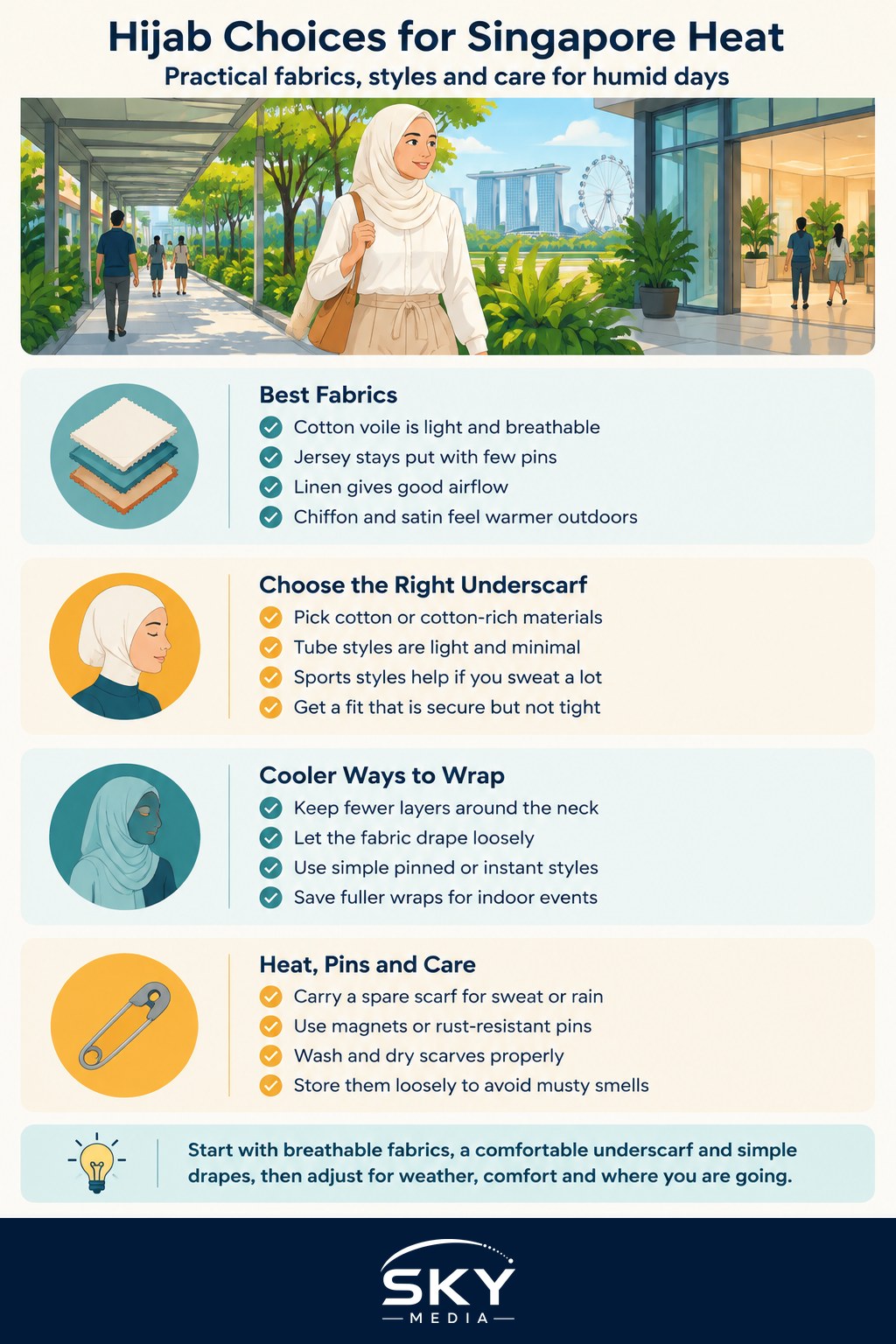
Cotton voile is a favourite for hot climates. It is light, slightly sheer, soft and breathable, and it holds folds well without slipping much. Good-quality voile is often opaque enough when folded; check in daylight before buying.
Viscose and modal feel soft and drape beautifully. They breathe reasonably well, though some can feel heavier when damp.
Linen and linen blends are excellent for airflow and look relaxed. They can crease, and some find them a little stiff at first, but they soften with washing. Our guide on how to wear linen in Singapore covers care and styling for the fabric generally.
Jersey is stretchy, easy to wear and stays in place with few pins, which makes it popular for busy mornings. Thin, cotton-rich jersey is more breathable than thick or heavily synthetic versions.
Chiffon looks elegant and is very light, but many chiffons are polyester, which can trap heat and feel clammy. It also slips, so it usually needs an underscarf and more pins. It works well for evening events in air-conditioned venues.
Satin and silky polyester look polished for weddings and festive occasions such as Hari Raya, but tend to be the warmest choice outdoors.
Here is a quick comparison:
| Fabric | Breathability in heat | Grip and ease of styling | Best for |
|---|---|---|---|
| Cotton voile | High | Good grip, holds folds | Daily wear, commuting, outdoors |
| Jersey (cotton-rich) | Medium to high | Very easy, few pins | Busy mornings, exercise, errands |
| Linen or linen blend | High | Moderate, can crease | Casual weekends, outdoor events |
| Chiffon (polyester) | Low to medium | Slippery, needs pins | Evening events, air-conditioned venues |
| Satin | Low | Slippery, needs underscarf | Weddings, festive occasions |
Choosing the Right Underscarf
The underscarf (sometimes called an inner, bonnet or anak tudung) keeps hair in place, stops the outer scarf from sliding and adds a layer of coverage. In heat, though, it is also an extra layer, so the choice matters.
- Pick a breathable material. Cotton or cotton-rich jersey underscarves are generally cooler than thick polyester ones.
- Choose the right style. Tube-style underscarves are minimal and light. Bonnet or cap styles with a tie at the back give more grip. Ninja-style underscarves with neck coverage give full coverage under sheer outer scarves but add warmth.
- Look for moisture-wicking options if you sweat a lot or exercise. Sports underscarves made from technical fabrics are designed to move sweat away from the skin.
- Get the fit right. Too tight can cause headaches and trap heat; too loose and it slips. Try a few sizes and styles.
- Own several. Since the underscarf sits closest to the skin and hair, washing it after each wear helps keep things fresh.
Some people skip the underscarf entirely with grippy fabrics like jersey or voile on cooler days. Others prefer it always. Both are fine.
Styles That Keep You Cooler
How you wrap and drape the hijab affects airflow. A few general principles help:
- Fewer layers around the neck. Multiple wraps around the neck trap heat. Styles that drape forward over the chest, rather than wrapping tightly, tend to feel cooler.
- Let the fabric hang loosely. Loose drapes allow air to move between the fabric and the body.
- Try a single-loop or simple pinned style for daily wear. A rectangular scarf pinned under the chin with one side draped over the shoulder is quick and less bulky.
- Consider instant or slip-on hijabs. Pre-sewn instant hijabs need no pins, go on in seconds and come in breathable fabrics. They are handy for school runs, gym sessions and hot afternoons.
- Square scarves folded into triangles sit neatly and use less fabric than long shawls.
- Save the elaborate wraps for indoors. Layered or voluminous styles look striking at weddings and dinners, where air-conditioning makes them comfortable.
Dealing With Sweat, Air-Conditioning and Rain
Singapore’s day often swings from hot pavements to chilly offices and back.
- Carry a light spare. A thin spare scarf or underscarf in your bag lets you change if you get very sweaty or caught in the rain.
- Use blotting papers or a small towel to freshen up discreetly.
- Layer for the cold indoors with a cardigan or light jacket rather than a thicker hijab, which will be uncomfortable outside.
- Choose colours wisely. Lighter colours reflect more sunlight and can feel cooler outdoors. Very light thin fabrics may become more see-through when damp, so pair them with a matching underscarf.
- Stay hydrated. Coverage plus heat means you lose fluids more than you think. See our tips on staying hydrated in Singapore’s heat.
Pins, Magnets and Accessories
Hardware matters for comfort and fabric care:
- Magnetic hijab pins hold fabric without piercing it, which is gentle on delicate materials. If you have a pacemaker or other implanted medical device, ask your doctor whether magnets near the chest are suitable.
- Small safety pins are secure and discreet. Choose rust-resistant ones, since sweat and humidity can mark fabric.
- Underscarf clips or hijab grips reduce the need to tighten everything.
- Straight pins are traditional but use them carefully, especially around children.
Caring for Your Hijabs in a Humid Climate
Humidity makes laundry harder, and damp fabric can develop odours or mildew.
- Wash underscarves after every wear and outer scarves regularly, following the care label.
- Use a laundry bag for delicate chiffons and voiles in the machine.
- Dry in a well-ventilated spot and avoid leaving damp scarves folded in a bag.
- Iron or steam on the right setting. Satin and chiffon need low heat; cotton and linen take more.
- Store loosely on hangers or rolled in a drawer, rather than tightly packed, to avoid musty smells.
Building a Practical Hijab Wardrobe
You do not need dozens of scarves. A useful starter set for Singapore weather might include a few cotton voile scarves in neutral colours, two or three jersey or instant hijabs for busy days, a handful of breathable underscarves, and one or two dressier pieces for special occasions. Add colours and prints over time as you discover what you actually reach for.
For more general advice on outfits for this climate, read our guide to dressing for Singapore’s heat and humidity.
Further reading: How to Dress Modestly in Singapore Heat