
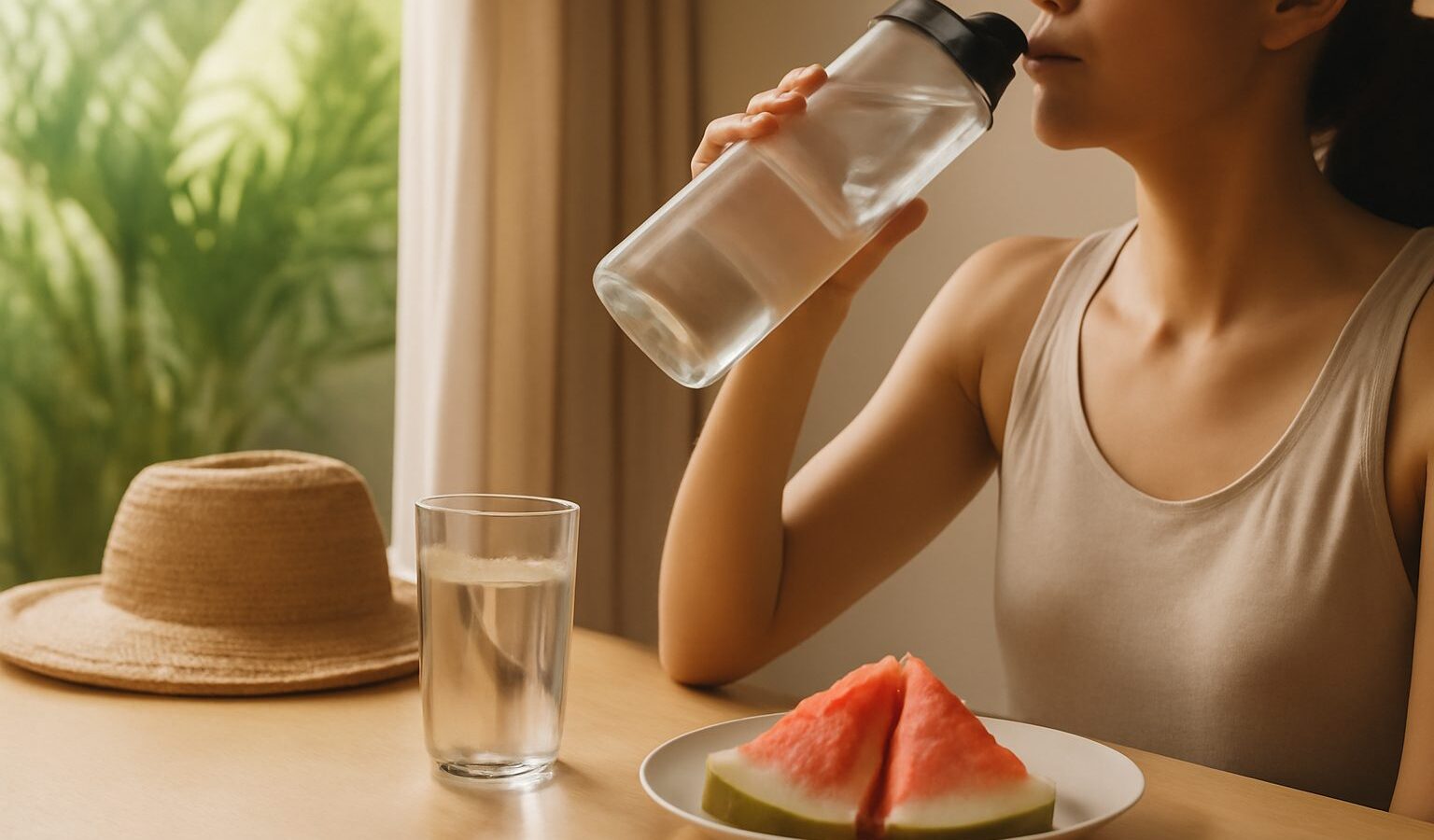
Our weather does not do us any favours when it comes to fluids. The heat and humidity mean we sweat more than we notice, often without the visible dripping you might expect, because sweat struggles to evaporate in humid air. That makes staying hydrated in Singapore a daily habit rather than an afterthought. Getting it right supports your energy, concentration, digestion and mood, while getting it wrong leaves you tired, headachy and foggy. This is general guidance, not medical advice, and specific needs vary from person to person.
Why Hydration Matters More Here
Water does a lot of quiet work in the body. It helps regulate temperature, cushions joints, moves nutrients around and keeps everything running smoothly. When we lose more fluid than we take in, even mildly, we can feel it as tiredness, poor focus, a dull headache or irritability long before we feel truly thirsty.
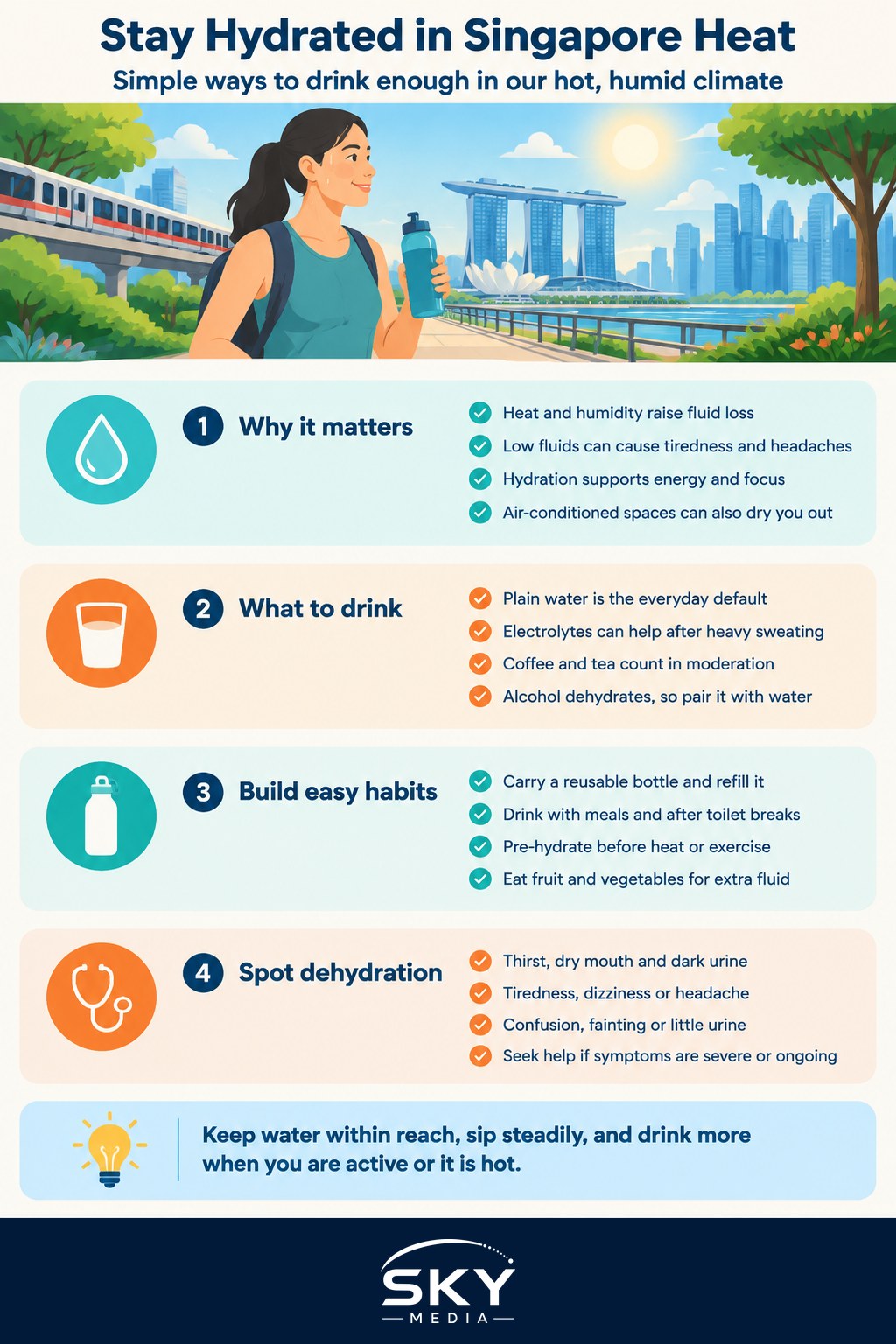
In our climate, the losses add up quickly. Walking to the MRT, standing on a crowded platform, exercising outdoors, or simply going about a humid day all draw fluid from you. Air-conditioned offices can be drying too, so it is not only the outdoors that matters. The upshot is that many people here are running slightly low on fluids much of the time without realising it.
How Much to Drink, Sensibly
There is no single magic number that fits everyone, and it is wise to be cautious of hard figures, because your needs shift with your size, activity, health and how much you sweat. A practical approach beats chasing an exact target.
- Sip through the day rather than gulping a lot at once. Steady intake keeps you topped up.
- Use your urine as a rough guide. Pale yellow generally suggests you are well hydrated, while dark and strong-smelling can be a sign to drink more.
- Drink to thirst, and a little ahead of it. By the time you feel very thirsty, you are already behind.
- Add more when you sweat more, such as during exercise, outdoor work, or a long day out in the sun.
If you have a heart, kidney or other condition, or take medication that affects fluid balance, ask your doctor how much is right for you, since more is not always better for everyone.
Best and Worst Choices in the Heat
Plain water is the everyday champion. It is cheap, effective and easy. Beyond that, some choices help and some quietly work against you.
For most daily needs, water is all you require. During prolonged, heavy sweating, such as intense sport or long outdoor exertion, drinks with some electrolytes can help replace what you lose, but you do not need them for a normal day. Be wary of sugary drinks, bubble tea and many packaged juices, which add a lot of sugar for little hydration benefit. Coffee and tea do count towards your fluids in moderation, despite the old myth, though very large amounts can be a diuretic for some. Alcohol is dehydrating, so pair it with water, especially in the heat.
A Simple Hydration Comparison
| Drink or habit | Good for | Watch out for |
|---|---|---|
| Plain water | Everyday hydration, all ages | Nothing, this is your default |
| Water with electrolytes | Long, heavy sweating or sport | Not needed for normal days, some are sugary |
| Coffee or tea | Counts towards fluids in moderation | Large amounts may unsettle sleep or stomach |
| Bubble tea and sweet drinks | An occasional treat | High sugar, poor everyday hydration choice |
| Alcohol | Not a hydration source | Dehydrating, always pair with water |
Keep it simple: make water your base, and treat the rest as occasional extras.
Easy Habits to Stay Topped Up
Hydration sticks when it is convenient. A few small systems make it almost automatic.
- Carry a reusable bottle and refill it. Seeing it nudges you to sip.
- Anchor drinks to routines, such as a glass when you wake, with each meal, and after every toilet break.
- Pre-hydrate before heat or exercise, drinking before you head out rather than only after.
- Eat your water too. Fruit and vegetables like watermelon, cucumber and oranges add fluid.
- Mind the vulnerable. Young children and older family members may not feel thirst as strongly, so gently remind and offer drinks, especially on hot days.
Older adults, outdoor workers, athletes and anyone unwell with fever, vomiting or diarrhoea lose fluid faster and need extra care.
Signs of Dehydration and When to See a Doctor
Mild dehydration often shows up as thirst, a dry mouth, dark urine, tiredness, dizziness or a headache. Usually, sitting somewhere cool and drinking fluids steadily sorts it out.
Take it more seriously, and seek medical care, if you notice:
- Confusion, severe dizziness, fainting, or a fast, weak pulse.
- Little or no urine over many hours.
- Ongoing vomiting or diarrhoea that stops you keeping fluids down.
- Dehydration in a baby, young child or frail older person, who can deteriorate quickly.
These can signal significant dehydration or another illness. Call 995 or go to A&E for severe symptoms such as collapse, confusion or a very high temperature, particularly if you suspect heat illness. When dehydration overlaps with overheating, hot dry skin, a pounding headache and confusion, treat it as an emergency. For anything persistent or worrying, see your GP or polyclinic.
Make It a Daily Rhythm
You do not need to overthink hydration. Keep water within reach, sip through the day, drink more when it is hot or you are active, and pay attention to how you feel. Build it into the rhythm of your day and it stops being a chore. In our climate, that steady habit is one of the simplest ways to feel better from morning to night.
Explore more
Overheating and dehydration go hand in hand, so it is worth recognising heat exhaustion and heat stroke and acting early. Feeling drained in the afternoon is often partly dehydration, so see our tips on beating afternoon fatigue and low energy. And to round out your everyday health, our guide to building better sleep habits in Singapore is a good next read.
Official sources: Health Promotion Board
Further reading: Kidney Health and Staying Hydrated