
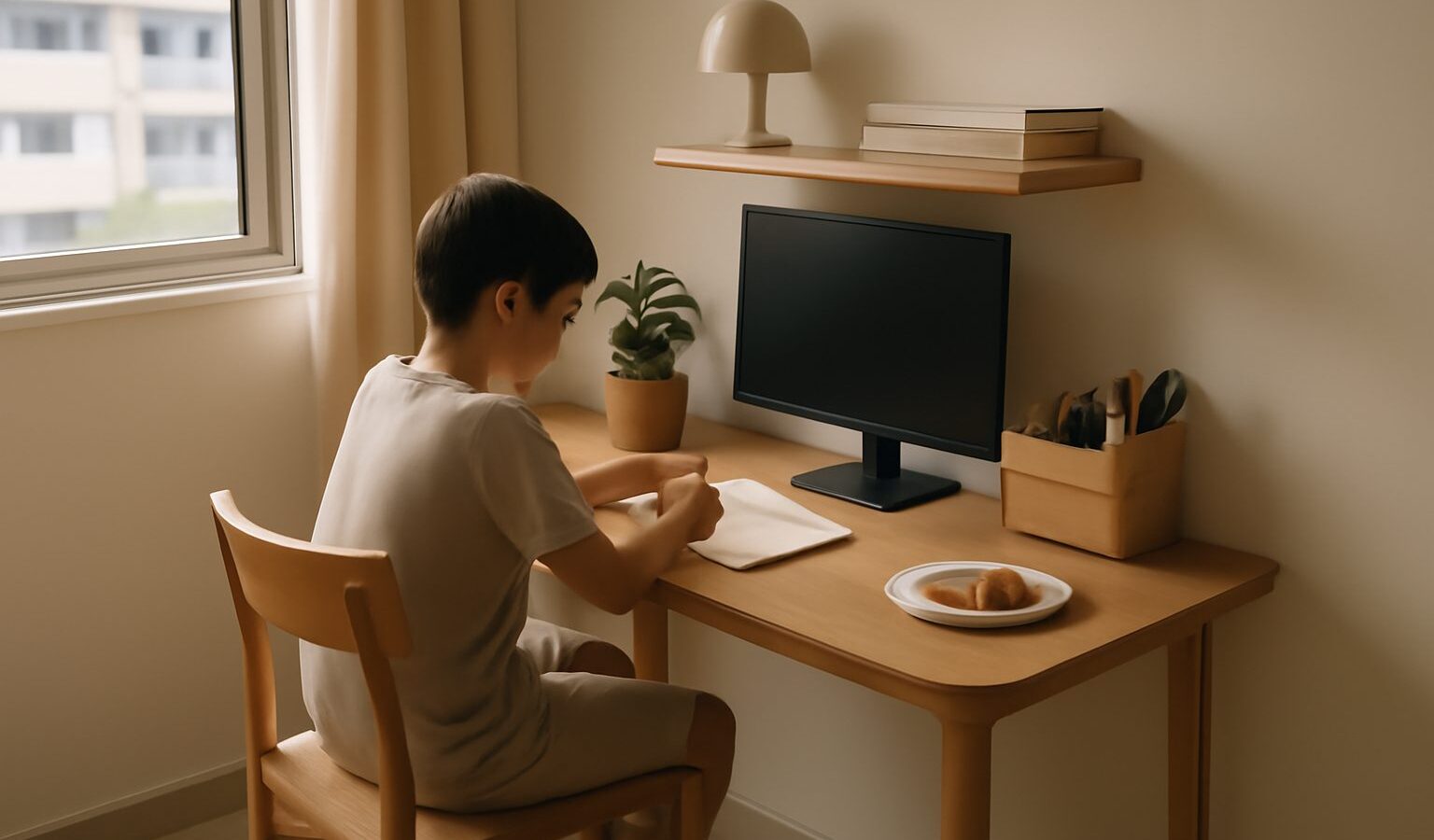
Most Singapore families do not have a spare room to turn into a study. Children end up doing worksheets on the dining table, the bed or the sofa, with books spread across whatever surface is free. A dedicated homework station solves much of that daily friction. It does not need to be big. It needs to be in the right place, sized for your child and organised so that starting work takes seconds rather than ten minutes of hunting for pencils.
This guide focuses on the physical setup in HDB flats and condos: where to put the station, what furniture works in tight spaces, how to light it, and how to store everything so the space stays usable. The end of the school year is a good time to do this, because the holidays give you weeks to rearrange furniture before the new term begins.
Choosing the Right Spot in an HDB Flat or Condo
Location matters more than furniture. Before buying anything, walk through your home and think about light, noise, supervision and how the space is used at different times of day.
| Location | Works well when | Watch out for |
|---|---|---|
| Bedroom corner | Child is older and works independently, or room is shared by siblings of similar age | Bed is a distraction; hard for parents to supervise younger children |
| Living room nook | Younger child needs a parent nearby | Television, visitors and household noise during homework time |
| Dining table with a mobile caddy | Space is very tight and the table is free after meals | Daily packing up; meal times interrupt longer sessions |
| Wall-mounted fold-down desk in a corridor or alcove | Floor space is precious and the area is quiet | Must be fixed securely; check wall type before drilling |
| Window bay or ledge (common in older condos) | Natural light is good and the ledge is a usable depth | Afternoon heat and glare; ledge height may not suit a chair |
A few Singapore-specific points:
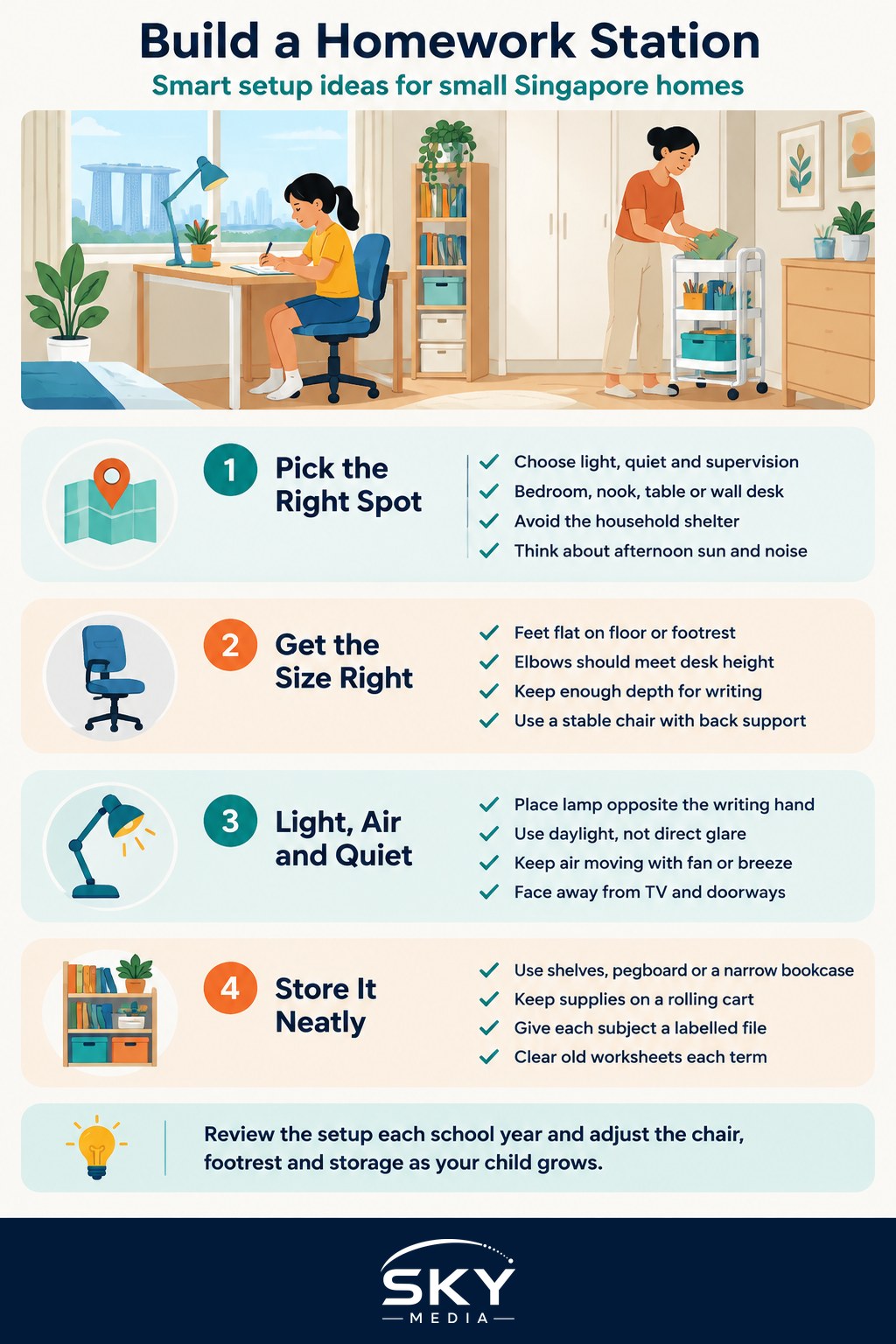
- Avoid converting the household shelter. Many newer HDB flats and condos have a household shelter (the reinforced room with a heavy steel door). It is tempting to use as a study, but there are rules from the Singapore Civil Defence Force (SCDF) against hacking, drilling or modifying its walls, and ventilation is limited. Use it for storage that does not block the door, not as a fixed study.
- Think about afternoon sun. West-facing windows get hot and bright in the afternoon, which is when most homework happens. Blinds or a slight desk shift can make a big difference.
- Consider who else uses the space. A living room nook that is quiet at 4pm may be noisy at 8pm when the family gathers.
Sizing the Desk and Chair for a Growing Child
A desk that is too high or a chair that is too low leads to slouching, tired shoulders and shorter concentration. Children grow fast, so adjustability is worth more than looks.
- Feet flat. Your child’s feet should rest flat on the floor or on a footrest, with knees at roughly a right angle. A sturdy box or a purpose-made footrest is an easy fix for adult-sized chairs.
- Elbows level with the desk. When sitting upright with relaxed shoulders, the forearms should rest comfortably on the desk surface.
- Enough depth. The desk should fit an open exercise book plus room for the forearms. Very shallow wall desks can feel cramped for writing-heavy primary school work.
- Screens at eye level. If your child uses a laptop or tablet for school assignments, raise the screen with a stand or stack of books and use a separate keyboard where practical.
- Choose a stable chair. Swivel chairs on wheels can be fun but distracting for younger children. A stable chair with a supportive back often works better.
Height-adjustable children’s desks and chairs are widely sold, but so are simple adult desks paired with an adjustable chair and footrest. Measure your space and your child before you shop. Our guide to space-saving and multifunctional furniture has more ideas for pieces that fold, extend or do double duty.
Lighting, Ventilation and Noise
Good light helps children focus and reduces eye strain. Singapore homes often rely on a single ceiling light, which casts shadows on the desk.
- Add a desk lamp. Position it on the opposite side of your child’s writing hand, so a right-handed child has the lamp on the left. This prevents the hand from shadowing the page.
- Use daylight where possible, but avoid direct sun on the desk or screen.
- Keep air moving. A small fan or good cross-ventilation keeps a corner from becoming stuffy in the humid afternoon. If the study area is in a bedroom with air-conditioning, ask whether it is really needed or whether a fan will do.
- Reduce noise. Rugs, curtains and bookshelves absorb sound. Agree on household “quiet hours” during homework, such as keeping the television off or turned down. Some children also find simple ear defenders helpful.
- Face away from distractions. Turning the desk to face a wall rather than the television or a busy doorway can noticeably improve focus.
Storage That Keeps the Station Ready
A homework station only works if supplies are at hand and the surface stays clear. In small homes, storage has to go up, under or on wheels.
- Go vertical. Wall shelves, a pegboard or a narrow bookcase beside the desk store files, textbooks and supplies without using floor space. See our vertical storage ideas for small homes for more options.
- Use a rolling cart. A three-tier trolley holds stationery, art supplies and current worksheets, and can be rolled away when the dining table is needed for meals.
- Give each subject a file or tray. Labelled files for English, Mother Tongue, Mathematics and Science make it easier for children to find and return their work.
- Keep a “today” tray. Homework due tomorrow goes in one clearly marked tray, so nothing is left behind in the morning rush.
- Store the school bag nearby. A hook or low shelf close to the station means the bag is packed at the desk rather than on the floor.
- Clear out regularly. Old worksheets pile up quickly. At the end of each term, keep what is useful for revision and recycle the rest.
Making It Work When Siblings Share
Many HDB families have two or more children sharing a room or a single study area. A few adjustments help prevent arguments.
- Give each child their own zone, even on a shared desk. Separate trays, lamps and labelled storage reduce “that’s mine” disputes.
- Use a long desk along one wall rather than two small desks facing each other, which invites chatting.
- Stagger homework times if possible, especially when one child has spelling to practise aloud while the other needs quiet.
- Consider a fold-down desk for the younger child in a different spot, such as the living room, where a parent can help more easily.
Keeping the Homework Station Useful All Year
A homework station is never truly finished. Review the setup at the start of each school year: raise the chair, lower the footrest, swap the small lamp for a better one, and clear out last year’s books. Involve your child in the decisions, from the colour of the storage boxes to where the noticeboard goes. Children who help design their space are more likely to use it and keep it tidy.
If you are planning bigger changes, such as built-in carpentry, our guide to renovating a small home covers what to consider before you commit. Even without renovation, a well-placed desk, good light and smart storage can give your child a calm, ready place to learn.
Frequently Asked Questions
How can I help my child stay focused at the homework station? Reduce visible distractions first: face the desk away from the television, keep only today’s work on the surface and set a clear start time. Short, predictable breaks help younger children. If focus problems are persistent, speak to the teacher, and consider a doctor if there are wider concerns.
Do I need to buy new furniture, or can I reuse what I have? You can often reuse what you have. A stable table, a supportive chair and a footrest can work well if the heights suit your child. Spend only on what fixes a real problem, such as a lamp for poor lighting or a chair that lets feet rest flat.
Is it safe to drill into flat walls for a fold-down desk? Only with care. Check the wall type and any rules before drilling, and avoid structural walls and the household shelter. Use proper fixings rated for the load and, if unsure, get a qualified installer. Refer to HDB’s guidelines for what is permitted in your flat.
What signs show that my child’s desk setup is not working? Watch for slouching, leaning in close to the page, rubbing the neck or eyes, and frequent complaints of tiredness. These often point to a desk or chair that is the wrong height, or poor lighting. Adjust the setup first, and see a doctor if pain or vision complaints continue.
How should I set up the station for lessons on a laptop or tablet? Place the screen at roughly eye level, with a stand or a stack of books, and use a separate keyboard if possible. Put the device away from glare, near a power point, and keep cables tidy. Take regular screen breaks, and keep the school’s device rules in mind.
Further reading: How to Choose Child-Friendly Furniture for Small Homes