

A weekend visit is easy. Hosting relatives for a long stay, say four weeks to a few months, is a different project. Parents come to help with a new baby, siblings visit during their own school holidays, grandparents arrive for Chinese New Year and stay on. Singapore homes are compact, routines are busy, and small frictions grow over weeks. This guide covers the practical side of hosting relatives long stay: space, house rules, money, insurance and how to fill the days, so everyone ends the visit still on good terms.
Immigration is a separate topic. If your guests may need more time than their visit pass allows, read How to Extend a Short-Term Visit Pass for Visiting Parents and Relatives and check the current rules with ICA (Immigration and Checkpoints Authority) well before any deadline.
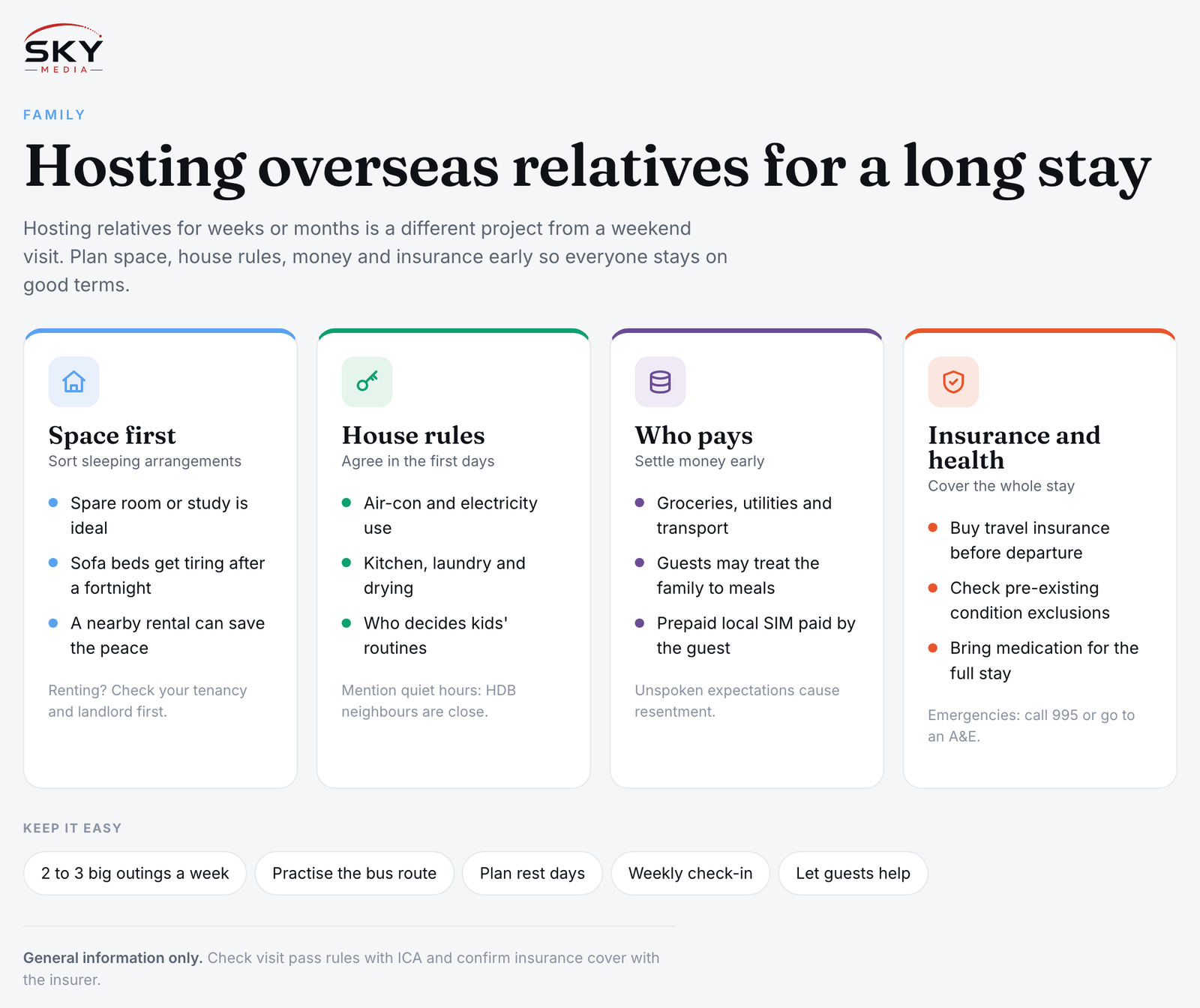
Sorting Out Space Before They Land
Most newcomer households live in an HDB flat, condo unit or rented room with little spare space. Plan the sleeping arrangements honestly before tickets are booked.
- Spare room or study: the ideal. Clear a shelf and some wardrobe space, and add a small side table, a lamp and a hook for towels.
- Children’s room: common when grandparents visit. Talk to the children early, and keep one corner of the room that is still theirs.
- Living room: a sofa bed or foldable mattress works for a short stretch but gets tiring after a fortnight. It also means the living room stops being shared space by 10pm.
- Nearby short-term rental: some families rent a serviced apartment or room close by for part of the stay. It costs more but can save the relationship on a long visit.
Think about the bathroom queue in the morning, where luggage will live for weeks, and whether elderly guests need a night light or a grab-friendly path to the toilet. A non-slip mat in the shower is a cheap, sensible addition.
If you rent, check your tenancy agreement and talk to your landlord before a long stay. Some agreements restrict additional occupants, and HDB has its own rules for flats, so confirm what applies to you rather than assuming.
House Rules Everyone Can Live With
The biggest strains on long visits are usually not big arguments but daily habits: air-con use, cooking smells, laundry timing, bedtime noise, and who is in charge of the children. Agree a few points in the first two or three days, kindly and in plain words.
Topics worth covering:
- Air-con and electricity: visitors from cooler or cheaper-energy places may run the air-con all day. Explain when you usually use it and how fans and blinds help.
- Kitchen: which pans to use for what, where groceries go, and whether anyone should check before cooking strong-smelling dishes for the household.
- Laundry and drying: Singapore’s humidity means clothes dry slowly indoors. Show how the washing machine works and where things hang.
- Children’s routines: grandparents often have firm views. Agree who decides screen time, snacks and bedtimes, and back each other up in front of the children.
- Visitors and noise: neighbours in HDB blocks are close. Mention quiet hours and the shared corridor etiquette.
- Rubbish and recycling: show the chute and the blue recycling bin downstairs.
If language differences make conversations tricky, our guide to Chinese kinship terms helps children address visiting relatives correctly, which goes a long way with grandparents.
Who Pays for What on a Long Stay
Money is awkward, so settle it early. Many families simply absorb the cost as hosts; others share. Neither is wrong, but unspoken expectations cause resentment.
| Cost area | What usually changes | Ways families handle it |
|---|---|---|
| Groceries and meals | Food spending rises noticeably, more if eating out | Host pays groceries, guests treat the family to some meals out |
| Utilities | Higher electricity and water use, especially air-con | Host absorbs it, or guests contribute a fixed monthly sum |
| Transport | MRT, bus and ride-hailing for daily outings | Give guests their own card topped up, or they top up themselves |
| Outings and attractions | Ticketed attractions add up over weeks | Mix paid outings with free parks, museums on free days and neighbourhood walks |
| Phone and data | Guests need a local number or roaming | Prepaid local SIM bought on arrival, paid by the guest |
A local prepaid SIM card is very useful for guests who will go out alone; it lets them use maps and messaging and lets you reach them. For public transport, contactless bank cards issued overseas may work at fare gates, but foreign card fees can apply, so a stored-value card is often simpler for grandparents. Check current options with SimplyGo or TransitLink.
Travel Insurance and Health Care for Visitors
This is the item most often skipped and the one that matters most. Visitors are not covered by Singapore’s subsidised schemes for citizens and residents, and private hospital bills for non-residents can be high.
- Buy travel insurance before departure, ideally in the home country, with the full length of the stay covered. If the stay is extended, check whether the policy can be extended too.
- Read the medical cover and exclusions, especially for pre-existing conditions such as heart problems or diabetes, which are often excluded or limited. Ask the insurer directly if unsure.
- Bring enough regular medication for the whole stay plus a margin, in original packaging, with a doctor’s letter or prescription. Some medicines are controlled in Singapore, so check HSA (Health Sciences Authority) guidance before travel.
- Know where to go: for minor illnesses, a nearby GP clinic is usually the first stop. For emergencies, call 995 or go to a hospital emergency department. Keep a copy of the guests’ passport and insurance details on your phone.
Whatever policy your relatives choose, the same habit applies: read the policy wording and confirm cover with the insurer. This is general information, not medical or insurance advice.
Filling the Weeks: Outings That Suit Long Visits
Long stays need a rhythm, not a tourist checklist. If you treat every day as a holiday, you will be exhausted in a week, and guests may feel guilty about your time.
A pattern that works for many families:
- Two or three bigger outings a week planned with you, such as Gardens by the Bay, the Botanic Gardens, a hawker trail or a heritage district.
- Independent routines on workdays. Show guests the nearest hawker centre, market, park connector and community club. Many older visitors are happy with a morning walk, a kopi and a newspaper.
- Practise the route. Ride the bus or MRT with them once before they go alone, and save your address in Chinese and English on their phone.
- Weekend family time that includes the children, rather than always adults-only sightseeing.
- Rest days. Singapore’s heat tires visitors, especially older ones. Plan indoor afternoons and encourage water and hats.
If you are planning a wedding or big event during the stay, Hosting Overseas Guests at Your Singapore Wedding covers the event logistics.
Keeping Relationships Easy Until the Goodbye
Even loving families get tired of each other. A few habits keep a long stay pleasant:
- Protect some private time for your partner and yourself each week.
- Let guests contribute. Many grandparents want to cook or help with the children; accepting help makes them feel useful rather than like visitors.
- Have a short check-in every week or two: what is working, what would make things easier.
- Prepare the children for the departure. After grandparents leave, video calls help; see Helping Kids Stay Close to Grandparents in China, Long Distance for ideas.
- Write a simple handover sheet for next time: Wi-Fi password, nearby clinic, favourite stalls and bus routes.
Hosting relatives long stay takes planning, but with clear space, fair money arrangements, proper insurance and a relaxed routine, a few weeks or months together can become one of the best parts of living abroad.
Official sources: ICA
Further reading: How to Handle Awkward Questions From Relatives at CNY Gatherings