
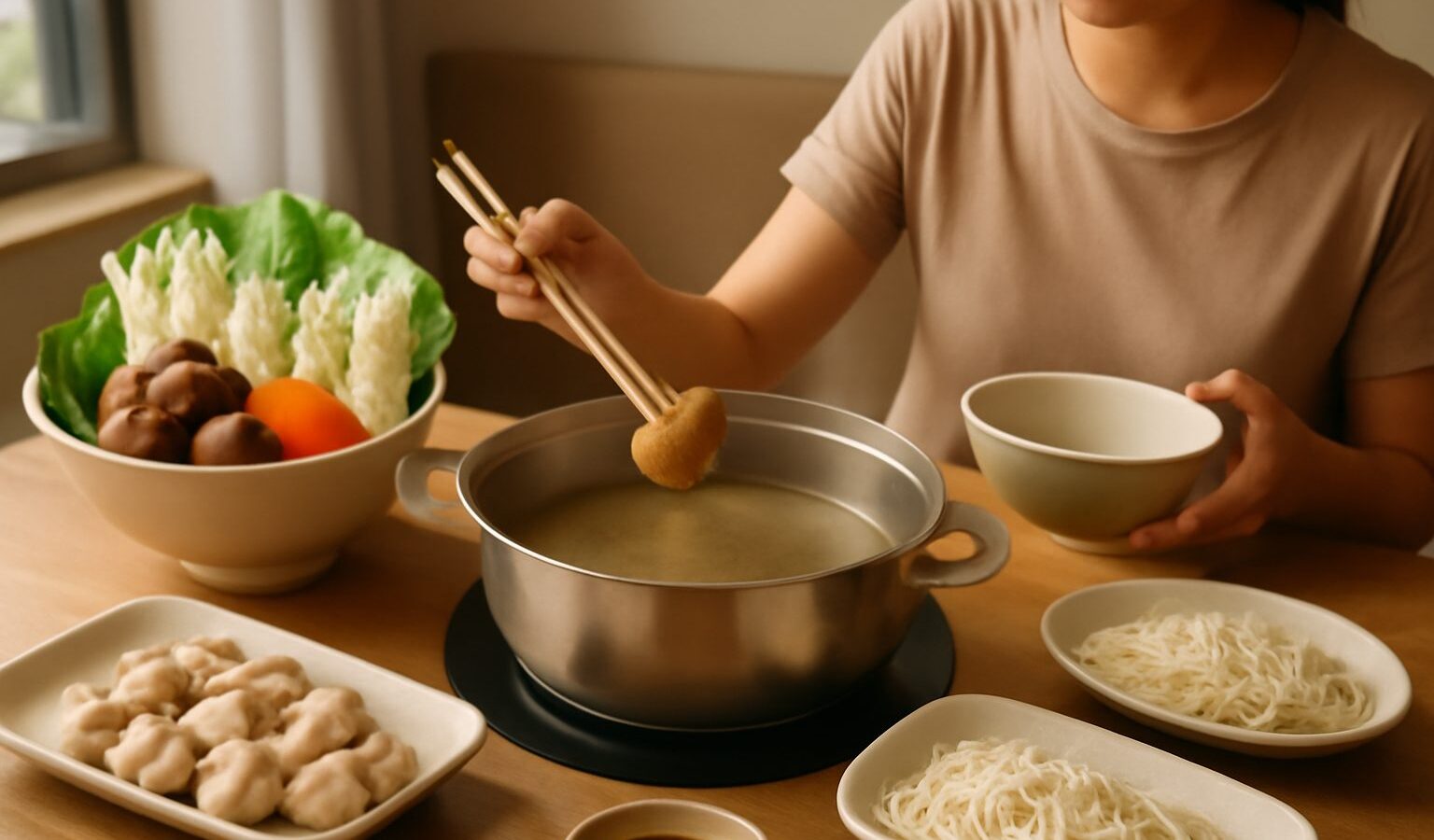
Many people in Singapore do not eat beef, whether for religious reasons, family custom, health or plain preference. Yet hotpot menus often lead with marbled beef slices, and some popular broths are built on beef stock or beef tallow. The good news is that hotpot without beef is completely doable, and often delicious, as long as you know which questions to ask.
This guide is about that one dining need: choosing a broth, building a beef-free spread and handling shared pots. For a broader introduction to the hotpot scene, start with a guide to steamboat and hotpot in Singapore.

Why the Broth Is the Real Question
Avoiding beef slices on the menu is the easy part. The broth is where beef can hide.
- Mala and spicy Sichuan-style soups are traditionally made with a chilli paste that may use beef tallow (rendered beef fat) as its base. Some restaurants use vegetable oil or other fats instead, but you cannot tell by looking. Our explainer on mala in Singapore covers how these soup bases are made.
- Clear bone broths may be pork, chicken or a mixed stock. Some restaurants include beef bones in a “house” or “bone” broth.
- Tomato broths are often vegetable based, but some add beef stock for depth.
- Herbal and mushroom broths are frequently free of beef, though they may use chicken or pork stock.
- Satay or peanut sauce broths vary by restaurant.
Recipes differ between chains and between outlets, and can change over time. Never assume a broth is beef-free because of its name. Ask the staff directly, and if they are unsure, ask them to check with the kitchen or look at the ingredient information many chains keep on hand.
Questions to Ask Before You Order
A few clear questions save you from guessing. Staff at busy hotpot restaurants hear dietary questions often, so asking is normal.
- “Does this soup base contain any beef, beef stock or beef fat?”
- “Is the chilli oil or mala paste made with beef tallow?”
- “Do any of the dipping sauces or the sauce bar items contain beef?”
- “Are the meatballs, dumplings or fish cakes made with any beef?”
- “Can you use a fresh pot and clean ladles for our table?”
If beef avoidance is a religious requirement for you, be clear about that. It helps staff understand that a trace in the stock matters, not just visible slices. For diners who need halal food specifically, look for restaurants certified by MUIS (the Islamic Religious Council of Singapore), since a “no beef” answer alone does not cover halal requirements.
Building a Beef-Free Spread
Once the broth is sorted, the rest of the menu opens up. Hotpot has far more on offer than beef.
Proteins
- Thinly sliced pork belly, collar or loin
- Chicken slices, chicken balls or marinated chicken
- Lamb or mutton slices, popular in northern Chinese-style hotpot
- Fish slices, prawns, clams, squid and crab sticks
- Tofu in many forms: silken, firm, fried puffs, tofu skin and frozen tofu, which soaks up broth beautifully
Vegetables and fungi
- Leafy greens such as napa cabbage, spinach, tang oh (crown daisy) and lettuce
- Enoki, shiitake, king oyster and wood ear mushrooms
- Corn, radish, lotus root, potato and pumpkin slices
Carbs and extras
- Glass noodles, instant noodles, udon and rice cakes
- Fried dough sticks (you tiao) for dipping
- Quail eggs and fish tofu
Watch for processed items. Mixed meatballs, “beef balls” (obviously), some dumplings and some luncheon-meat style products can contain beef. If the label is unclear, ask or skip it.
Shared Pots, Ladles and the Sauce Bar
Cross-contamination is the hardest part of hotpot without beef, because the whole meal is built around sharing. How strict you need to be depends on why you avoid beef. Someone avoiding it for taste may be relaxed; someone with a religious commitment may want full separation.
| Situation | Risk for a non-beef eater | What you can do |
|---|---|---|
| Whole table orders beef-free | Very low, if the broth is confirmed | Simplest option; agree on the menu before ordering |
| Split pot (yin-yang), beef only on one side | Moderate, since broth can splash and ladles get mixed | Keep beef strictly in one side and use separate ladles |
| Individual pots per diner | Low | Choose a restaurant offering single-person pots |
| One shared pot with beef added | High | Not suitable if you need to avoid beef traces |
| Sauce bar shared by all diners | Varies with ingredients and shared spoons | Check ingredients and take sauces before others start cooking |
A few practical habits help:
- Ask for separate ladles and strainers in a distinct colour if the restaurant has them.
- Sit next to the beef-free side of a split pot, so nobody reaches across.
- Cook beef-free items first if the table is sharing one pot and you are relaxed about it, before any beef goes in.
- Use your own chopsticks only for eating, and the shared tools for cooking.
When you are dining with friends who do eat beef, a simple “I don’t take beef, could we keep it on one side?” is usually enough. Most people are happy to accommodate once they know.
Choosing the Right Type of Hotpot Restaurant
Some formats make hotpot without beef easier than others.
- Individual-pot restaurants give everyone their own broth, which is the easiest way to avoid sharing.
- Northern Chinese-style hotpot often centres on lamb and mutton, with clear broths, making beef less central to the meal.
- Seafood-focused steamboat spots naturally lean on fish, prawns and shellfish.
- Large chains are more likely to have written ingredient information for their soup bases.
Our best steamboat in Singapore shortlist is a useful starting point for comparing styles. When booking a group meal, mention the dietary need in advance, especially for a birthday or company dinner where the restaurant may pre-set the menu.
Eating Hotpot at Home Without Beef
If restaurant broths feel like too much guesswork, home hotpot gives you full control. A simple chicken, pork bone, tomato or mushroom broth, plus a vegetable-oil mala paste, covers most cravings. Supermarket soup base packs vary, so read the ingredient list for beef extract, beef fat or tallow before buying.
Hotpot is about sharing a table, not one particular meat. With the right broth and a few clear questions, everyone can enjoy the meal together.
Frequently Asked Questions
Is no-beef the same as halal when eating hotpot? No. A restaurant saying there is no beef does not cover halal requirements, which also involve other ingredients, preparation methods and kitchen practices. If you need halal food, look for restaurants certified by MUIS and check the certificate is current.
Which hotpot soup bases are most likely to contain beef? Mala and spicy Sichuan-style soups are the main concern, since their chilli paste may use beef tallow. House or bone broths can include beef bones too. Recipes vary by outlet, so ask staff each time.
Can I order hotpot without beef if my friends are having it? Yes, a split pot or individual pots work well. Ask for separate ladles, keep the beef strictly on one side and sit beside the beef-free half. Most friends are happy to adjust once they know.
Are meatballs and dumplings at hotpot restaurants beef-free? Not always. Mixed meatballs, some dumplings and luncheon-meat style products can contain beef. Ask staff directly whether each item is made with any beef, and skip anything with an unclear label or no ingredient information.
Is individual-pot hotpot the easiest way to avoid beef? It is usually the safest, since everyone gets their own broth and there is no shared ladle risk. Check the broth ingredients and the sauce bar. Mention your dietary need when booking a group meal.