

If you have watched a match and wondered what sits behind the five players on stage, you are asking the right question. Understanding how esports teams work means looking past the roster to the coaches, managers, analysts and business staff who make competition possible. A modern organisation is a small company, not just a group of friends queueing together.
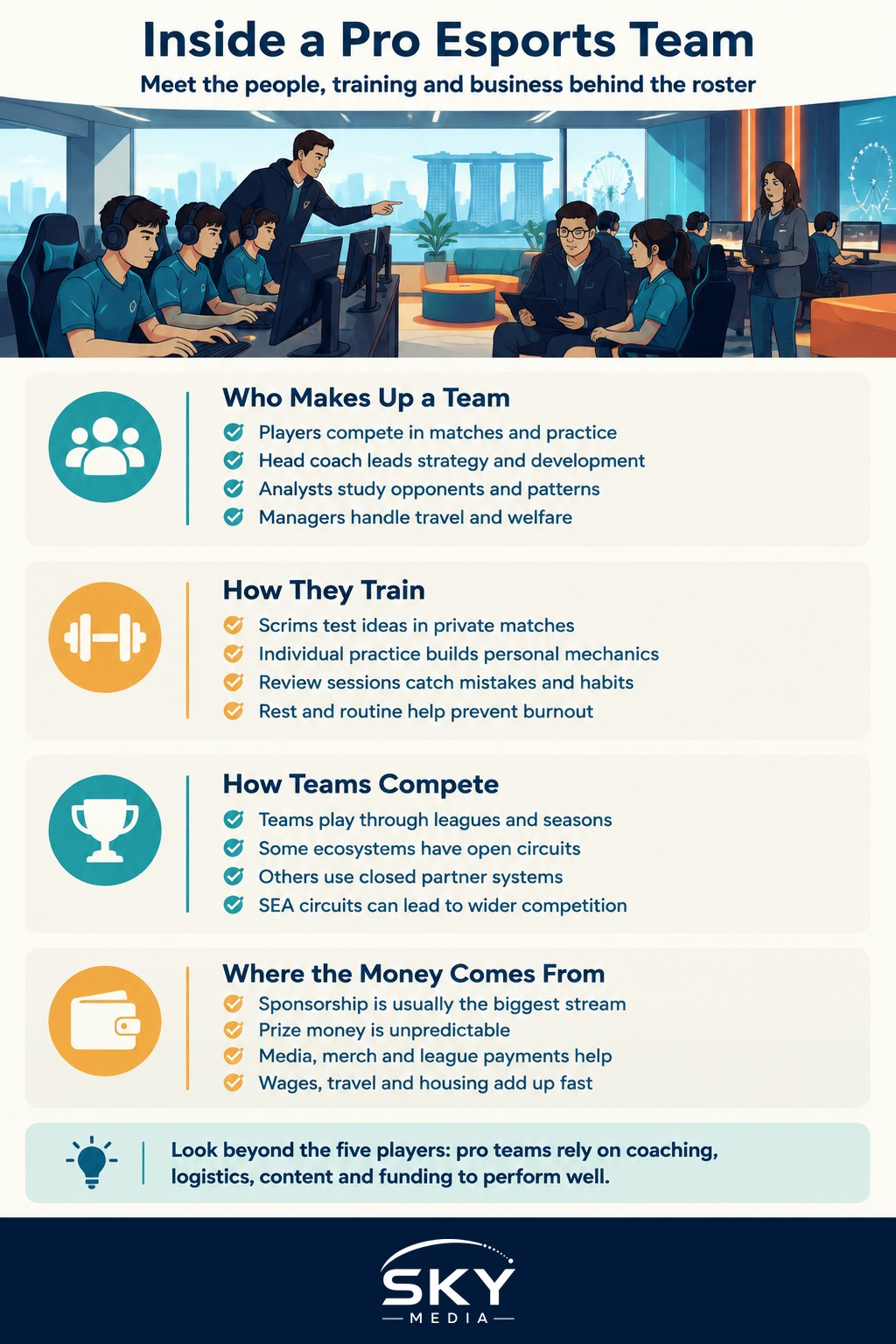
More Than the Players You See
The visible part of any team is the competitive roster. In most popular titles that means a fixed number of starting players, often with one or two substitutes. But the roster is only the tip of a much larger structure.
A serious organisation usually fields multiple teams across different games. One brand might have a squad in a tactical shooter, another in a MOBA, and a third in a fighting game. Each has its own line-up and support staff, while sharing the organisation’s back office, sponsors and facilities.
This structure exists because competing at a high level is demanding. Players cannot also handle contracts, travel bookings, content schedules and strategy preparation on their own. Specialised roles free them to focus on playing well, which is the entire point.
The People Behind a Roster
Here are the roles you will commonly find in a well run organisation. Not every team has all of them, and smaller outfits often combine several jobs into one person.
- Players. The competitors themselves, usually specialists in one game and often one position within it.
- Head coach. Sets strategy, runs practice, reviews footage and manages the team’s competitive direction.
- Assistant coach or analyst. Studies opponents, prepares data and drafts, and spots patterns the players miss in the heat of a match.
- Team manager. Handles logistics, scheduling, travel, and day to day welfare so players can concentrate on training.
- General manager. Oversees roster decisions, contracts and the long term direction of a specific team.
- Content and social staff. Produce videos, manage streams and keep fans engaged between matches.
- Business and sponsorship team. Secure the partnerships and deals that fund everything else.
Behind these sit owners, executives and sometimes sports scientists, physiotherapists or sports psychologists at the largest organisations. The trend over recent years has been towards more support staff, not fewer, as teams recognise that fitness and mentality affect results.
How Support Roles Compare
The line between these jobs can blur, so it helps to see them side by side. This table summarises what each core role focuses on and who they answer to.
| Role | Main focus | Works most closely with |
|---|---|---|
| Player | Performing in matches and practice | Coach and teammates |
| Head coach | Strategy and player development | Players and analysts |
| Analyst | Data, opponents and preparation | Coaching staff |
| Team manager | Logistics and player welfare | Players and management |
| General manager | Roster and contracts | Owners and coaches |
| Content staff | Fan engagement and media | Marketing and players |
How Teams Actually Train
Training is where an organisation earns its results, and it is more structured than outsiders expect. A typical week is built around a few repeating blocks.
Scrims
Scrims are practice matches against other teams, arranged privately so both sides can test ideas without the pressure of an official result. A team might play several scrim blocks a day during a competitive season. These sessions are where new strategies get their first real trial.
Individual practice
Beyond team play, competitors work on personal mechanics. In a shooter that might mean aim routines. In a MOBA it might mean practising specific characters or last hitting. Coaches often set individual goals so this time is focused rather than aimless.
Review
Perhaps the most important block is review. The team watches recordings of their own matches and their opponents’ games, breaking down decisions frame by frame. Honest review is uncomfortable but it is how players correct habits that cost them rounds.
Rest and routine
Good organisations now protect sleep, meals and time away from the screen. Burnout is a genuine risk in a job that involves staring at a monitor for long hours, so structured rest is treated as part of performance, not a luxury.
How Teams Compete
Most competitive games run structured seasons. Teams qualify for or are placed into leagues, play through a regular schedule, and aim for playoffs that lead to larger events. Some ecosystems use an open circuit where anyone can climb from small online cups towards bigger stages, while others use a more closed partner system with a fixed set of organisations.
For a Singapore audience, regional context matters. Southeast Asia has its own competitive circuits in several titles, and local players often start there before reaching wider Asian or global competition. If you want the local picture, our guide to the esports scene in Singapore sets out how the ecosystem here fits together.
Where the Money Comes From
Revenue is the part fans see least, yet it keeps everything running. In general terms, organisations earn from a mix of sources rather than any single one.
- Sponsorship. Brand deals are usually the largest income stream, from hardware makers to non gaming companies chasing a young audience.
- Prize winnings. Tournament earnings vary hugely and are unpredictable, so few sensible organisations rely on them.
- Media and streaming. Content, subscriptions and broadcast arrangements bring steady income and keep fans close.
- Merchandise. Jerseys and branded goods turn fan loyalty into direct support.
- League payments. In partnered ecosystems, teams may receive a share of central revenue.
The honest reality is that running a team is expensive and margins are often thin. Wages, travel, housing and staff add up quickly. This is why the business side is as vital as the competitive side, and why so many organisations invest heavily in content and community.
The Bigger Picture
An esports team, seen properly, is a blend of a sports club and a media company. The players win the matches, but the coaches shape them, the analysts prepare them, the managers protect them and the business staff fund them. When all these parts work together, a roster can perform at its best on stage.
If you are new to all this, it helps to start with the fundamentals. Our beginner’s guide to esports explains the basics, and if you want to see these structures in action, learning how to watch esports will help you spot the coaching and strategy at play during a broadcast. The more you understand the machine behind the roster, the more rewarding the matches become.
Explore more: What Is Esports: A Beginner’s Guide · The Esports Scene in Singapore · How to Watch Esports
Further reading: How to Find and Run Scrims for Your Esports Team · How to Go Pro in Esports: An Honest Guide