

When people picture an esports match, they see the players. Yet behind almost every strong team stands a coach whose work happens long before the match begins. Esports coaching is the craft of turning talented individuals into a coordinated, resilient team, and it involves far more than shouting instructions. This guide explains what a coach actually does and why the role has become essential.
What a Coach Really Does
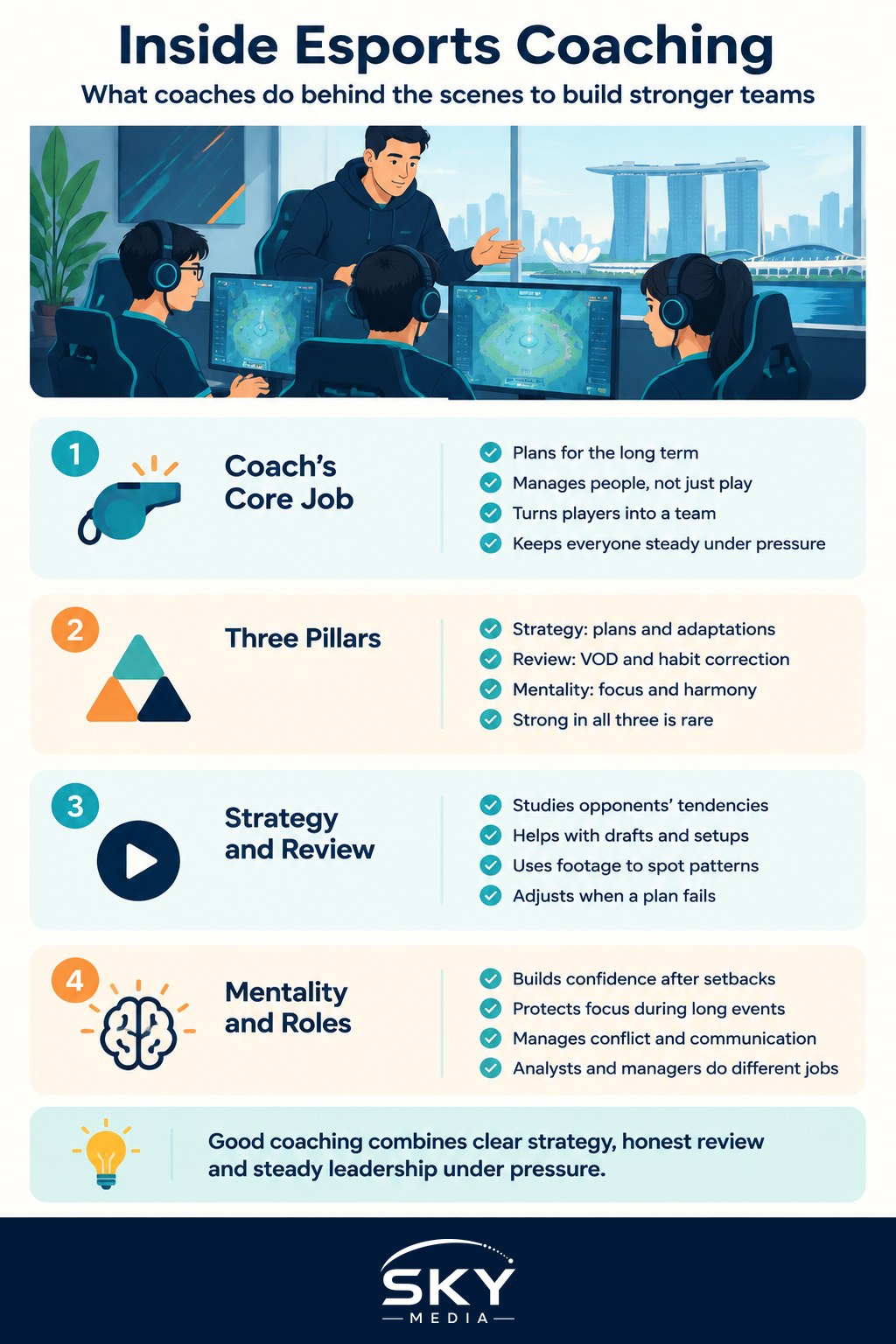
A common misunderstanding is that a coach is simply a very good player who tells others what to do. In reality, many excellent coaches are not the sharpest mechanical players on the team, and that is fine. Their job is different. A coach sees the whole picture, plans for the long term and manages people, not just gameplay.
The work spans several areas that overlap through a season. A coach prepares strategies, reviews footage, scouts opponents, runs practice, manages personalities and keeps the team steady under pressure. On any given day they might switch between tactician, teacher, analyst and counsellor. The best coaches move between these hats without losing sight of the single goal, which is helping the team perform when it matters.
The Three Pillars of Coaching
Most coaching work falls into three broad areas. A coach who is strong in all three is rare and valuable.
| Pillar | What it covers | Why it matters |
|---|---|---|
| Strategy | Plans, drafts, adaptations | Wins are engineered, not lucky |
| Review | VOD analysis, correcting habits | Improvement comes from honesty |
| Mentality | Confidence, focus, team harmony | Talent fails under pressure |
Let us look at each in turn, because together they explain almost everything a coach does.
Strategy and Preparation
Strategy is the most visible pillar. Before a match, a coach studies how opponents like to play, identifies their tendencies and prepares a plan to counter them. In games with a drafting or picking phase, the coach helps decide which characters, maps or setups give the team the best chance.
But strategy is not only about the opponent. A coach shapes the team’s own identity, deciding what style suits their players and drilling the patterns that make it work. Good preparation means the team is rarely surprised, because they have already discussed what to do in the situations that arise.
Crucially, strategy must adapt mid match. When a plan is not working, the coach and in-game leader adjust between rounds or during breaks. This calm, quick thinking under pressure separates good preparation from rigid planning.
VOD Review
If strategy is the most visible pillar, VOD review is the most important. VOD means video on demand, and here it refers to recordings of matches that the team watches back together.
Why review matters
In the heat of a match, players make dozens of fast decisions and cannot judge them clearly. Review is where those decisions get examined honestly. The coach pauses the footage, asks why a choice was made and points out what a better option might have been. Over time this reshapes habits, so players start making stronger decisions instinctively.
How review is done well
Good review is specific and constructive, not a blame session. A skilled coach highlights patterns rather than picking on one mistake, and balances criticism with recognition of what went right. Players must feel safe enough to accept hard feedback, which is why the tone a coach sets during review shapes the whole team culture.
Teams also review their opponents’ footage to prepare, and their own scrims to test new ideas. This constant cycle of playing, recording and reviewing is the engine of improvement. If you want to apply the same principle to your own play, our guide to how to improve at competitive games shows how self review works for individuals.
Mentality and People
The third pillar is the one outsiders underestimate most. Esports is intensely psychological. A team can be more skilled than their opponent and still lose because nerves, frustration or a lost round spiral into collapse. Managing mentality is therefore central to coaching.
- Confidence. A coach reminds players of their strengths and keeps belief alive after setbacks.
- Focus. Long events and long practice days test concentration. Coaches structure rest and keep players present rather than dwelling on past mistakes.
- Team harmony. Five strong players who do not trust each other will lose. Coaches manage conflict, build communication and turn a roster into a genuine team.
- Composure. When a match tightens, the coach’s steadiness gives players something calm to lean on.
Some larger organisations now bring in dedicated sports psychologists, but in most teams the coach carries much of this weight. The ability to read people, to know when to push and when to comfort, is what separates a manager of tactics from a true leader.
Coaches, Analysts and Managers
It helps to distinguish coaching from nearby roles, because they are often confused. An analyst focuses on data and opponent research, feeding information to the coach. A team manager handles logistics and welfare rather than gameplay. The coach sits between them, taking the analyst’s insights and the manager’s stability and turning them into performance on the day. In smaller teams one person may do all three jobs, which shows just how demanding the work can be. To see how these roles fit into a full team, our guide to how esports teams work maps out the whole structure.
Why Coaching Keeps Growing
Over the past years, teams have invested more and more in coaching because the results speak for themselves. As games grow deeper and competition tightens, the margins between winning and losing come down to preparation and mentality, exactly the areas a coach owns. A talented roster without coaching is like a talented athlete without a trainer. They might do well, but they will rarely reach their ceiling.
The Quiet Craft Behind the Wins
Coaching is a quiet craft. The coach rarely gets the spotlight, yet their fingerprints are on every well timed strategy, every corrected habit and every steady head in a tense moment. Understanding esports coaching gives you a richer appreciation of the sport, because you start to see the thinking behind the plays. And if you love competition but the player path is not for you, coaching is a genuine and rewarding way to build a life in esports, one where patience, empathy and a sharp mind matter more than raw reflexes.
Explore more: How Esports Teams Work · How to Improve at Competitive Games · Getting Into Competitive Gaming
Frequently Asked Questions
What is the difference between a coach and an analyst? An analyst focuses on data and opponent research and feeds information to the coach, while the coach turns that insight into strategy, practice and decisions on the day. A team manager handles logistics and welfare. In smaller teams, one person may do all three.
Does a coach need to be a better player than the team? No. Many excellent coaches are not the sharpest mechanical players. Their job is to see the whole picture, plan for the long term and manage people. Reading players, knowing when to push or comfort, and calm thinking matter more than raw reflexes.
How do coaches give feedback without upsetting players? They keep review specific and constructive, highlighting patterns rather than blaming one mistake, and balancing criticism with recognition of what went right. Players must feel safe enough to accept hard feedback, so the coach’s tone shapes the whole team culture.
What do coaches do when a plan is not working mid-match? They work with the in-game leader to adjust between rounds or during breaks. This calm, quick thinking under pressure is what separates good preparation from rigid planning, since a strategy must adapt once the opponent shows something unexpected.
Can someone build a career in esports coaching without being a pro player? Yes. The article describes coaching as a genuine, rewarding path where patience, empathy and a sharp mind matter more than reflexes. Learning how teams work and practising review on your own play are sensible places to start.