
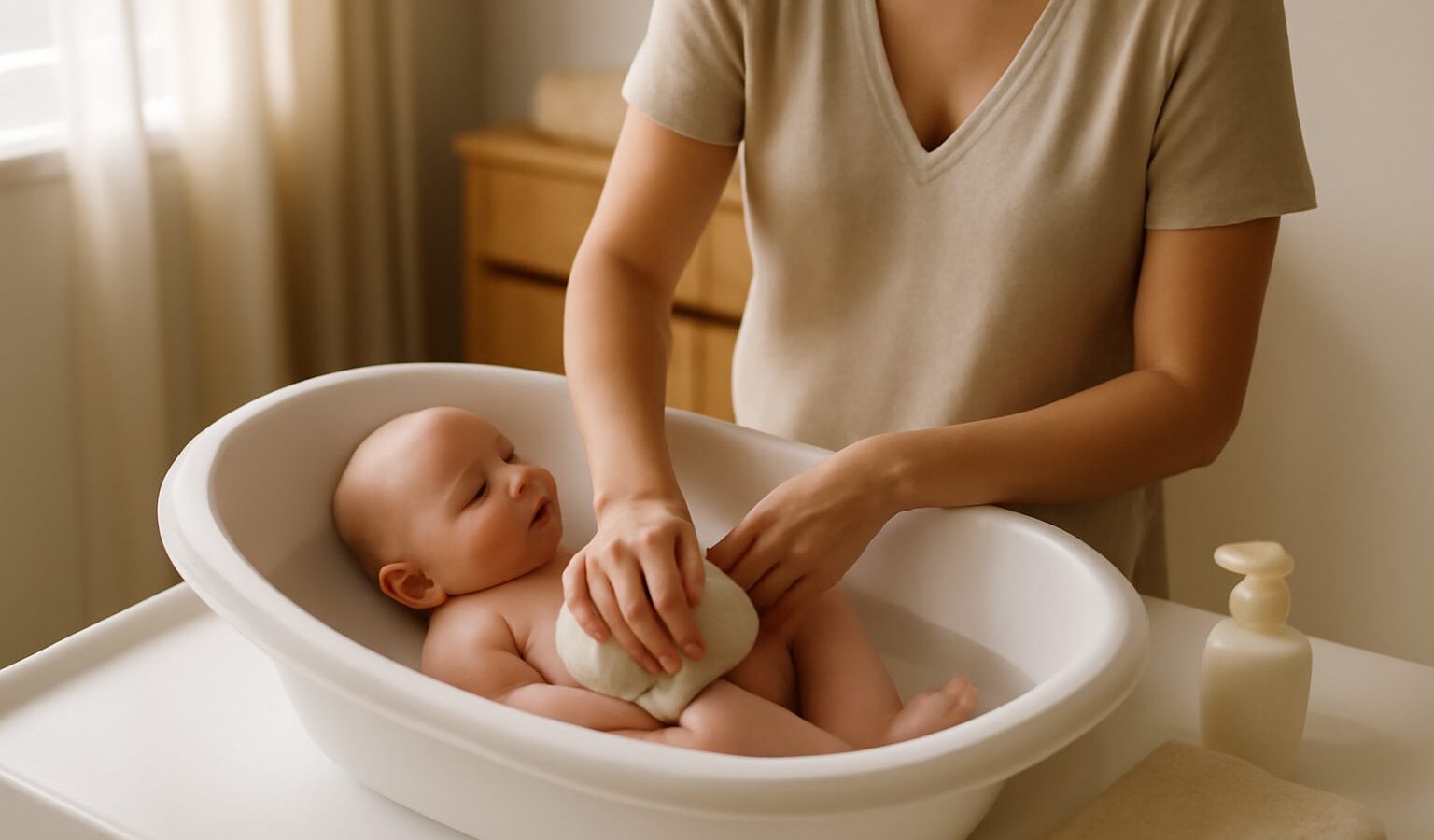
That first bath at home can feel like the most nerve wracking part of new parenthood. A slippery, wriggling baby, warm water, and the fear of doing it wrong is enough to make anyone’s hands shake. Take a breath. Bathing a newborn Singapore parents will be relieved to hear is a skill you learn quickly, and it becomes one of the calmest, sweetest parts of your day. This gentle guide walks you through the whole thing, from getting ready to keeping your little one safe, so you can feel steady the very first time.
Newborns do not get very dirty, so they only need a proper bath two to three times a week. On the other days, a quick wipe of the face, neck folds, hands, and nappy area is plenty. Over washing can dry out that delicate new skin, which matters even more in our warm, humid climate where sweat rashes are common.
Getting Everything Ready Before You Start
The golden rule of newborn bathing is to have everything within arm’s reach before your baby touches the water. Once you begin, you should never step away, not even for a second, so set up like you will not be able to move.
Gather these first:
- A clean towel, ideally with a hood, and a change of clothes and nappy
- Two soft washcloths or cotton wool
- A mild, fragrance free baby wash if you use any, though plain water is fine for newborns
- A small basin or baby bath, or a padded bath support
- A jug or cup for pouring water gently
Warm the room first. In an air conditioned HDB flat, switch off the aircon or turn it down and close the door so the room is cosy and free of draughts. Newborns lose heat fast, so a warm, still room keeps them comfortable. Wash your own hands, and remove watches or rings that could scratch.
Sponge Baths While the Cord Stump Heals
Until the umbilical cord stump dries up and drops off, usually within the first week or two, skip the tub and give sponge baths instead. This keeps the stump dry, which helps it heal and lowers the chance of infection.
Lay your baby on a warm, flat, padded surface such as a changing mat with a towel on top. Keep them wrapped and only uncover one area at a time so they stay warm. Using a damp cloth, wipe gently from the cleanest area to the least clean:
- Start with the eyes, using a fresh corner of cloth for each eye, wiping from the inner corner outward
- Move to the rest of the face, then behind and around the ears, but not inside them
- Clean the neck folds, underarms, and hands where milk and lint collect
- Wash the body and legs, then finish with the nappy area last
Pat the cord stump dry and leave it exposed to air where you can. Fold the nappy down below it. If the base of the stump becomes red, swollen, smelly, or oozes, or if your baby seems unwell, see a doctor.
Getting the Water and Room Temperature Right
Water should be warm, never hot. Aim for comfortably warm, around body temperature, so it feels pleasant but not warm on the inside of your wrist or your elbow. Always test it this way, because hands can be misleading, and a baby’s skin scalds far more easily than an adult’s.
Fill the bath with only a little water, roughly enough to reach your baby’s hips when they are lying down, about 5 to 8 centimetres. You do not need a deep bath to get a newborn clean. Run cold water in first and add hot to mix, then swirl it well so there are no hot pockets. In Singapore’s climate you rarely need the water very warm, and a slightly cooler bath on a sweltering day can be soothing.
A Gentle Step by Step Bath
Once the cord has healed, you can move to a small baby bath. Here is the simple flow.
Lower your baby in slowly, feet first, supporting the head and neck the whole time. Slide your forearm under their upper back so their head rests near the crook of your elbow, and hold the far arm or shoulder with that hand. Your other hand is free to wash. Keep their head and face clear of the water at all times.
Use your free hand or a cup to scoop warm water over their body to keep them warm, and wash gently with plain water or a little mild wash. Save the hair for last: cup a hand over the forehead so water runs back, not into the eyes, and rinse. There is no need to scrub. Talk softly and smile, as your calm voice reassures a startled baby.
Lift them out gently, remembering they will be extra slippery, and wrap them straight into the hooded towel. Pat, do not rub, dry, paying attention to the neck, underarm, and nappy skin folds where moisture and heat rashes love to hide. Most newborns do not need lotion, but a little fragrance free moisturiser is fine if the skin looks dry.
Sponge Bath or Tub Bath: What to Use When
| Stage | Best method | Why | Key safety focus |
|---|---|---|---|
| Cord stump still attached | Sponge bath on a mat | Keeps the stump dry to heal | One hand always on baby |
| Cord healed, under 6 months | Small baby bath or support | Shallow, contained, warm | Support head and neck |
| Baby can sit unaided | Bath seat is not a substitute for you | Baby can still tip and slip | Stay within arm’s reach |
| Any distraction (phone, door) | Take baby out first | Drowning is silent and fast | Never leave, even briefly |
Keeping Your Baby Safe In and Around Water
This is the part to take most seriously. Never leave a baby unattended in or near water, even shallow water, not even for a moment. Babies can drown quickly and silently in just a few centimetres. If the doorbell rings, your phone buzzes, or an older child calls out, wrap your baby up and take them with you. Nothing is more urgent than the baby in the water.
A few more safety habits:
- Keep one hand on your baby at all times during a bath
- Never rely on a bath seat or support to hold your baby; they are a comfort, not a guard
- Empty the bath immediately after use and store it upside down
- Around our homes, keep pails, tubs, and toilet bowls covered or empty, as toddlers explore them
- Set your water heater to a safe temperature to avoid accidental scalds
When to Speak to a Doctor
Bathing is general care, not medical treatment, and every baby is a little different. Trust your instincts, and when something feels off, ask a professional. Your polyclinic, a paediatrician, or KKH and NUH are there for questions.
Seek medical help urgently if your baby has any of these signs:
- Difficulty breathing, or lips or face turning blue
- Becomes limp, floppy, or unusually hard to wake
- Has swallowed water and then seems breathless, very sleepy, or unwell afterwards
- A high or persistent fever, or refuses feeds and has fewer wet nappies
For non urgent worries such as a healing cord, cradle cap, dry skin, or a rash that will not settle, book a routine visit rather than guessing. Do not use adult products or medicated washes on a newborn without a doctor’s advice. You know your baby best, and asking is always the right call.
Explore more
Bath time is only one piece of those early weeks, and the rest gets easier too. If your little one struggles to settle afterwards, our guide to soothing a crying baby offers gentle, practical ideas. For cosy, secure sleep once they are clean and dry, read up on swaddling your baby safely and safe sleep for babies. You are doing beautifully, one small day at a time.