

Your baby’s skin may look nothing like the smooth, even skin in the advertisements. In the first weeks, many babies develop little red bumps, white dots or blotchy patches, and baby acne in newborns is one of the most common reasons parents call the clinic. The good news is that most of these spots are harmless and fade on their own.
This guide explains the three newborn skin conditions parents ask about most, baby acne, milia and erythema toxicum, along with a few other common marks, and when a spot needs a doctor’s look. It is general information, not medical advice. If you are unsure about anything on your baby’s skin, check with your paediatrician, GP or polyclinic.
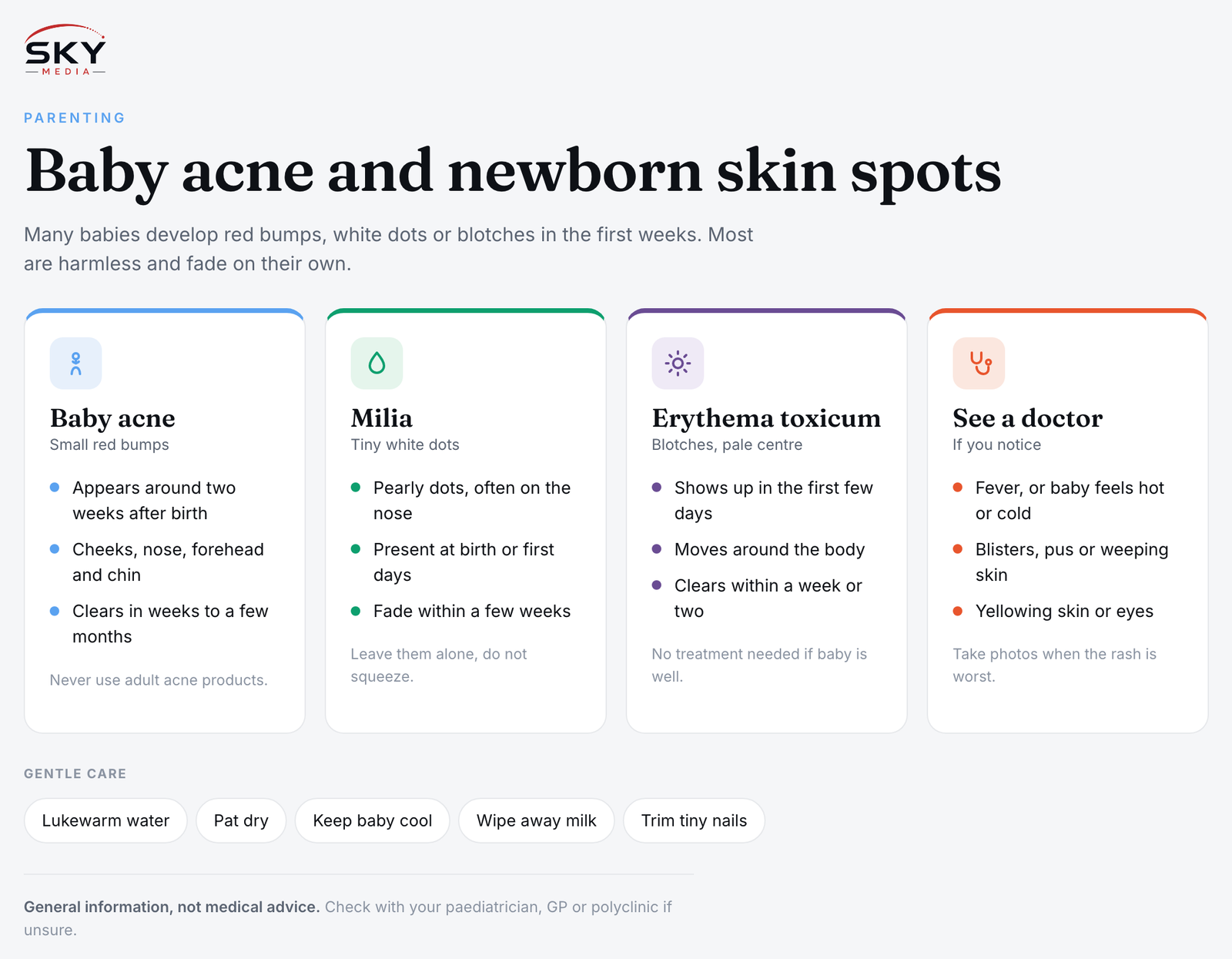
Baby Acne (Neonatal Acne)
Baby acne usually appears a couple of weeks after birth, though it can show up a little earlier or later. It looks like small red or pink bumps, sometimes with tiny whiteheads, mostly on the cheeks, nose, forehead and chin. It can look worse when your baby is warm or crying.
Doctors are not entirely sure what causes it. Hormonal changes around birth and the normal yeast that lives on skin are both thought to play a part. It is not caused by poor hygiene, and it is not related to what a breastfeeding parent eats.
What to know:
- It is not itchy or painful for most babies.
- It usually clears on its own within weeks to a few months, without leaving scars.
- Do not squeeze, scrub or pick at the spots.
- Do not use adult acne products, such as creams containing benzoyl peroxide, salicylic acid or retinoids, unless a doctor specifically advises it. A baby’s skin is thin and absorbs products easily.
Acne that first appears after about six weeks of age, or that is still severe after several months, is sometimes called infantile acne. It is less common and worth showing to a doctor, who may want to check for other causes.
Milia: Tiny White Dots on the Nose
Milia are tiny, pearly white or yellowish dots, about the size of a pinhead. They are very common on the nose, but also appear on the cheeks, chin and forehead.
Milia are small pockets of trapped skin protein (keratin) just under the surface. They are not pimples and do not contain pus. They are present at birth or appear within the first days, and they usually go away by themselves within a few weeks.
Leave milia alone. Squeezing them will not help and can irritate the skin or introduce infection. Normal gentle washing is enough.
Erythema Toxicum: Blotches With a Pale Centre
Despite the alarming name, erythema toxicum neonatorum is a harmless rash and has nothing to do with toxins. It is very common in healthy full-term babies.
It usually appears in the first few days after birth. You may see red, blotchy patches, often with a small yellowish or white bump in the centre, a bit like a flea bite. It can turn up on the face, chest, back, arms and legs, and it tends to move around, fading in one area and appearing in another over hours or days.
Your baby should otherwise be feeding well and behaving normally. The rash generally clears without treatment within a week or two. If the bumps look like fluid-filled blisters, are spreading quickly, or your baby seems unwell, see a doctor promptly, as some infections can look similar at first glance.
How to Tell Newborn Spots Apart
The table below summarises the common newborn skin spots. It is a guide only; a doctor can confirm what you are seeing.
| Condition | What it looks like | When it usually appears | What to do |
|---|---|---|---|
| Baby acne | Small red bumps, sometimes whiteheads, on cheeks, nose and forehead | Around two weeks after birth | Gentle washing, no squeezing, no adult acne products |
| Milia | Tiny pearly white dots, often on the nose | At birth or in the first days | Leave alone; fades within weeks |
| Erythema toxicum | Red blotches with a small pale or yellow centre, moving around the body | First few days of life | No treatment needed if baby is well |
| Cradle cap | Greasy, yellowish scales on the scalp, sometimes eyebrows | First weeks to months | Gentle care; ask your doctor if it spreads or looks inflamed |
| Peeling skin | Dry, flaking skin on hands, feet and body | First days, more in babies born after their due date | A plain, fragrance-free moisturiser if advised |
Other common newborn marks
A few other marks often worry parents but are usually harmless:
- Salmon patches (“stork bites”): flat pink or red patches on the eyelids, forehead or back of the neck. Those on the face often fade over the first year or two.
- Blue-grey birthmarks: flat, bluish patches, often on the lower back or bottom, very common in babies of Asian, African and Indian heritage. They are not bruises and usually fade over the years. Point them out at check-ups so they are recorded.
- Cradle cap: scaly patches on the scalp. See our guide on caring for cradle cap and delicate baby skin.
Some eye stickiness in the first weeks is also common and separate from skin spots; our article on blocked tear ducts and sticky eyes in newborns covers that.
Gentle Skin Care for Newborn Spots
Most newborn spots need patience rather than products. A simple routine helps:
- Wash gently. Use lukewarm water and a soft cloth on the face once a day, and pat dry. A mild, fragrance-free baby cleanser can be used if needed.
- Skip heavy oils and lotions on the face. Thick creams and oils can make baby acne look worse. Use a moisturiser only on dry areas, and choose fragrance-free.
- Keep your baby cool. Singapore’s heat and humidity can make red spots more noticeable. Dress your baby in light, breathable cotton, and avoid over-bundling, especially at night in an air-conditioned room.
- Wash fabrics that touch the face. Burp cloths, bedsheets and your own clothes can carry milk, saliva and detergent. A mild detergent and a thorough rinse can reduce irritation.
- Wipe away milk and spit-up. Dried milk and drool on the cheeks and chin can irritate the skin.
- Trim tiny nails. This stops your baby scratching their face.
Family members sometimes suggest home remedies, such as dabbing breast milk, herbal washes or powders on the spots. Ask your doctor before trying anything, since some powders can be breathed in and some remedies may irritate the skin.
When to See a Doctor
Most newborn spots are not urgent, but trust your instincts. Bring your baby to a doctor, or seek urgent care, if you notice any of the following:
- A fever, or your baby feels unusually hot or cold. In very young babies, a fever needs prompt medical attention.
- Blisters, pus-filled spots, crusting or weeping skin.
- A rash that spreads quickly or does not fade when you press on it.
- Your baby is unusually sleepy, floppy, irritable or not feeding well.
- Yellowing of the skin or the whites of the eyes. Newborn jaundice is common, but it should always be checked, especially if it is spreading or your baby is drowsy.
- Spots that are still getting worse after several weeks, or acne that starts after about six weeks of age.
- Dry, itchy, red patches that might be eczema.
Your baby’s routine developmental and health checks, with your paediatrician or at a polyclinic, are also a good time to ask about any skin spots. Take clear photos when a rash is at its worst, since it may look different by the time you see the doctor. HealthHub also carries trusted information on newborn health.
Baby acne, milia and erythema toxicum are part of your newborn adjusting to life outside the womb. With gentle care and a little patience, most babies’ skin settles by itself within the first few months.
Explore more: Baby Hiccups and Sneezing: What Is Normal
Official sources: HealthHub
Further reading: How to Wash Newborn Clothes: Detergents, Sterilising and Drying · Baby Poo Colours and Textures: What Is Normal · Common Baby Rashes and When to Worry