

The last stretch of the year in Singapore is a run of celebrations, from Deepavali to Hari Raya in some years, then Christmas and the countdown to New Year. Each brings gifts, gatherings, feasts and outings, and they cluster into a few short months. Year end festive budgeting in Singapore is really about pacing: deciding early how much the whole season gets, then letting each celebration draw from that pot. Do this, and December feels merry and open handed instead of tight and anxious. Skip it, and the new year opens with a credit card statement that undoes the cheer.
Because these dates are known well in advance, you have the luxury of preparing. A plan made in the calm months costs nothing and saves a great deal of stress later.
See the Whole Season as One Budget
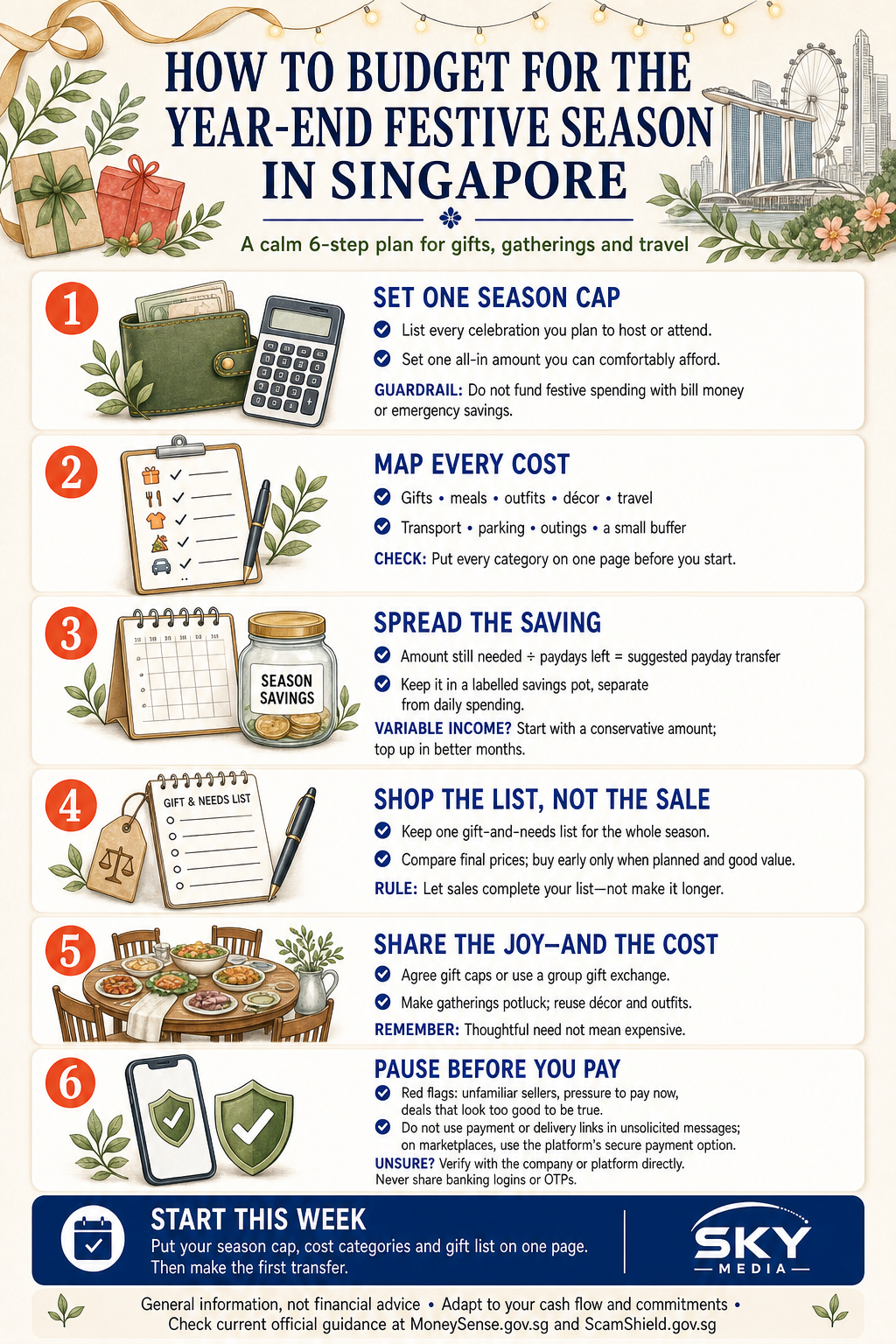
The classic mistake is treating each festival as a separate surprise. You handle Deepavali, recover, then Christmas arrives and you start from scratch, then New Year’s outings land before you have caught your breath. Instead, zoom out and treat the entire year-end as a single season with one overall budget. Then slice that budget across the celebrations you personally observe and attend.
Within that one pot, the common spending streams look similar across festivals: gifts and gift exchanges, festive meals whether hosted at home or booked out, new outfits or home refreshes, decorations, and the extra transport, parking and outings that come with visiting and gathering. Some households also travel during the school holidays, which deserves its own clear line because it can quietly dwarf everything else.
Here is a simple way to keep the streams visible without inventing any numbers.
| Spending stream | Easy to underestimate because | How to keep it in check |
|---|---|---|
| Gifts | Many small buys across many people | Set a per-group limit and a gift list |
| Festive meals | Bookings and add-ons creep up | Choose home versus dining out early |
| Outfits and home | Feels like a fresh-start splurge | Refresh a few pieces, reuse the rest |
| Travel | Peak-season prices during holidays | Decide and book well ahead, or skip |
| Gatherings and outings | Countless little “just this once” spends | Give the season a firm outings cap |
When every stream sits on one page, you can move money to what matters most to you and trim what does not, on purpose rather than by accident.
Save Ahead and Ride the Sales Sensibly
The year-end also overlaps with the season of big promotions, from the Great Singapore Sale earlier in the year to the wave of online sales that fill the final quarter. Sales are a genuine help when you buy things you already planned to buy. They are a trap when the discount itself becomes the reason to purchase. Keep a running gift and needs list through the year, and let sales fill that list rather than expand it.
Saving ahead is the other half. Work out a comfortable total for the whole season, divide it by the months you have left, and set that amount aside each payday in a separate pot. This turns one frightening lump into small, painless set-asides. Buying non-perishable gifts and decorations early, when they are cheaper and the shelves are full, also spares you the last-minute rush premium and the stress of picked-over stock.
A few habits keep festive spending honest:
- Keep one gift list for the whole season and update it as ideas come.
- Set a limit per group of recipients, then stick to it.
- Track your outings and dining as you go, so the small “just once” spends stay visible.
- Watch for fake discounts, and be cautious with unfamiliar online sellers and time-pressure deals.
Give and Gather Without Overspending
Gifts and gatherings are where good intentions get expensive. A warm, workable approach is to focus on thoughtfulness over price tag. Agreed gift caps within a friend group, a family gift exchange instead of everyone buying for everyone, or a shared potluck instead of one person hosting an entire spread, all keep the joy while spreading the cost. Suggesting these early feels generous, not stingy, because it lets everyone relax about money.
For hosting, decide clearly between cooking at home and dining out before the calendar fills up, since last-minute bookings during peak weeks cost more and offer less choice. If you are attending rather than hosting, a homemade dish or a modest, sincere gift for the host carries more warmth than an expensive one bought under pressure. Across every festival in the season, the pattern holds: the memories come from the people and the rituals, not the amount spent.
Be especially alert to scams during the busy shopping weeks. Festive urgency is exactly when fraudulent deals and fake delivery messages spread. If something feels off, slow down and verify through official channels, and look up current ScamShield or Police advisories rather than trusting a link you were sent.
Protect Your January Self
The real test of a good festive budget is how you feel in January. A season funded from savings you set aside on purpose leaves you calm and clear. A season funded from next month’s income leaves a hangover that can shadow the first weeks of the year. Give your future self a gift by keeping festive spending within the pot you planned, and by keeping a small buffer for the inevitable surprise invitation or last-minute gift.
Where to start this week: list every year-end celebration you will observe, set one total season budget, and open a separate savings pot to feed it monthly. If everyday bills make saving hard, remember that CDC and government vouchers, where available, can ease grocery and household costs, though amounts and timing change, so check the official announcement. This article is general information rather than financial advice, and MoneySense offers further general guidance if a decision feels big.
Explore more
The year-end flows straight into the next big celebration, so pair this with budgeting for Chinese New Year to plan the whole festive calendar. If red packets are part of your season, our guide to planning your ang bao giving keeps that calm, and for shared households, managing money as a family helps everyone pull together.