

Some people seem to click with almost anyone within minutes. They are easy to talk to, they put you at ease, and you leave the conversation feeling good. That ability is often called rapport, and the encouraging news is that it is a skill, not a personality trait you are either born with or not. Building rapport quickly is not about slick tricks or manipulation. It is about showing genuine warmth and attention so the other person feels comfortable and respected. Get that right, and connection tends to follow naturally, whether you are meeting a new colleague, a client, or a friend of a friend at a gathering.
What rapport really is
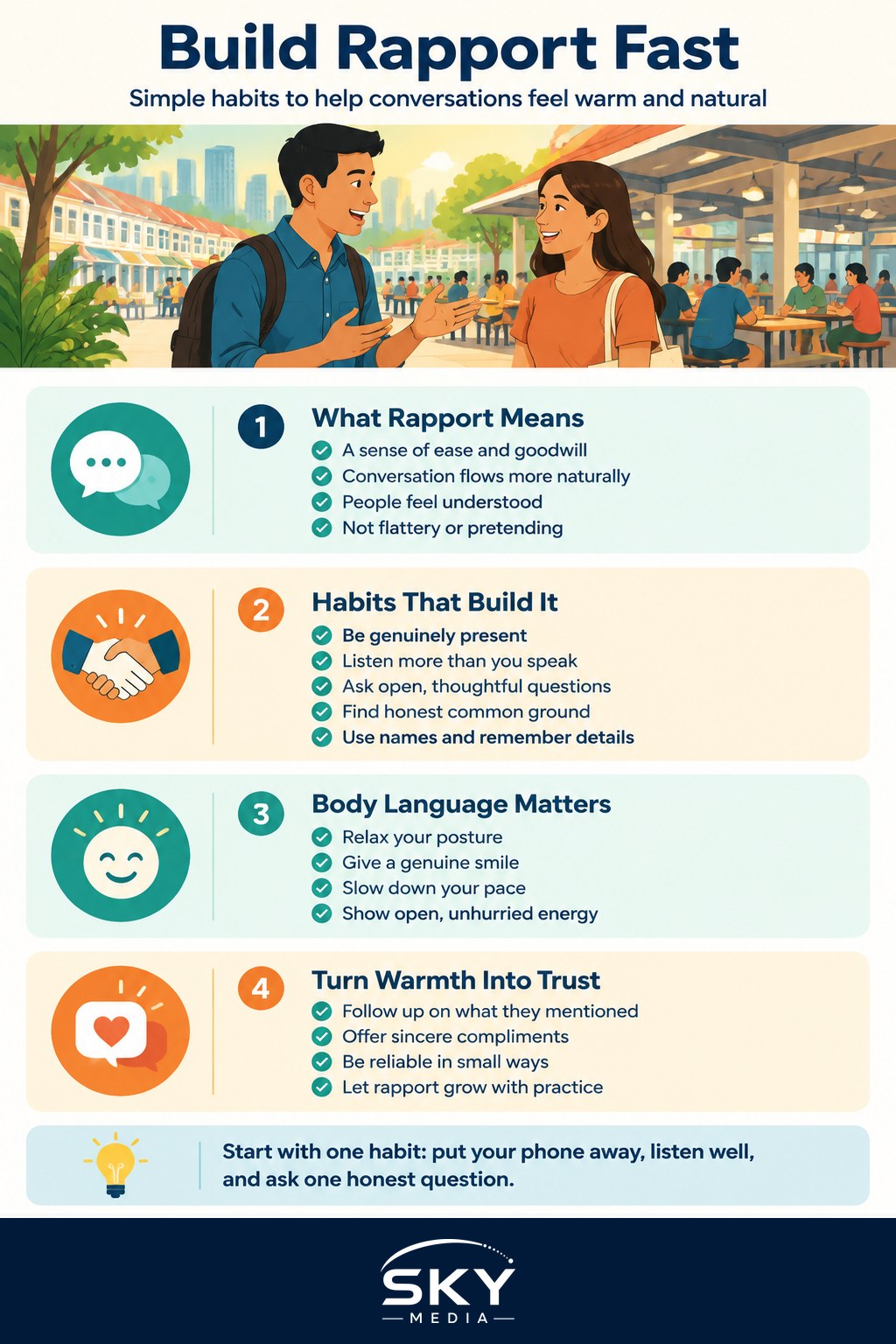
Rapport is simply a sense of ease and mutual goodwill between people. When it is present, conversation flows, small awkwardness disappears, and both people feel a little more understood. When it is missing, even a friendly exchange can feel stiff and effortful.
It is important to be clear about what genuine rapport is not. It is not flattery, mirroring someone’s every gesture as a technique to win them over, or pretending to agree with everything they say. People can usually sense insincerity, and shortcuts like these tend to backfire. Real rapport is built on honesty and interest. You are not performing a role to extract something from the other person. You are making a real effort to connect, and treating them as someone worth your full attention.
That distinction matters because the goal is a healthy relationship, not a conquest. Rapport built on manipulation is fragile and, frankly, unkind. Rapport built on genuine respect tends to deepen over time into something worth having.
Simple ways to build rapport fast
You can create warmth quickly with a few honest habits. None of these require a big personality, so they work well even if you are on the quieter side.
- Be genuinely present. Put your phone away and give the person your attention. In our distracted, fast-moving city, undivided attention is rare enough that it stands out. Working on how to be more present does more for your conversations than any clever line.
- Listen more than you speak. People warm to those who make them feel heard. Ask a question, then actually listen to the answer instead of planning your next remark. This is the heart of how to be a better listener.
- Ask good, open questions. Move gently past “what do you do?” into what someone finds interesting or how their week has been. Thoughtful questions signal real curiosity, and how to ask better questions is a skill you can practise anywhere.
- Find honest common ground. A shared hawker favourite, a mutual gripe about the morning commute, a common interest. Genuine points of connection build warmth fast, as long as you are not inventing them.
- Use their name and remember details. Remembering someone’s name and something they mentioned shows you were paying attention, and people notice.
Notice that all of these are things you actually mean, not poses you strike. That is what keeps them working over time.
Small things that make a big difference
Beyond the conversation itself, warmth is carried in tone and body language. A relaxed posture, a genuine smile, and open, unhurried energy tell people you are safe to talk to. You do not need to force any of this. Often it is enough to simply slow down and stop looking like you are rushing off somewhere, and to let your face and posture soften.
Warmth also comes through in small courtesies. Remembering to follow up on something a person mentioned, offering a genuine compliment when you mean it, or simply being reliable and kind in little ways. These build on first impressions and turn quick rapport into lasting trust. A sincere, specific compliment is especially powerful, and how to give a genuine compliment is worth reading if praise does not come naturally to you.
For quieter people, all of this can feel daunting, but rapport actually favours listeners. You do not need to be the loudest person in the room. If networking or meeting new people drains you, some gentle, introvert-friendly ideas can help ease the pressure without asking you to become someone you are not.
An encouraging wrap-up
Building rapport quickly is not about charm techniques or getting people to like you through clever moves. It is far simpler and far kinder than that. Give people your genuine attention, listen well, ask honest questions, and treat them with warmth and respect. Do that, and connection tends to take care of itself.
Like any skill, it grows with practice and unevenly. Some conversations will flow beautifully and others will feel a little clumsy, and that is completely normal. Start with one small habit, perhaps just putting your phone away and really listening, and let the rest build from there. The people you meet will feel the difference, and so will you.
Frequently Asked Questions
How do I build rapport with someone online or over video calls? Give full attention by closing other tabs, look at the camera now and then, and use their name. Reference something they said earlier and ask open questions. Short, warm check-ins before getting to business help make up for the missing body language.
How do I build rapport with a client or boss from a different culture? Learn a little about their communication norms, listen closely and avoid assuming your own style is the default. Showing curiosity and respect usually travels well. If unsure, follow their lead on formality and small talk.
What if I am shy and struggle with small talk? Small talk does not need to be witty. Ask one easy question about their day or surroundings, then listen and follow up on what they say. Listeners often build rapport well, so you can let the other person do more of the talking.
How can I tell whether rapport is actually forming? Signs include relaxed body language, easy back-and-forth, natural laughter and the other person volunteering details or asking about you. If the conversation feels stiff, slow down and show more interest rather than trying harder to impress.
Can I rebuild rapport after an awkward first meeting? Yes. A brief, friendly follow-up message that refers to something you talked about often resets the tone. Next time, focus on listening and being relaxed. Most people forgive a clumsy start when they sense real effort.
Further reading: How to Build Better Conversation Skills in Daily Life · How to Be More Charismatic