

Changing a light, reaching the top of a wardrobe, cleaning a ceiling fan, hanging curtains: sooner or later, every household needs to reach something high. Many people make do with a dining chair or a wobbly stool, which is how a lot of falls at home happen. Buying the right step ladder in Singapore is a small, inexpensive decision that makes these jobs safer and faster.
This guide covers how to pick a ladder height that suits HDB and condo ceilings, what load ratings and safety markings mean, how to store a ladder in a compact flat, and the habits that keep you safe each time you climb.
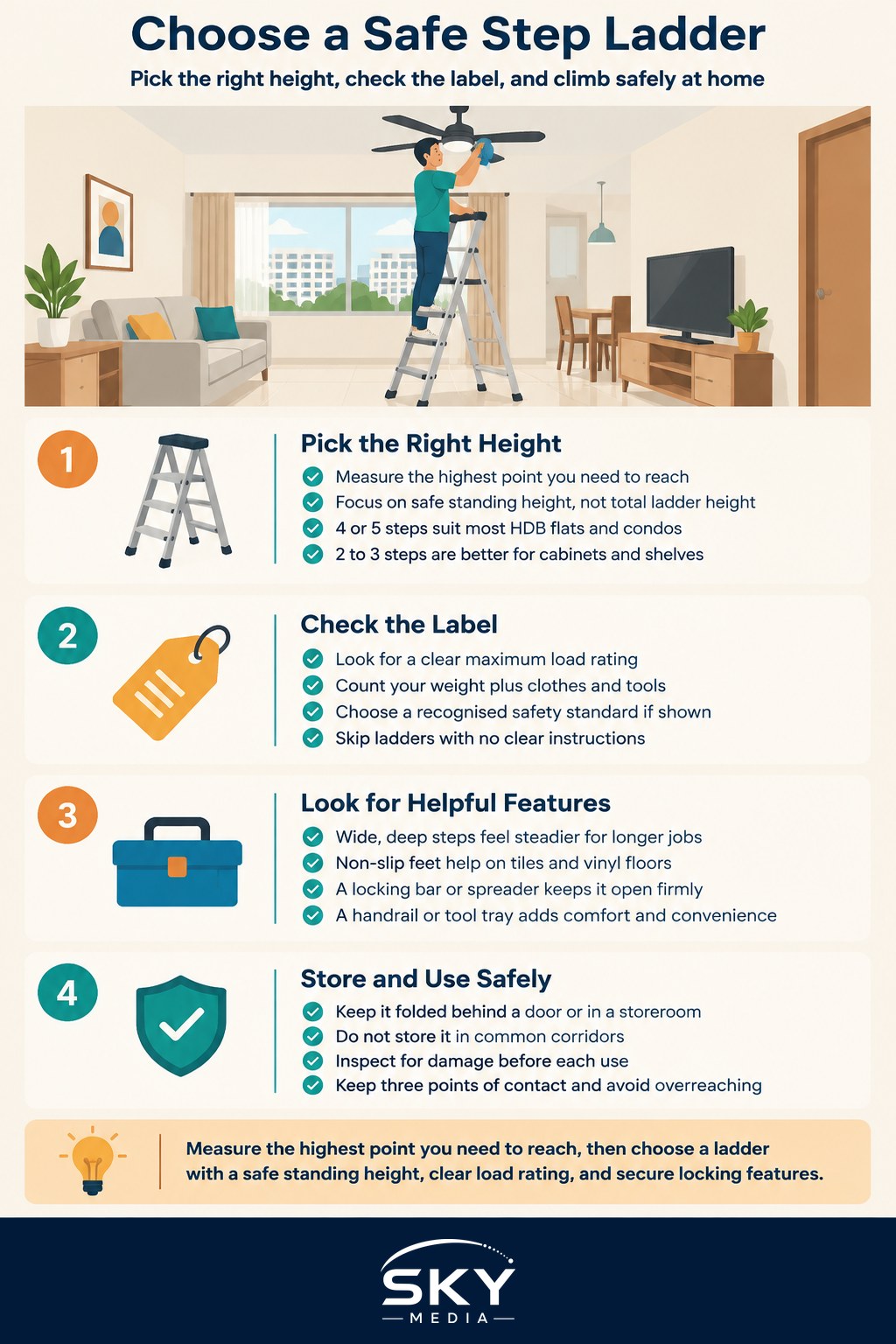
Work Out the Height You Actually Need
The most common mistake is buying a ladder that is too short, which tempts you to stand on the top step or overreach. The second is buying one that is too tall to store or carry around a small flat.
Start by measuring. Ceiling heights vary between flat types, ages of block and private developments, so take a tape measure to the highest point you regularly need to reach, usually the ceiling or a ceiling fan. Then think in terms of the highest step you can safely stand on, not the overall ladder height. Most manufacturers state a maximum standing height, and the top platform or top cap is usually not meant for standing.
As a rough guide, most adults can comfortably work with their hands somewhat above head height. So the step you stand on only needs to lift you high enough that the job is at chest to shoulder level, without stretching up on your toes.
| Ladder type | Typical uses at home | Pros | Watch out for |
|---|---|---|---|
| 2 to 3 step stool | Top kitchen cabinets, upper wardrobe shelves, mounting a clock | Light, easy to store, quick to grab | Too short for ceilings and lights in most rooms |
| 4 to 5 step household ladder | Changing light bulbs, cleaning fans, curtain tracks, aircon filter covers | Covers most ceiling jobs in a typical flat | Needs a storage spot, check maximum standing height |
| 6 step or taller | High-ceiling condo units, double-volume spaces, outdoor work | Reaches high fittings | Heavy, hard to manoeuvre in corridors and lifts |
| Multi-purpose or telescopic | Mixed jobs, staircases in landed homes | Versatile, adjustable | More moving parts, locks must be checked each time |
For most HDB flats and condos with standard ceilings, a 4 or 5 step household ladder is the practical sweet spot. If you only ever reach cabinets and shelves, a sturdy step stool may be all you need.
Read the Load Rating and Safety Markings
Every decent ladder carries a label stating its maximum load. This is the total weight the ladder is designed to take, including you, your clothes, and any tools or items you carry up. If you are carrying a heavy light fitting, a box or a bucket, include that in your calculation and pick a ladder with comfortable headroom above your total.
Other things to check on the label or packaging:
- A recognised standard. Many ladders sold in Singapore state compliance with an international standard, such as the European EN 131 series. This suggests the design has been tested, though it is not a substitute for checking the ladder yourself.
- Maximum standing height or the highest step you can safely use.
- Material. Aluminium is light and rust-resistant, which suits humid homes. Fibreglass is heavier but does not conduct electricity, which some people prefer for electrical work. Steel is strong but heavy.
- Usage warnings and pictograms, which show how to face the ladder and where not to stand.
If a ladder has no clear load rating or instructions, skip it.
Features That Make a Real Difference
When comparing models in the shop or online, look for:
- Wide, deep, anti-slip steps. Broad treads are much more comfortable for longer jobs like painting or curtain fitting.
- Non-slip rubber feet that grip smooth tiles and vinyl floors, common in Singapore homes.
- A locking spreader or safety bar that holds the ladder open firmly.
- A handrail or high guard rail at the top, which gives you something to hold and steadies you.
- A tool tray or hook so you are not climbing with your hands full.
- A slim folded profile and a reasonable weight, so you can carry it and store it easily.
Try opening and closing the ladder in the shop. If it feels flimsy, sticks, or pinches your fingers, keep looking.
Storing a Ladder in a Small Flat
Space is precious, so plan where the ladder lives before you buy. Common options:
- Behind a bedroom or storeroom door, folded flat.
- In the household shelter or storeroom, if there is space and it does not block the door.
- On wall hooks in a service yard, kept out of direct rain.
- Beside the fridge or a tall cabinet, if the gap is wide enough.
Do not store a ladder in the common corridor. Keeping items in shared corridors can create obstructions and fire safety issues, and your town council or condo management may have rules against it. Also keep it away from children’s play areas so it does not become a climbing toy.
Safe Habits Every Time You Climb
A good ladder only helps if you use it properly. Before and during every job:
- Inspect it first. Check for bent legs, cracked steps, missing feet and loose rivets. Do not use a damaged ladder.
- Set it on a firm, level, dry floor. Wipe up water first, especially in kitchens and bathrooms. Never put it on a rug, a mat or uneven bricks.
- Fully open and lock the spreaders before you climb.
- Face the ladder when climbing up and down, and keep three points of contact (two feet and a hand, or two hands and a foot) whenever possible.
- Keep your body between the side rails. Overreaching is a leading cause of falls. Climb down and move the ladder instead.
- Do not stand on the top cap or above the marked step.
- Wear proper footwear with grip, not socks or loose slippers.
- Have someone nearby for bigger jobs, to steady the ladder and pass up tools.
- Switch off power at the mains before touching light fittings or ceiling fans.
When you are working with tools up a ladder, take extra care. Our guide on how to use a power drill safely covers drilling into walls and ceilings, and how to choose a steam cleaner for home use is useful if you plan high-level cleaning.
When to Call a Professional Instead
Some jobs are not worth the risk. Call a qualified contractor or electrician for work on electrical wiring, installing heavy ceiling fittings, anything near windows or ledges where a fall could be serious, or when you feel unsteady, unwell or dizzy. Older family members in particular may be safer asking for help than climbing themselves. For anything involving windows, never lean out or work near an open window from a ladder.
With the right height, a clear load rating and a few good habits, a step ladder becomes one of the most useful tools in a Singapore home.
Explore more: How to Use a Power Drill Safely · How to Choose a Steam Cleaner for Home Use in Singapore