
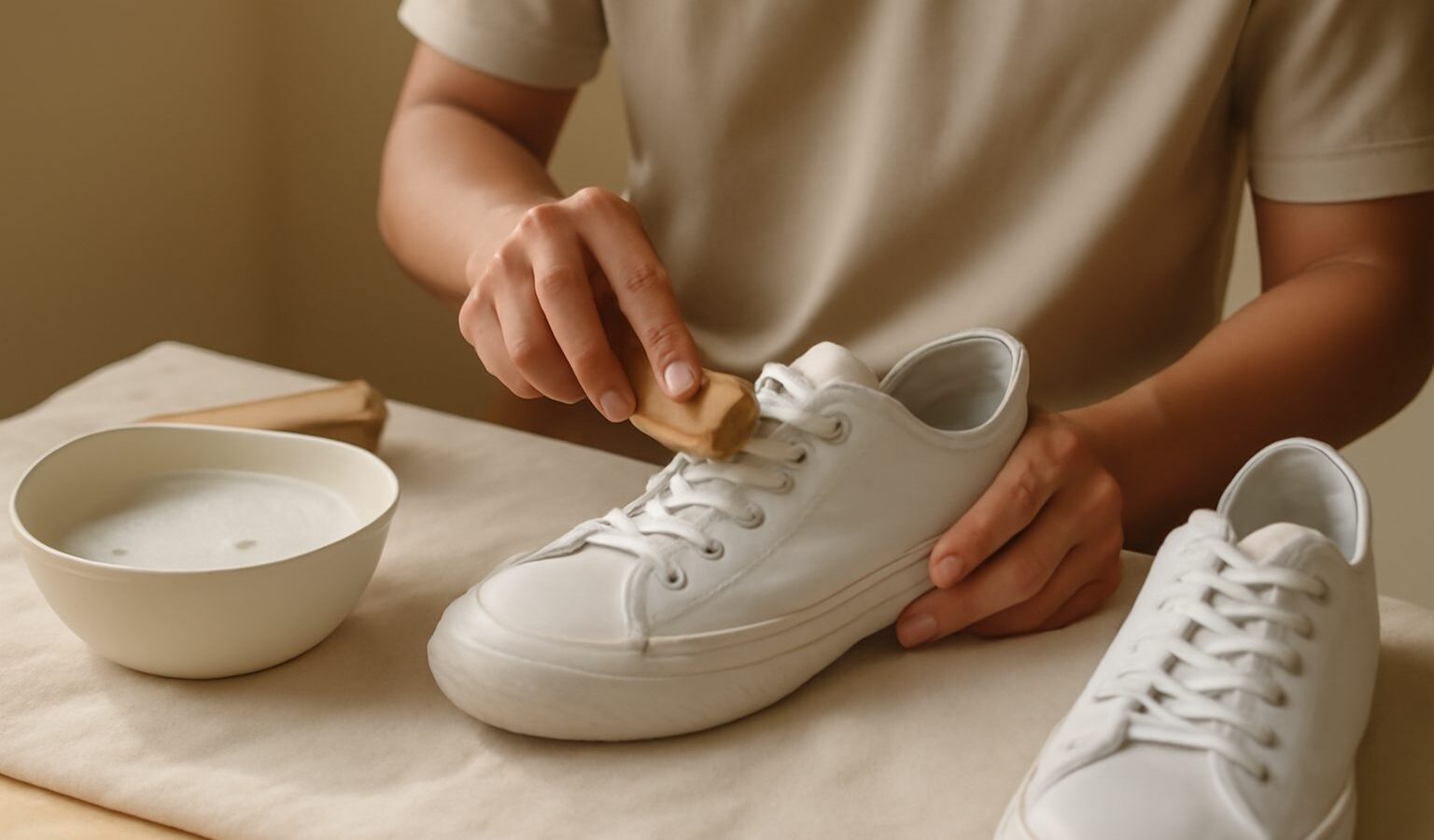
Learning how to clean white sneakers properly is about matching the method to the material, because leather, canvas, suede and knit each need a different touch. Get it right and you can lift dirt, whiten yellowed soles and keep a pair looking fresh for years. This guide gives you a safe, step-by-step process for each material, plus the prevention habits that matter most in our humid climate.
Before you start: identify the material and gather tools
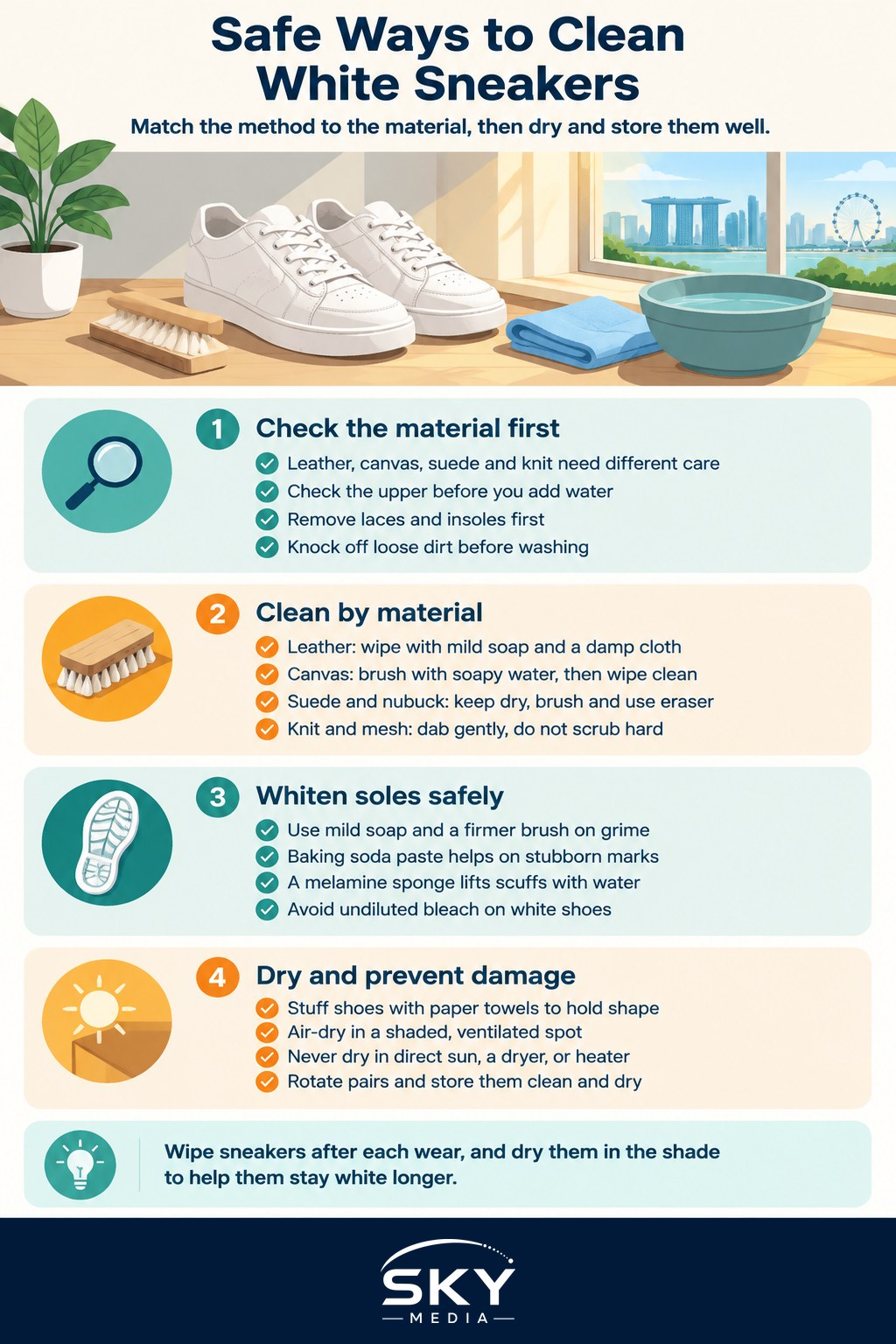
The fastest way to ruin sneakers is to use the wrong method, so check what the upper is made of first. Leather wipes clean and takes gentle scrubbing. Canvas tolerates water and mild agitation. Suede and nubuck hate water and need dry, specialist care. Knit and mesh are delicate and can stretch or fray if scrubbed hard.
You need very little: a soft brush (an old toothbrush works), a soft cloth or two, mild soap such as a little dish soap or a dedicated sneaker cleaner, a bowl of lukewarm water, and paper towels. For suede, add a suede brush and a suede eraser. Always remove the laces and insoles first, and knock off loose dirt before any water touches the shoe.
| Material | Water safe? | Cleaner | Method | Never do |
|---|---|---|---|---|
| Leather | Lightly | Mild soap, damp cloth | Wipe, gentle brush | Soak or machine wash |
| Canvas | Yes | Mild soap solution | Brush with soapy water | Bleach directly on fabric |
| Suede / nubuck | No | Suede eraser and brush | Dry brushing, spot lift | Wet or soak |
| Knit / mesh | Lightly | Mild soap, soft brush | Light dab and brush | Hard scrubbing |
Step-by-step by material
Leather sneakers. Wipe off surface dust. Mix a drop of mild soap into lukewarm water, dampen a cloth, and wipe the upper in small circles. For scuffs, use a soft brush gently. Wipe again with a clean damp cloth to remove soap, then dry with a towel. Once dry, a little leather conditioner keeps the upper from cracking under constant air-conditioning.
Canvas sneakers. Brush off loose dirt. Dip the brush in the mild soap solution and work the whole upper in gentle circles, going over stains a little more. Wipe the foam and lifted dirt away with a damp cloth. Rinse the brush and go over it once more with clean water so no soap dries into pale streaks. Canvas can take more water than leather, but avoid a full soak, which can loosen the glue.
Suede and nubuck. Keep these dry. Brush the whole shoe with a suede brush to lift dirt and revive the nap. For marks, rub gently with a suede eraser, then brush again. For a greasy spot, dab a tiny amount of cornflour, leave it to absorb overnight, then brush it out. Never use soap and water on suede, as it stains and stiffens.
Knit and mesh. Use the soap solution and a soft brush with a light touch, dabbing rather than scrubbing so you do not fray the weave. Wipe clean and press out excess water with a towel.
How to whiten soles and yellowed rubber
Yellowing on white rubber soles is oxidation, made worse by heat, sweat and sun. For general grime on the sole, scrub with the mild soap solution and a firmer brush; a little baking soda paste helps on stubborn marks. A clean melamine sponge, the kind sold as a “magic eraser”, lifts scuffs off rubber and midsoles very effectively with just water.
For genuine yellowing, keep it gentle and safe. Make a paste of baking soda and a small amount of water, work it over the yellowed rubber, and leave it briefly before rinsing. Repeat rather than reaching for harsh chemicals. Avoid pouring undiluted bleach onto shoes, which can actually turn white materials more yellow and damage fabric. If you use any brightening product, dilute it well, keep it off the fabric upper, test a hidden spot first, and rinse thoroughly.
Laces come up best on their own: soak white laces in warm soapy water, rub the dirty sections, rinse, and air-dry. Insoles usually just need a wipe with the mild soap solution and a full air-dry, and a light dusting of baking soda inside overnight absorbs the odour that our climate builds up quickly.
A word on the machine wash, which people always ask about. You can machine-wash sturdy canvas or fully synthetic trainers occasionally if you must: remove the laces and insoles, put the shoes in a laundry bag or pillowcase, add a couple of towels to cushion the drum, use cold water on a gentle cycle with a little mild detergent, and always air-dry afterwards. Never machine-wash leather, suede or delicate knit, and never tumble-dry any of them, as the heat and tumbling warp soles, crack uppers and dissolve the glue. When in doubt, clean by hand, which is gentler and gives you more control over stains.
Drying and prevention in a humid climate
How you dry matters as much as how you clean. Stuff shoes with paper towels to hold their shape and soak up moisture, then air-dry in a shaded, ventilated spot. Never dry white sneakers in direct sun, which yellows them, and never use a dryer or heater, which warps soles and cracks glue. In our humidity, allow more drying time and consider a moisture absorber nearby so damp sneakers do not grow mould.
Prevention saves the most effort:
- Spray a protector on new sneakers, suede especially, and refresh it after cleaning.
- Rotate pairs so each fully dries out between wears, which also slows yellowing.
- Wipe marks quickly, since fresh dirt lifts far more easily than dried-in stains.
- Store them clean and dry, away from direct sun, ideally with a shoe tree or paper inside.
Keep it simple and safe
You do not need harsh chemicals or expensive kits to keep white sneakers looking new. Match the method to the material, whiten rubber gently with baking soda or a melamine sponge, dry in the shade, and protect and rotate your pairs. A quick wipe after each wear beats a heavy clean once a month, and in our climate that light, regular habit is what keeps a white pair genuinely white.
Explore more: How to Style Sneakers with Any Outfit · Caring for Shoes, Bags and Leather · The Best Footwear for Singapore Weather