
Most of what we wear in Singapore’s heat goes straight into the washing machine, and that is how it should be. But a handful of garments, from wool suits to silk dresses, beaded wedding outfits and structured blazers, can be ruined by one careless wash. This guide to dry cleaning in Singapore is about that grey area: when paying a professional is genuinely worth it, when it is a waste of money, and how to pick a dry cleaner who will treat your clothes well.
If you are looking for step-by-step home washing methods, our guide on how to wash delicates, wool and silk covers that in detail. Here we focus on the decision and the service.
What Dry Cleaning Actually Does
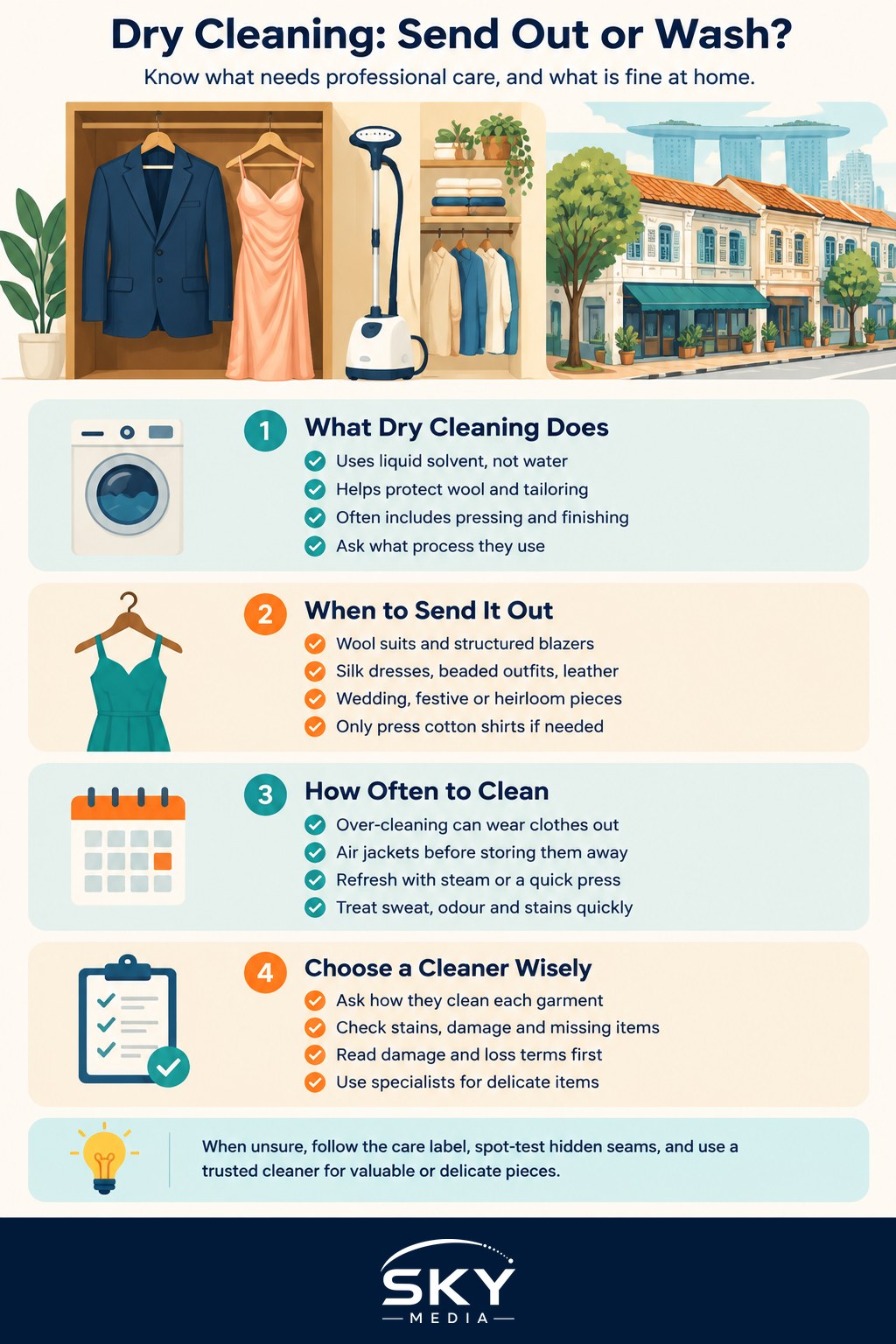
Despite the name, dry cleaning is not dry. Garments are cleaned in a liquid solvent instead of water, then pressed and finished. Because the solvent does not soak into fibres the way water does, it is less likely to shrink wool, distort tailoring, make dyes bleed or collapse the inner structure of a jacket.
Many cleaners also offer related services worth knowing about:
- Wet cleaning: a professional, controlled water-based process with gentle machines and special detergents. Some shops use it for garments that tolerate water but need careful handling.
- Pressing only: steam and press without cleaning, useful when a suit is clean but creased.
- Spot treatment: targeted stain removal before the main clean.
- Finishing: reshaping collars, lapels and pleats, which is often what makes a suit look sharp again.
The solvents and methods vary from shop to shop. If you have sensitive skin or prefer a particular process, ask the cleaner what they use.
Send It Out or Wash It at Home?
The care label is your starting point. A symbol of a circle means professional cleaning; a circle with a cross through it means no dry cleaning. A label reading “Dry Clean Only” is a firmer instruction than plain “Dry Clean”, which often just means it is the safest option. Beyond the label, use common sense about value, construction and how much risk you are willing to take.
| Garment or item | Usually send out | Usually fine at home |
|---|---|---|
| Wool or wool-blend suits and blazers | Yes, the structure and canvas can warp in water | Spot clean and air between wears |
| Silk dresses, blouses and ties | Yes for structured or printed pieces | Simple silk tops may hand wash if the label allows |
| Cotton and linen shirts | Only for pressing if you lack time | Yes, machine or hand wash |
| Beaded, sequinned or embroidered outfits | Yes, especially wedding and festive wear | Rarely worth the risk |
| Leather, suede and fur trims | Yes, to a specialist who handles leather | No |
| Down jackets and heavy coats | Often, for an occasional deep clean | Some can be machine washed if the label says so |
| Everyday polyester and knits | Rarely needed | Yes, gentle cycle and air dry |
A few rules of thumb help with the grey cases:
- Cost of replacement: if the garment would be expensive or impossible to replace, the cleaning fee is cheap insurance.
- Construction: anything with shoulder pads, interfacing, lining or tailored shape is more likely to need professional care.
- Stains: oil, wine, curry, makeup and ink are harder than they look. Taking a fresh stain to a cleaner quickly gives a better chance than scrubbing it yourself.
- Sentimental pieces: a wedding gown, cheongsam, baju kurung or sari you plan to keep for years is worth a cleaner who specialises in delicate or heirloom pieces.
How Often to Dry Clean in a Humid Climate
Over-cleaning wears garments out. Solvents and pressing are gentler than a washing machine, but they still stress fibres. For a work suit worn in air-conditioned offices, many people clean it only a few times a year and freshen it between wears.
Singapore’s humidity changes the picture a little. Sweat and moisture left in a garment can cause yellowing, odour and mould, especially if a jacket goes back into a dark wardrobe while still damp. Practical habits:
- Hang jackets on a broad, shaped hanger to air for a day before putting them away.
- Use a steamer or a quick press to refresh creases between cleans.
- Brush wool after wearing to lift dust.
- Send it out promptly if there is visible sweat marking, a lingering smell or a food stain. Do not wait for the stain to set.
- Clean seasonal or occasion wear before storing it for months, since invisible stains can oxidise and show up later.
How to Choose a Dry Cleaner You Can Trust
There are many dry cleaners across Singapore, from neighbourhood shops near HDB town centres and shopping malls to app-based laundry services with pickup and delivery. Quality varies more than price suggests. Here is what to check.
Ask about their process. A good cleaner will happily explain whether they dry clean, wet clean or simply launder a garment, and why. Be wary if every item seems to go through the same treatment regardless of fabric.
Inspect the counter check. When you drop off, a careful cleaner looks over the garment with you, notes existing stains, loose buttons or damage, and asks what caused any stain. This protects both of you if there is a dispute later.
Check their damage and loss policy. Ask what happens if an item is damaged or lost, and whether there is a cap on compensation. Read the terms on your receipt or the app before handing over anything valuable.
Look for specialists when it matters. Leather, suede, wedding gowns, heavily embellished pieces, curtains and carpets often need specialist handling. Not every neighbourhood shop is set up for them, and a good cleaner will tell you so rather than risk it.
Read recent reviews, but read them carefully. Look for comments about how a shop handled problems, not just how fast it was.
Compare pickup and delivery services. Online and app-based services are convenient for busy households. Check their turnaround times, how they label and track items, whether they separate dry cleaning from regular laundry, and their minimum order or delivery charges.
Prices differ widely by garment, shop and service level, so ask for a quote upfront and compare a few options rather than assuming one price is typical.
Tips for Drop-Off and Collection
Small habits make a big difference to the result.
- Empty all pockets. Pens, lipstick and tissues can damage a whole load.
- Point out every stain. Say what it is, if you know, and how long it has been there.
- Mention any previous cleaning or home treatments, since some stain removers react badly with solvents.
- Bring matching pieces together. Clean both parts of a suit at the same time so the colour fades evenly.
- Check items at collection. Look at seams, buttons and stains at the counter, not days later at home.
- Remove plastic covers once home. Plastic traps humidity, so store garments in breathable cotton covers instead.
- Collect on time. Many shops have a policy for items left uncollected for a long period, so ask about it.
Home Alternatives That Reduce Trips
You can cut down on professional cleaning without risking your best clothes. A handheld garment steamer refreshes jackets and removes odours. A fabric brush keeps wool looking neat. For bedding, curtains and bulky items, many can be washed at home or at a self-service laundromat if the label allows, and our guide to washing and caring for pillows and duvets explains how.
When in doubt, follow the care label, test any product on a hidden seam first, and leave genuinely valuable or tricky pieces to a professional. A good dry cleaner is a long-term relationship, so once you find one who handles your clothes well, it pays to stick with them.
Explore more: How to Wash Delicates, Wool and Silk · How to Wash and Care for Pillows and Duvets
Frequently Asked Questions
How long does dry cleaning usually take in Singapore? It varies by shop and service level, but regular turnaround is often a few days, while some outlets offer express service for an extra charge. Delicate pieces, beading and stain treatment can take longer. Ask for a collection date when you drop off, especially before an event.
Can a dry cleaner remove old, set-in stains? Sometimes, but not always. Fresh stains come out far more easily, and heat, home scrubbing or ironing can set them permanently. Tell the cleaner what the stain is and how long it has been there, and ask them to explain honestly what result to expect.
What can I do if the dry cleaner damages my garment? Raise it straight away, ideally at the counter or in writing, with your receipt and photos. Check the shop’s damage and loss policy on the receipt or app. If you cannot settle it, the Consumers Association of Singapore (CASE) offers guidance on consumer disputes.
Why does my clothing smell after dry cleaning, and is it safe for sensitive skin? A faint solvent smell can linger, especially if the garment was bagged damp. Air it on a hanger in a ventilated spot for a day before wearing or storing it. If you or your family have sensitive skin, ask the cleaner what process they use and consider wet cleaning.
Should I dry clean a second-hand or rented outfit before wearing it? It is a good idea for pre-loved suits, dresses and formalwear, since you do not know how they were stored or cleaned. A clean also removes musty smells. Check the care label first, and tell the cleaner it is second-hand so they can look out for hidden marks.