
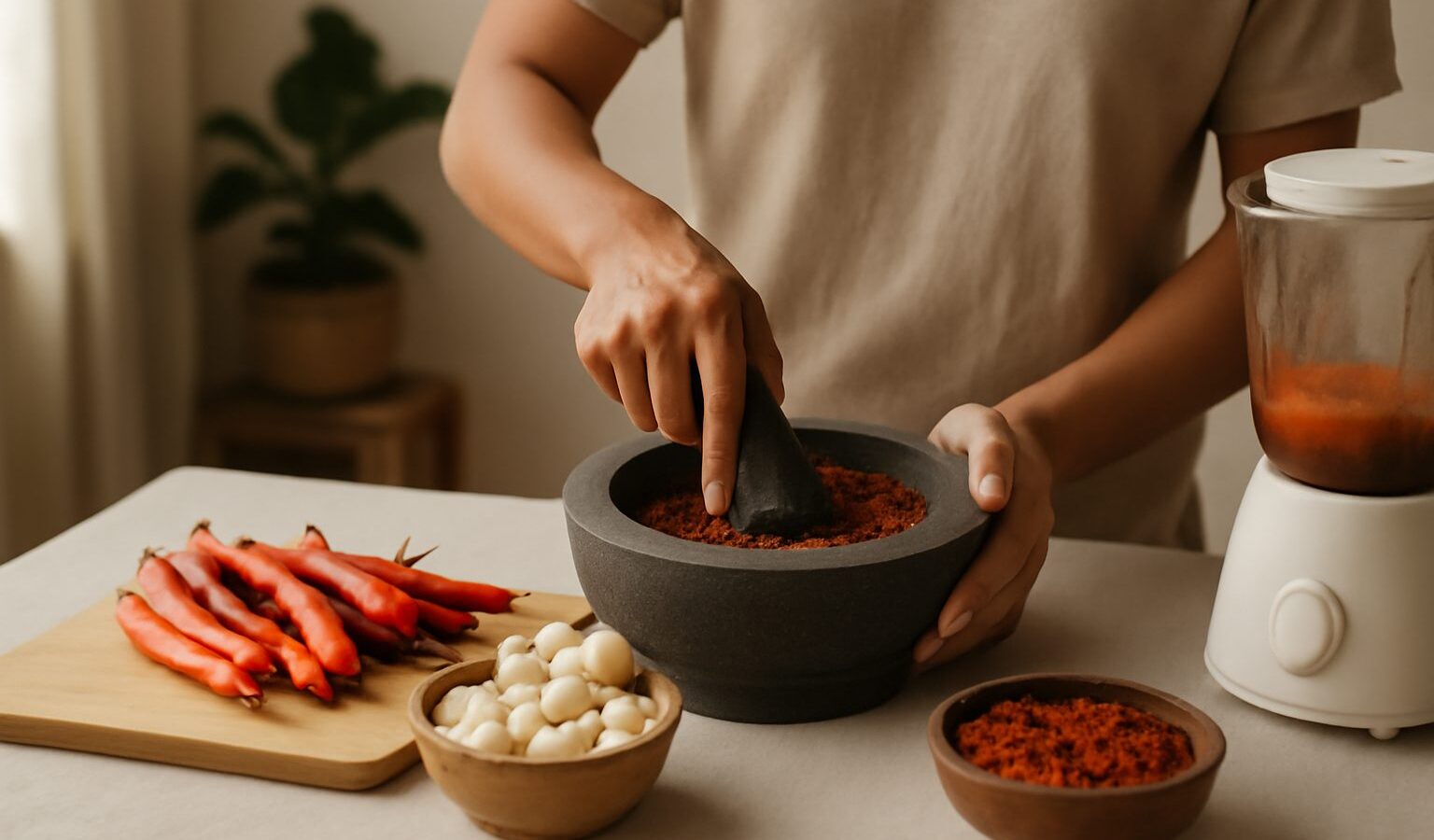
A jar of homemade sambal in Singapore quietly upgrades everything, from plain rice and fried eggs to grilled fish and noodles. It is also one of the easiest local pastes to master, because there is no delicate technique to fear, just chillies, a few aromatics, and the patience to fry them slowly until they turn glossy and deep red. Once you have made your own sambal a couple of times, you will stop reaching for the bottled kind, and you will start keeping a small jar in the fridge for whenever a meal needs a lift. This guide walks through the classic sambal tumis method step by step.
What Sambal Actually Is
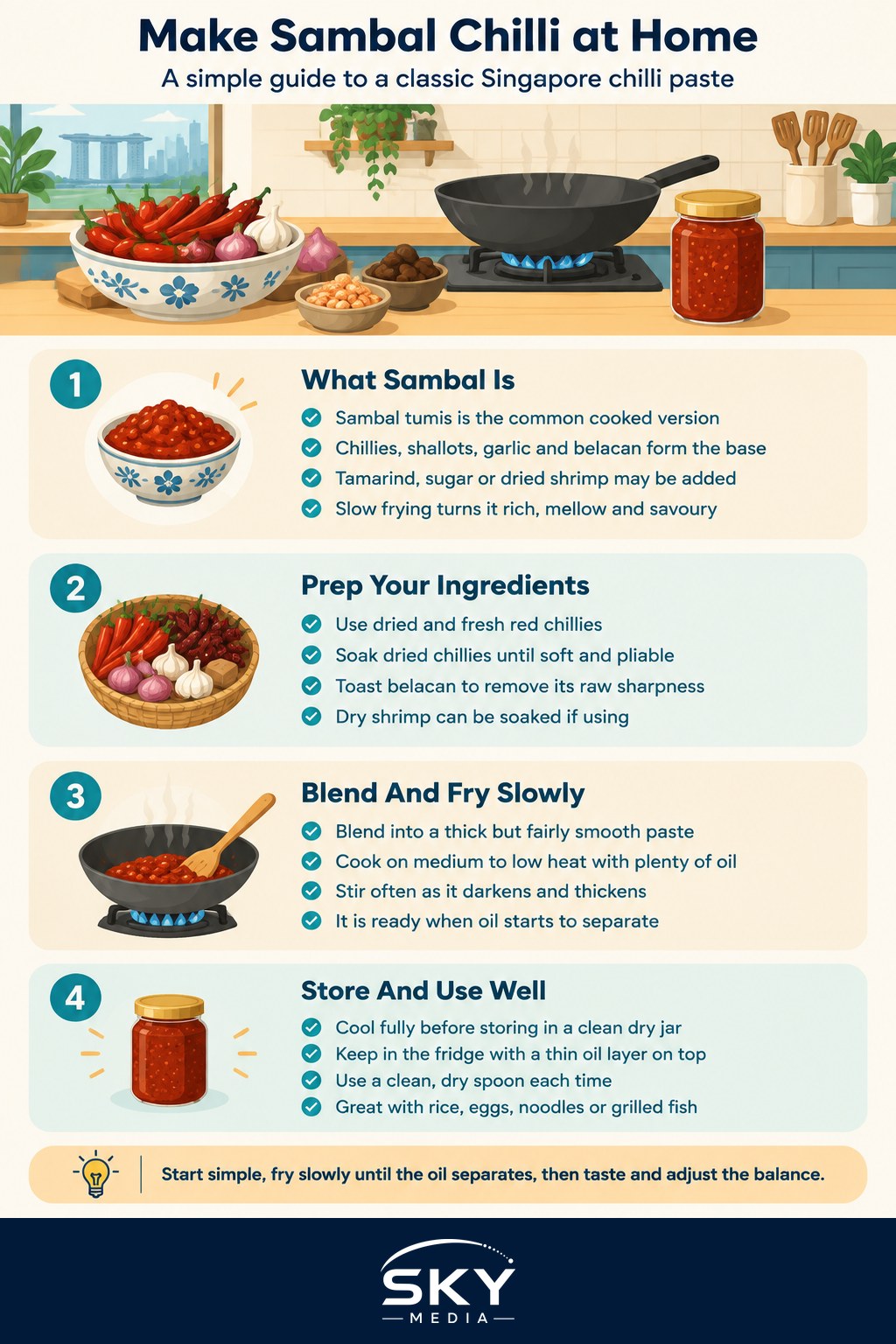
Sambal is a broad family rather than a single recipe, but the version most Singaporeans keep on hand is sambal tumis, a cooked chilli paste fried down with aromatics until rich and jammy. At its heart are chillies for heat and colour, shallots and garlic for sweetness and body, and belacan for that unmistakable savoury, funky depth. Some versions add tamarind for tang, sugar for balance, and dried shrimp for extra umami.
The magic is in the frying. Raw blended chilli tastes sharp and one-note, but slowly cooked chilli paste becomes mellow, complex and deeply savoury as the sugars caramelise and the oil separates. Understanding this is the whole game: you are not just mixing chilli, you are cooking it patiently until it transforms. Everything else is seasoning to taste.
Gathering and Preparing Your Ingredients
For a small jar, you will want a mix of dried and fresh red chillies, a handful of shallots, a few garlic cloves, and a small piece of belacan. Optional extras that make a difference are a spoon of tamarind pulp, a little sugar, and some soaked dried shrimp for depth. All of this is easy to find: the wet market has the freshest shallots and chillies, while any supermarket stocks dried chillies, belacan and tamarind on the shelves.
Preparation is simple but worth doing right. Soak the dried chillies in hot water until soft and pliable, usually around 15 to 20 minutes, which softens their heat and helps them blend. If you want to control the spice level, snip the chillies and shake out some seeds. Soak the dried shrimp too if you are using them. Toast the belacan briefly in a dry pan or wrapped in foil until it smells strong and nutty, which cooks off its raw sharpness.
For heat control, dried chillies give colour and a rounded warmth, while fresh red chillies add brightness. If you are cautious about spice, lean on more dried chillies and fewer fresh ones, and remember you can always add heat later but cannot easily take it away.
Blending and Frying the Rempah
Blend the soaked chillies, shallots, garlic, toasted belacan and dried shrimp into a thick paste, using a splash of oil or a little chilli soaking water to help the blades. A stick blender or small countertop blender is perfect for a compact kitchen, and you want a paste that is fairly smooth but still has body.
Now comes the important part. Heat a generous glug of oil in a pan or wok, add the paste, and fry it on medium to low heat, stirring often. This slow fry, known as tumis, is what develops the flavour. Over 15 to 20 minutes the paste will darken, thicken and become fragrant, and you will see oil starting to separate and pool at the edges, which is the classic sign that your sambal is ready. Keep the heat moderate so it does not catch and turn bitter, and stir the bottom regularly.
Near the end, stir in tamarind for tang, a little sugar to balance, and salt to taste. Let it cook a couple more minutes so the flavours meld. Taste and adjust until it hits that moreish balance of spicy, savoury, sweet and sour.
Balancing, Storing and Using Your Sambal
A great sambal is all about balance, so taste as you go and nudge it in the right direction. Here is a quick troubleshooting guide:
| Problem | Likely cause | Easy fix |
|---|---|---|
| Too spicy | Too many fresh chillies or seeds | Add sugar, oil, or more fried shallot |
| Tastes raw or sharp | Not fried long enough | Keep frying until oil separates |
| Bitter | Paste scorched on high heat | Lower heat next time, do not rush |
| Flat and dull | Needs salt, tamarind or belacan | Add a little acid and seasoning |
Because sambal is cooked down in oil, it keeps far longer than raw chilli. Cool it fully, then store it in a clean, dry jar in the fridge with a thin layer of oil on top to help seal it. In our humid climate, always use a clean, dry spoon to avoid introducing water or crumbs that cause spoilage, and give it a sniff before each use. Made this way it comfortably lasts a couple of weeks, and you can freeze portions in an ice-cube tray for longer.
Use your sambal generously: stir it into fried rice or noodles, spoon it over eggs, spread it on grilled fish, or serve it alongside nasi lemak. A note on allergens, since belacan and dried shrimp are shellfish, so tell anyone with a shellfish allergy before you share the jar. You can make a shrimp-free version by leaving out the belacan and dried shrimp, which loses some depth but is still tasty.
A Simple Sambal to Start With
If all of this feels like a lot, start with the simplest possible version and build confidence. Blend soaked dried chillies, shallots and garlic with a little toasted belacan, fry it slowly in oil until it darkens and the oil separates, then season with salt and a pinch of sugar. That alone will already taste better than most jars from the shelf.
Do not worry if your first batch is not perfect. Sambal is endlessly adjustable, and every time you make it you will get a feel for the heat, the frying and the balance that suits your table. A homemade jar in the fridge is one of the most satisfying small wins in local home cooking.
Explore more
Sambal shares its base with many local dishes, so try how to make a rempah spice paste next, and explore more chilli condiments in how to make your own chilli oil and sauces. Put your sambal to work in how to make laksa from scratch or alongside how to cook hawker favourites at home.
Frequently Asked Questions
What is the difference between sambal tumis and raw sambal belacan? Sambal tumis is cooked slowly in oil until mellow and jammy, so it keeps longer. Sambal belacan is usually pounded fresh with chilli, belacan and lime, tastes sharper and is best eaten soon after making. Both suit rice, but the cooked version suits cooking and storing.
Do I need to sterilise the jar before storing sambal? A clean, completely dry jar matters most. Wash it well, rinse with boiling water if you like, and let it dry fully, since moisture speeds spoilage. Spoon cooled sambal in, add a thin layer of oil on top and always use a clean, dry spoon.
How do I make sambal less oily? Oil is part of the cooking and preserving process, so use less to start and pour off or blot some at the end. Do not cut it too far, because the paste needs oil to fry properly and keep. Stir the remaining oil back in before serving.
Can I make a milder sambal for children? Yes. Use mostly dried chillies with the seeds removed and fewer fresh chillies, and add a little more sugar and tomato or tamarind for sweetness and tang. Keep a separate spicier jar for adults, and taste it first, since heat tolerance varies.
Can I use a store-bought chilli paste as a shortcut? Yes, fry it gently in oil with fresh shallots and garlic to deepen the flavour, then season to taste. Check the salt and sugar in the paste first. It will not match a full homemade version, but it is a handy starting point for busy days.
Further reading: A Guide to Chilli Varieties · How to Make Chilli Crab at Home · How to Make Kaya at Home From Scratch