
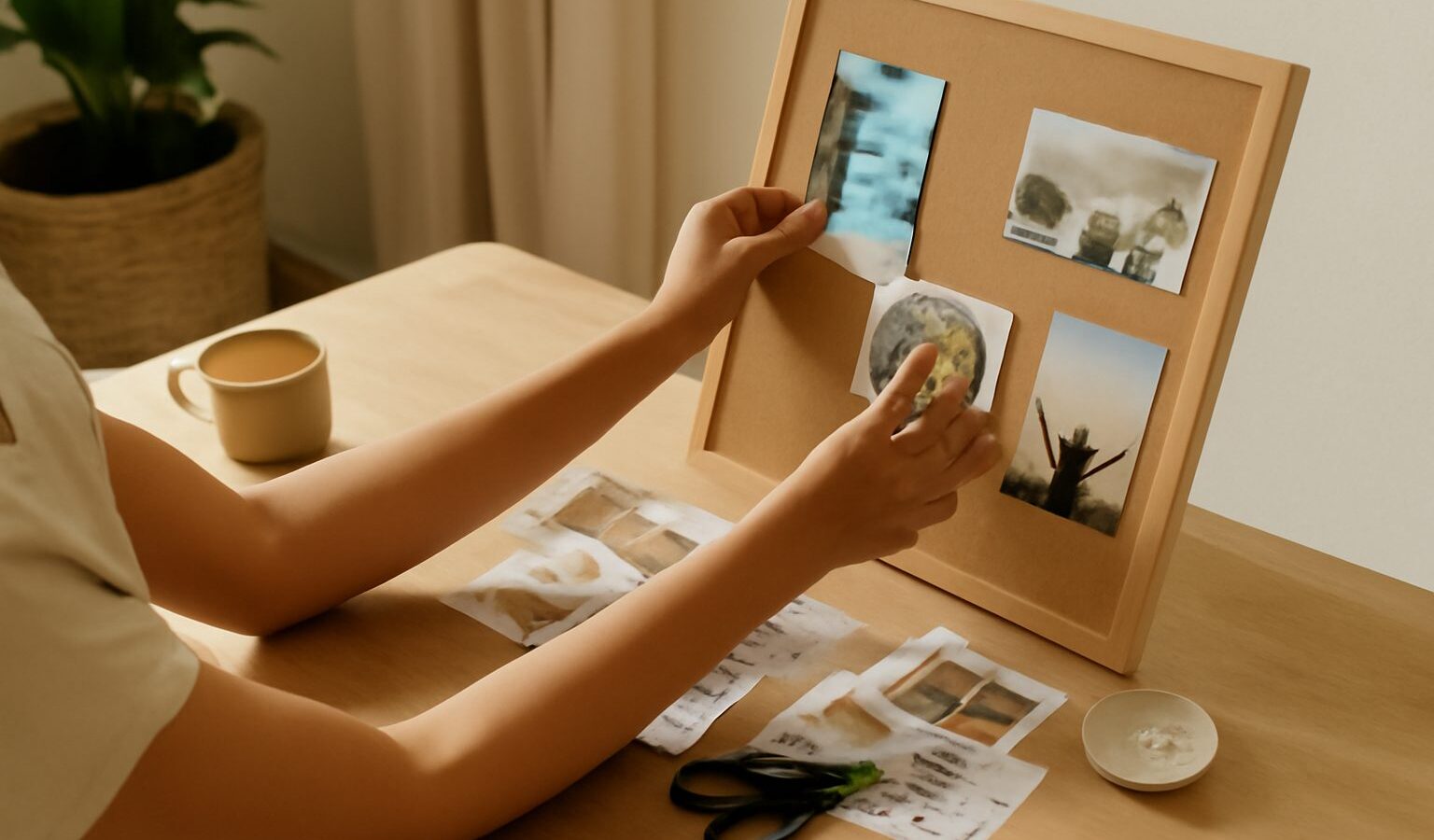
A vision board has a reputation for being a bit woo, a collage you make and then stare at hoping the universe delivers. Done that way, it does nothing. But learning how to create a vision board properly turns it into something genuinely useful: a clear, visual reminder of what you are working towards that keeps your goals in front of you and quietly steers your daily choices.
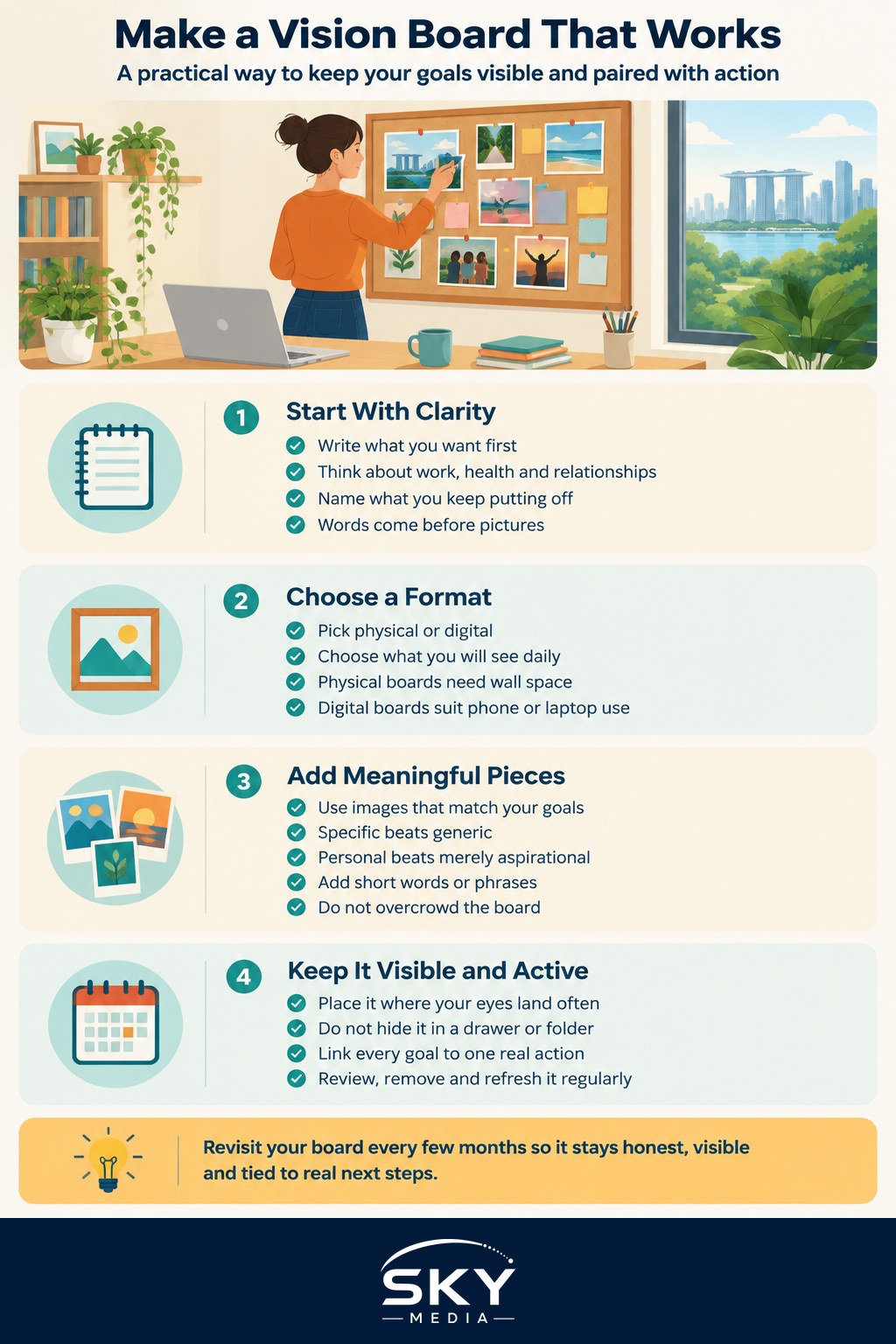
Get Clear Before You Get Crafty
The most common mistake is jumping straight to cutting out pretty pictures. A board full of random luxury images is just a mood board for envy. A vision board that works starts with clarity about what you actually want.
Before any images, spend time answering a few honest questions:
- What do I want more of in my life over the next year or two?
- What would a good version of my work, health and relationships look like?
- What have I been putting off that genuinely matters to me?
Write these down first. The words come before the pictures. If you skip this step, you end up decorating with other people’s dreams rather than clarifying your own.
Reflection prompt: If nothing changed and nothing were added, what would you most regret not pursuing?
Choose Physical or Digital
Vision boards come in two practical forms, and neither is better. Choose the one you will actually see every day.
| Type | Best for | Watch out for |
|---|---|---|
| Physical board | People who like making things by hand and have wall space | Ends up in a drawer where you never see it |
| Digital board | People on their phone or laptop all day | Buried in a folder you never open |
A physical board, corkboard, card or a frame, feels tactile and lives on your wall. A digital one, your phone lock screen, a simple slide, a private board online, travels everywhere with you. The deciding factor is visibility. The best vision board is the one that stays in your line of sight, not the prettiest one you hide away.
Gather Images and Words That Mean Something
Now you can collect the visual pieces, guided by the words you wrote earlier. For each goal or area, find an image, a phrase or a symbol that genuinely represents it to you.
Keep these principles in mind:
- Specific beats generic. A photo of the actual course you want to take beats a stock image of a graduation.
- Personal beats aspirational. A picture that stirs something in you works better than one that just looks impressive.
- Words help. A short phrase or a single word can anchor a goal more clearly than any picture.
Do not overcrowd it. A handful of meaningful images beats a wall papered edge to edge. If everything is on the board, nothing stands out, and the whole thing becomes visual noise you learn to ignore.
Keep It Visible, Or It Does Nothing
This is the step almost everyone gets wrong. They make a lovely board, feel a burst of motivation, and then put it somewhere they never look. Out of sight, it stops working within a week.
A vision board earns its value through repeated, casual exposure. It should sit where your eyes naturally land many times a day:
- Beside your desk or on the wall you face while working.
- As your phone or laptop wallpaper.
- On the wardrobe door you open every morning.
- Near the kettle or the bathroom mirror.
You are not meant to stare at it and meditate. You just want it in the background of daily life, quietly reminding your brain what you are aiming at, so your small choices drift a little more towards those goals.
Pair It With Action, Always
Here is the honest part. A vision board does not make anything happen on its own. It is a reminder, not a magic trick. Its real power is keeping your goals front of mind so you are more likely to act on them. The action is what changes your life.
So for every image on your board, ask a grounding question: what is the next real step towards this? Then attach at least one concrete action to each goal.
- A board image of a fitter you needs a booked class or a set walking time.
- A board image of a new skill needs a course signed up for and time blocked.
- A board image of a trip needs a savings amount set aside each month.
The board keeps the destination visible. Your calendar and your habits do the driving. Treat the vision board as the map and your daily actions as the walking, and the two together become genuinely powerful.
Reflection prompt: Looking at your board, which goal has no next step attached to it yet?
Review and Refresh It
Your goals will shift, and your vision board should too. A board you made two years ago may show a life you have outgrown or already reached. Revisit it every few months.
When you review, do three simple things:
- Celebrate what has happened. Take down or tick off anything you have achieved.
- Remove anything that no longer matters to you, without guilt.
- Add what has become important since you last looked.
This keeps the board alive and honest rather than a dusty relic of an old version of you. Pairing the refresh with a broader life review or yearly reflection makes both richer, because your vision board becomes the visual layer on top of your deeper thinking.
A Practical Tool, Not a Wish
Learning how to create a vision board well strips away the magical thinking and leaves something genuinely helpful. You clarify what you want in words. You gather images that mean something. You keep it visible. And crucially, you pair every goal with real action.
Done that way, a vision board stops being a hopeful collage and becomes a daily nudge towards the life you are actually building. Spend an evening this week making one, put it where you will see it, and then go and take the first small step it points you towards.
Explore more: How to Find Your Why in Singapore · Finding Your Personal Values · How to Do a Personal Yearly Review
Frequently Asked Questions
Do vision boards actually work? A vision board is not magic, but it can help by keeping your goals visible and nudging your daily choices. Its value depends on pairing the images with concrete actions. Without a plan, it is just a collage; with one, it becomes a useful reminder.
Can couples or families make a vision board together? Yes, it can be a good way to talk about shared goals such as home, travel or family time. Each person can add their own section and agree on joint ones. Keep it respectful and balanced so no one’s dreams are overlooked.
How can I make a vision board with my children? Keep it fun and simple. Ask what they want to learn, try or be proud of, and let them pick pictures and words. Focus on effort and curiosity rather than achievements, and display it where they can see it.
How many goals should a vision board have? A handful of meaningful goals works best, perhaps in a few life areas such as health, work and relationships. Too many images dilute focus. Choose what matters most for the next year or two, and leave room to refresh it.
When is the best time to make a vision board? Any time you feel ready, though many people like the start of a new year, a birthday or after a big life change. What matters is that you have thought through what you want first. Set a regular review date to refresh it.
Further reading: How to Make a Career Vision Board