

You put in the late hours, cracked the problem, and shaped the idea. Then, in a meeting, a colleague presents it as their own and soaks up the praise. It is one of the most deflating moments in office life. Credit stealing at work can leave you feeling angry, undervalued, and unsure how to respond without looking petty. The good news is there are calm, professional ways to protect your contribution and set the record straight. This guide walks through how to handle it with your dignity and your working relationships intact.
The aim is not revenge or a public showdown. It is to make sure your genuine work is seen, while you stay the kind of professional people respect and want to work with.
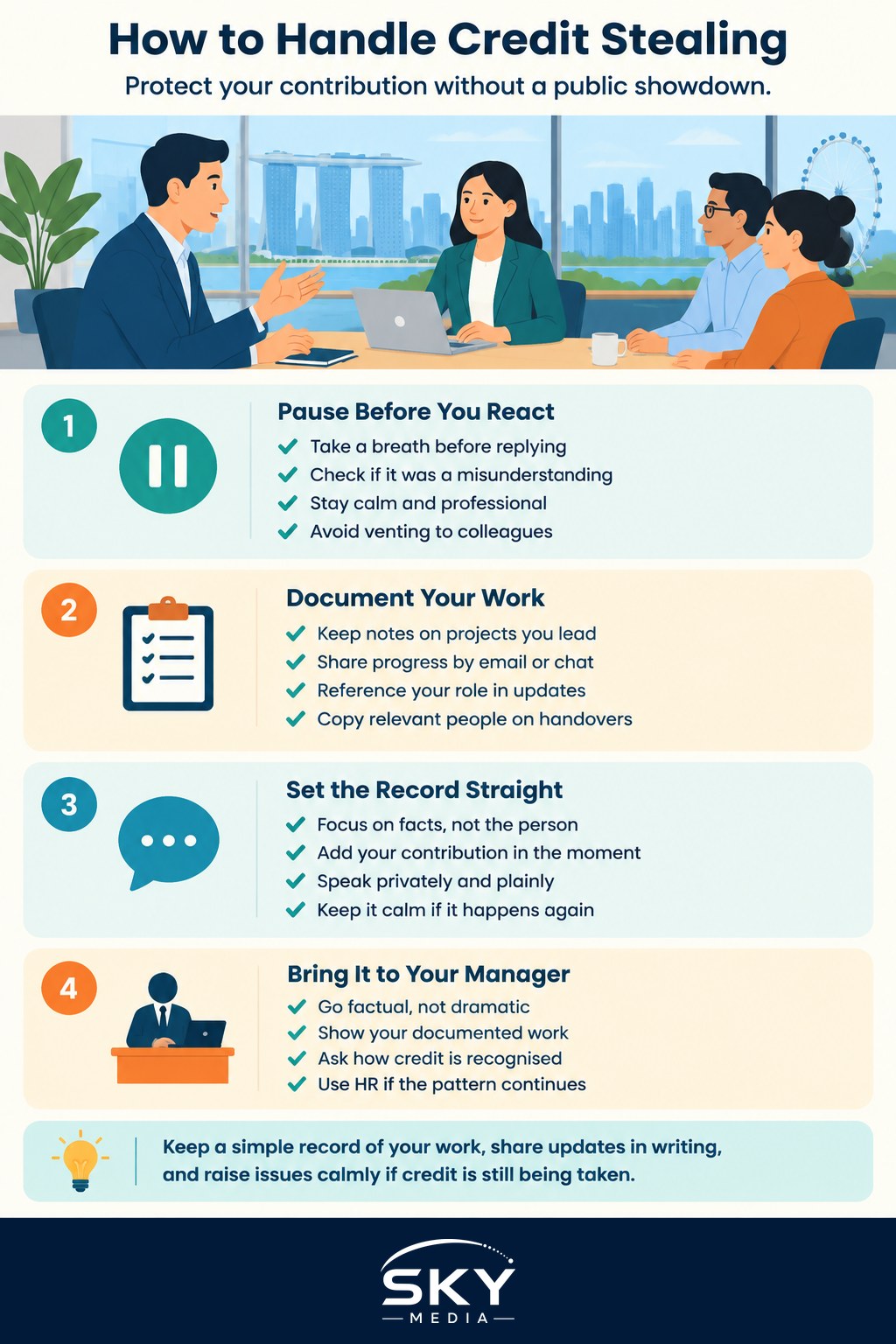
Pause Before You React
The first thing to do when someone takes your credit is nothing dramatic. A heated reaction in the moment can make you look insecure and hand the other person the higher ground. Take a breath and consider what actually happened before you respond.
Sometimes what feels like theft is a misunderstanding. In fast moving teams, credit can genuinely get muddled, or a manager may simply not know who did what. Other times it is careless rather than malicious. And occasionally it is deliberate. Your response can be firmer as you move along that spectrum, but starting from calm curiosity rather than accusation keeps you in a strong position.
While you gather your thoughts, avoid venting about the person to colleagues, which can slide into gossip and damage your own standing. Keeping your composure is part of handling difficult personalities without becoming difficult yourself.
Build the Habit of Documenting Your Work
The single best protection against credit stealing at work is a quiet, ongoing record of what you actually do. This is not about being paranoid. It is about good professional practice that pays off in appraisals, promotions, and moments like these.
- Keep notes on the projects you lead and the contributions you make.
- Share progress updates by email or in team channels, so your involvement is visible in writing.
- Use group settings to naturally reference your part, for example by giving a status update on the piece you own.
- Copy relevant people when you hand over work, so the trail is clear.
When your contributions are already documented and visible along the way, it becomes very hard for anyone to quietly claim them later. Keeping a brag document and getting comfortable with giving a status update at work turns your everyday communication into a natural, honest record of your value.
Set the Record Straight Gracefully
If credit has been taken, you can correct it without confrontation. The key is to focus on the facts of the work rather than attacking the person, which keeps you constructive and avoids any hint of a personal feud.
In the moment, you can add to a conversation by building on the idea and naturally referencing your role, for example noting the approach you took when you developed it. Afterwards, a calm private word with the colleague can help. Assume good intent, describe what happened plainly, and explain that you would like your contribution acknowledged. Many people, faced with a composed and factual conversation, will correct course.
If it keeps happening with the same person, prepare for a slightly firmer chat and keep it professional. Reviewing how to approach difficult conversations at work helps you go in clear and steady rather than emotional.
When to Involve Your Manager
If a private approach does not work, or the pattern is affecting your recognition and growth, it is reasonable to raise it with your manager. Do this factually and without drama. Rather than accusing anyone, you can share your documented contributions and ask for guidance on how credit is recognised on the team.
This is where all that quiet documentation proves its worth, because you can point to a clear record rather than relying on your word against theirs. Frame the conversation around your development and fair recognition, not around punishing a colleague. Keeping it constructive protects your reputation and makes it easier for your manager to help. If the issue is broader and touches on consistently unfair treatment, your HR department is the appropriate next channel, and you can also look at how to handle being passed over for promotion when recognition is not landing where it should.
A Realistic Wrap Up
Credit stealing at work is genuinely frustrating, but you do not have to choose between silent resentment and a messy confrontation. Stay calm, document your work as a matter of habit, and correct the record gracefully by focusing on facts rather than blame. If it persists, bring it to your manager with a clear record in hand. Over time, the professionals who quietly and consistently make their real contributions visible are the ones who earn lasting trust and recognition, which is worth far more than winning any single moment of applause.
Frequently Asked Questions
What if my colleague took credit by mistake rather than on purpose? Credit can get muddled in fast-moving teams, and a manager may not know who did what. Start from calm curiosity instead of accusation. A private, factual word, assuming good intent, is often enough for people to correct course.
How do I claim credit in a meeting without sounding boastful? Build on the idea and naturally reference your role, for example by describing the approach you took or giving a status update on the part you own. Sticking to the facts of the work keeps it constructive rather than personal.
What records should I keep to prove my contribution? Keep notes on projects you lead, share progress updates by email or team channels, and copy relevant people when you hand over work. A running list of your achievements also helps in appraisals, promotions and moments like this.
When should I take credit-stealing to my manager or HR? Go to your manager if a private chat does not work or the pattern is affecting your recognition and growth. Share your documented contributions factually and ask how credit is recognised on the team. HR is the next channel for broader unfair treatment.
Should I vent to colleagues about the person who took my credit? Avoid it. Venting can slide into gossip and damage your own standing. Process your feelings with someone outside the workplace if you need to, and keep your composure at work so you stay in the stronger position.
Further reading: How to Deal With Favouritism at Work · How to Deal With a Bad Boss