

Few things sting quite like feeling that a colleague gets the good projects, the praise, and the promotions while your own effort goes unnoticed. Favouritism at work is a common frustration in Singapore offices, and it can quietly chip away at your motivation if you let it. The good news is that you have more constructive options than either stewing in silence or blowing up in anger. This guide walks through calm, professional ways to understand what is happening and to respond in a way that protects your standing and your peace of mind.
Before anything else, take a breath. What looks like favouritism is sometimes a manager rewarding results you cannot fully see, or a colleague who simply asks for opportunities more often. That does not make your feelings wrong, but it does mean it pays to look closely before you act.
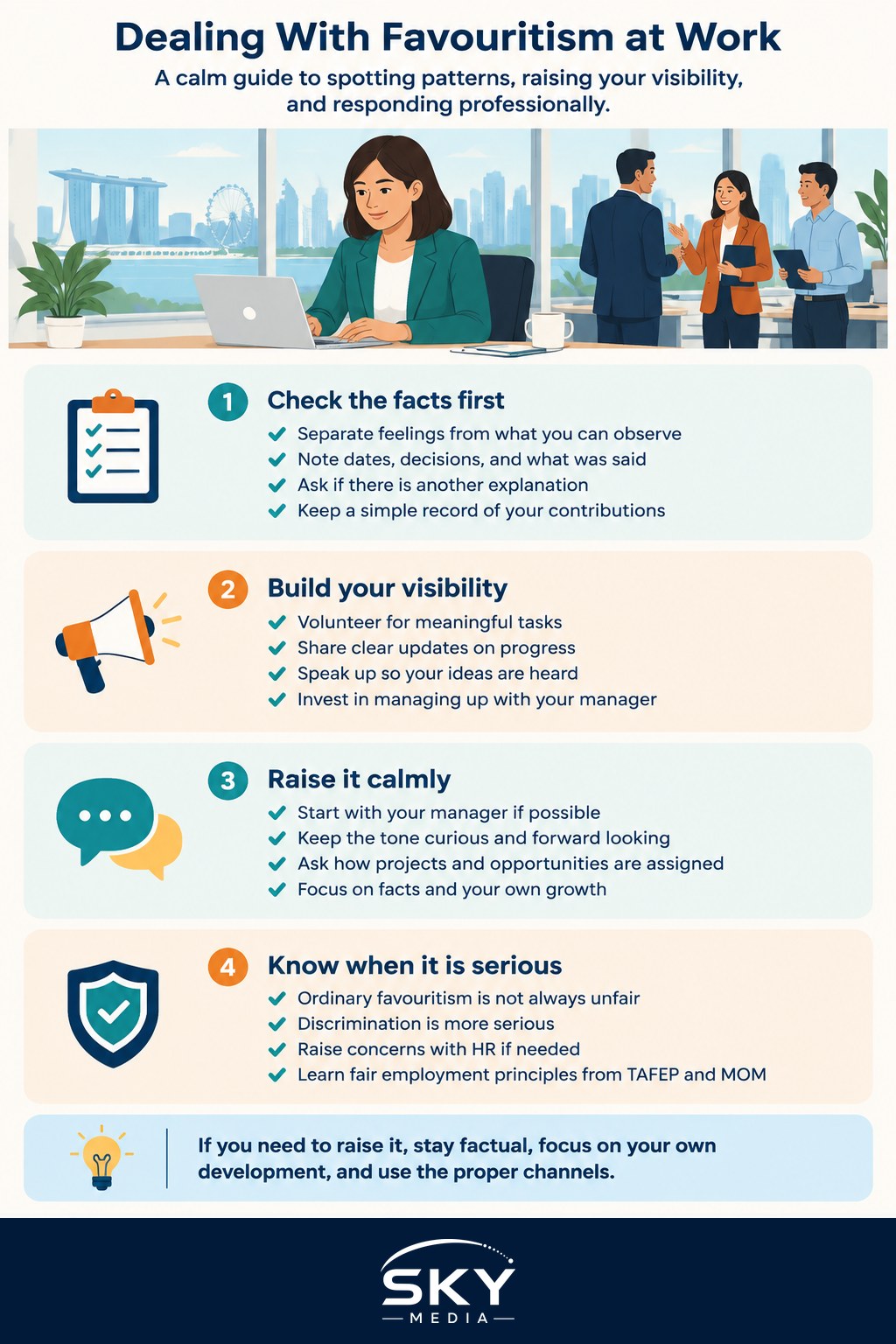
Check the Facts Before You React
Start by separating what you feel from what you can observe. Feelings are valid, but they are not evidence. Ask yourself what specifically points to favouritism at work, and whether there might be another explanation.
- Is the favoured colleague genuinely delivering strong results, or being handed easy wins?
- Are opportunities offered openly, or quietly given to one person again and again?
- Have you actually asked for the projects, visibility, or stretch tasks you want?
It helps to keep a simple, factual record. Note dates, decisions, and what was said, sticking to observable events rather than assumptions about anyone’s motives. This is not about building a case against a person. It is about seeing the pattern clearly and, if you ever do raise it, being able to speak from facts rather than emotion. Keeping a light brag document of your own contributions also makes it far easier to show your value when it matters.
Focus on Raising Your Own Visibility
One of the most powerful responses to favouritism is to make your own good work harder to overlook. This is not about playing politics or self promotion for its own sake. It is about making sure the people who make decisions actually know what you do.
Practical steps include volunteering for meaningful tasks, sharing clear updates on your progress, and speaking up in meetings so your ideas are heard. If you tend to keep your head down and assume good work speaks for itself, that assumption may be part of the problem. Learning to build visibility at work and to speak up in meetings can shift how you are seen over time. A strong, professional relationship with your own manager matters too, so investing in managing up is rarely wasted.
Raise It Calmly and Constructively
If the pattern continues and it is affecting your growth, it is fair to raise it, but how you do so matters enormously. The goal is a professional conversation, not an accusation.
Start with your manager, unless the issue is with your manager directly. Keep the tone curious and forward looking. Rather than saying someone is being favoured, you might say you would like to understand how projects and opportunities are assigned, and ask what you can do to be considered for more of them. Focus on your own development and the facts you have noted, not on running down a colleague. This keeps you constructive and avoids any risk of coming across as bitter or, worse, defamatory.
If you have prepared and the conversation still feels daunting, it can help to review how to approach difficult conversations at work so you go in composed and clear.
When It Crosses Into Unfair Treatment
There is a difference between ordinary favouritism, which is common and often not against any rule, and treatment that is genuinely unfair or discriminatory. If you believe you are being treated unfairly because of a protected characteristic, or the situation involves anything that feels like harassment, that is more serious.
In those cases, raise it with your HR department, which should have a process for handling such concerns. You can also learn about fair employment principles through the Tripartite Alliance for Fair and Progressive Employment Practices, known as TAFEP, and the Ministry of Manpower, or MOM, which set out expectations for fair workplaces in Singapore. Keep your records factual, follow the proper channels, and seek appropriate guidance rather than taking matters into your own hands. Understanding fair employment and discrimination can help you tell the difference between an annoyance and a real breach.
A Realistic Wrap Up
Favouritism at work is frustrating, but you are not powerless. Look at the facts calmly, keep steady records, make your own contributions visible, and raise concerns professionally through the right channels. Most of the time, the best long term answer is to keep doing excellent, well documented work and to build genuine trust with the people who make decisions. Protect your energy, stay constructive, and remember that your reputation for professionalism is one of your most valuable assets.
Frequently Asked Questions
How can I tell favouritism from a manager rewarding results? Separate feelings from observable facts. Ask whether the colleague genuinely delivers strong results, whether opportunities are offered openly, and whether you have actually asked for the projects you want. A simple dated record helps you see the pattern without assuming motives.
What should I say to my manager if I feel overlooked for projects? Keep it curious and forward-looking. Say you would like to understand how projects are assigned and ask what you can do to be considered for more of them. Focus on your own development and facts, not on running down a colleague.
Is favouritism at work against the rules in Singapore? Ordinary favouritism is common and often not against any rule. It becomes more serious if the treatment is unfair or discriminatory because of a protected characteristic, or involves harassment. Then raise it with HR and consult the tripartite fair employment body or MOM.
What can I do to be noticed if I keep my head down? Volunteer for meaningful tasks, share clear progress updates and speak up in meetings. Assuming good work speaks for itself may be part of the problem. Keeping a record of your contributions also makes it easier to show your value.
What if the favouritism comes from my own manager? Since you cannot start with that manager, consider HR, who should have a process for such concerns. Keep your notes factual, stay constructive, and avoid accusations. Building relationships with other decision makers can also widen how your work is seen.
Further reading: How to Deal With Credit-Stealing at Work