
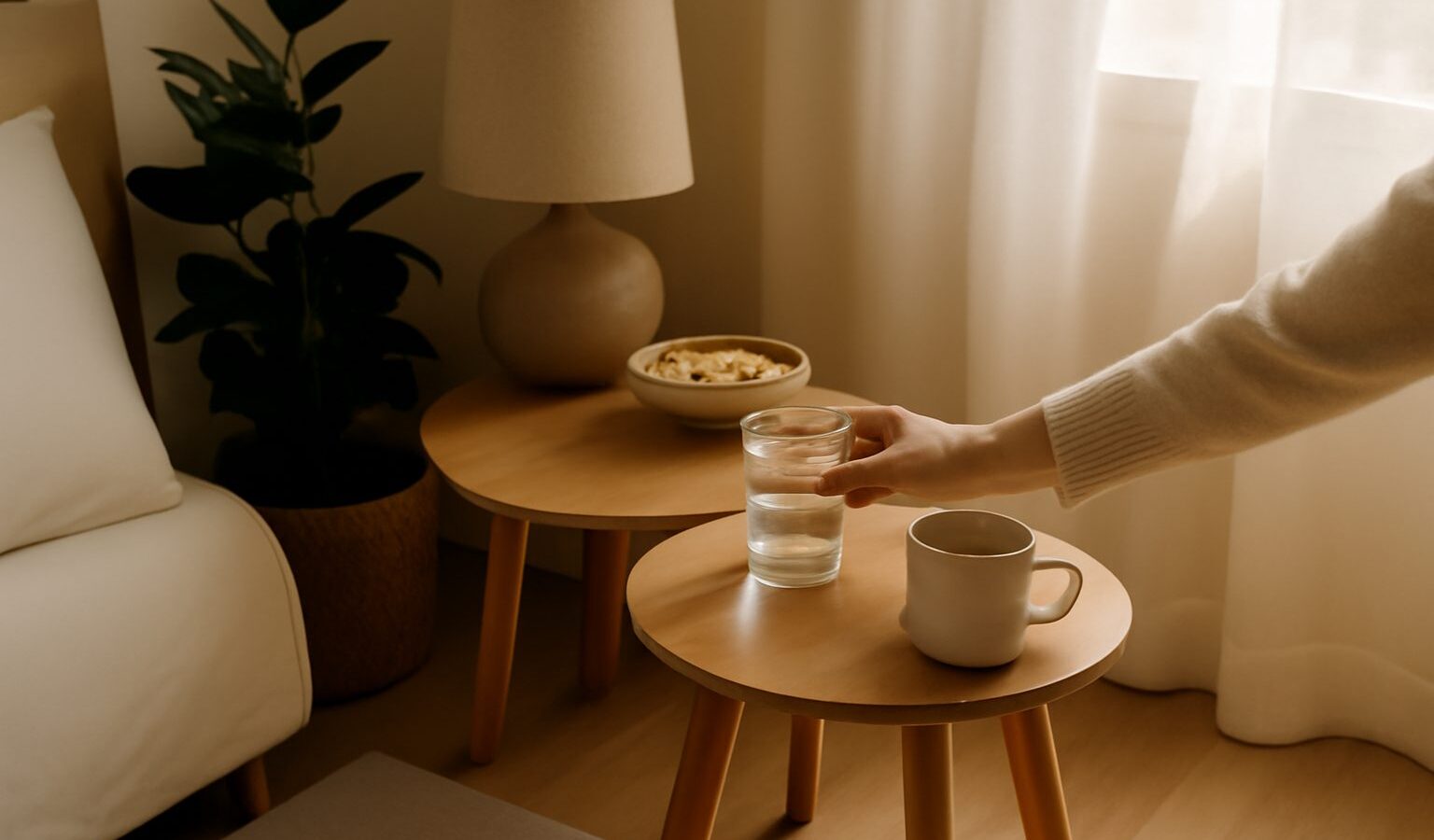
We like to believe our choices come from character and willpower. In truth, a great deal of what we do is shaped by our surroundings. The bowl of snacks on the counter, the phone within arm’s reach, the running shoes buried in a cupboard: each quietly steers our behaviour long before willpower gets a say. Environment design for habits is the practice of arranging your space on purpose so the good choice becomes the easy one.
This matters especially in Singapore, where many of us live in compact flats, spend hours commuting, and carry a phone that never stops competing for attention. You cannot always change your schedule, but you can almost always change your surroundings. Here is how to make your environment do the hard work for you.
Why Your Surroundings Beat Your Willpower
Willpower is real but limited. It drains through the day, and by evening there is little left to resist temptation with. If your good habits depend on winning a fresh battle of self-control every day, they will lose on the days you are most tired, which are the days that matter most.
Your environment, by contrast, works around the clock without any effort from you. Once you set it up well, it keeps nudging you in the right direction whether you feel motivated or not. This is the heart of environment design for habits: instead of trying to be more disciplined, you make discipline less necessary.
Think of it as removing the daily fight rather than trying to win it. A well-arranged space does not demand willpower, it quietly makes the healthy path the path of least resistance.
Make Good Habits Obvious and Easy
The two levers that matter most are visibility and friction. We do what we see, and we do what is easy. So put the good habit right in front of you and strip away every needless step.
If you want to read more, leave a book on your pillow. If you want to drink more water, keep a filled bottle on your desk. If you want to exercise in the morning, lay your workout clothes out the night before. Each removed step, each visible cue, tips the odds a little further in your favour.
A few practical moves that reduce friction:
- Prepare things the night before so morning-you has nothing to decide.
- Keep the tools of a good habit in plain sight and within reach.
- Cut the number of steps between you and the behaviour to as few as possible.
- Put a healthy default where the unhealthy one used to sit, such as fruit on the counter.
None of these require extra motivation. They simply make the habit you already want a little more likely to actually happen.
Make Bad Habits Invisible and Hard
The same two levers work in reverse. To do less of something, make it harder to see and harder to reach. This is often more effective than trying to resist it in the moment.
If you snack too much in the evening, do not keep snacks in the house, or store them somewhere inconvenient and out of sight. If you doomscroll in bed, charge your phone in another room. If a game eats your evenings, delete it from your phone so reinstalling becomes a small barrier. You are not relying on iron discipline, you are adding just enough friction that the easy default changes.
Even a few seconds of added effort makes a real difference, because habits thrive on convenience. Put a little distance between yourself and the behaviour you want less of, and much of its pull quietly fades.
Design for a Small Flat and a Busy City
Environment design does not need a big house or a dedicated study. It works just as well, arguably better, in a compact HDB flat where every corner has to earn its keep.
Zones are your friend. Reserve one small spot for one purpose so your brain links the place to the behaviour. A particular chair for reading, one end of the dining table for focused work, the balcony or corridor for a morning stretch. When a space has a single job, sitting there becomes its own cue.
Your commute is an environment too. A packed MRT ride can become reading time, language practice, or a few minutes of planning, simply by deciding in advance what that space is for and loading it onto your phone the night before. And because our phones are the single most powerful environment most of us carry, tidying the home screen, muting notifications, and moving tempting apps into a buried folder may be the highest-leverage change of all.
Cues and Anchors That Trigger Good Habits
Every habit needs a trigger. Environment design lets you plant reliable triggers in your day so the habit fires without you having to remember it. The most dependable triggers are existing routines and fixed features of your space.
The table below shows how to turn everyday cues into habit triggers.
| Existing cue | Attach this habit | Why it works |
|---|---|---|
| The kettle boiling | A quick stretch | Idle time already exists |
| Sitting on the MRT | Reading or planning | A fixed, repeated window |
| Arriving home | Change and drink water | A clear daily boundary |
| Brushing your teeth | Two minutes of tidying | A rock-solid daily anchor |
| Finishing dinner | A short evening walk | A natural, consistent signal |
By tying a new behaviour to a cue that already happens without fail, you stop relying on memory or motivation. The cue does the remembering for you, which is exactly what makes these anchors so reliable.
Let Your Environment Support Bigger Change
Shaping your surroundings is not a standalone trick. It quietly strengthens almost every other habit you are trying to build. A well-designed space makes a keystone routine easier to hold, which is why it pairs so well with understanding keystone habits, the small habits that pull many others along.
It also makes specific habits far more achievable. Laying out your kit the night before supports how to build an exercise habit, and keeping a notebook open and ready supports how to build a writing habit. In each case, the environment removes the friction that willpower would otherwise have to overcome.
The broader lesson is that lasting change is less about becoming a stronger person and more about becoming a better designer of your own days.
Start With One Small Change
You do not need to redesign your whole home this weekend. Pick one habit you want more of, and make it a little more obvious and a little easier. Then pick one you want less of, and add a little friction. That is the entire method, applied one small change at a time.
Environment design for habits is quietly forgiving. When you slip, you do not need more guilt or grit, you simply adjust the space and try again. Look around you right now, move one thing, and let your surroundings start working on your side.