
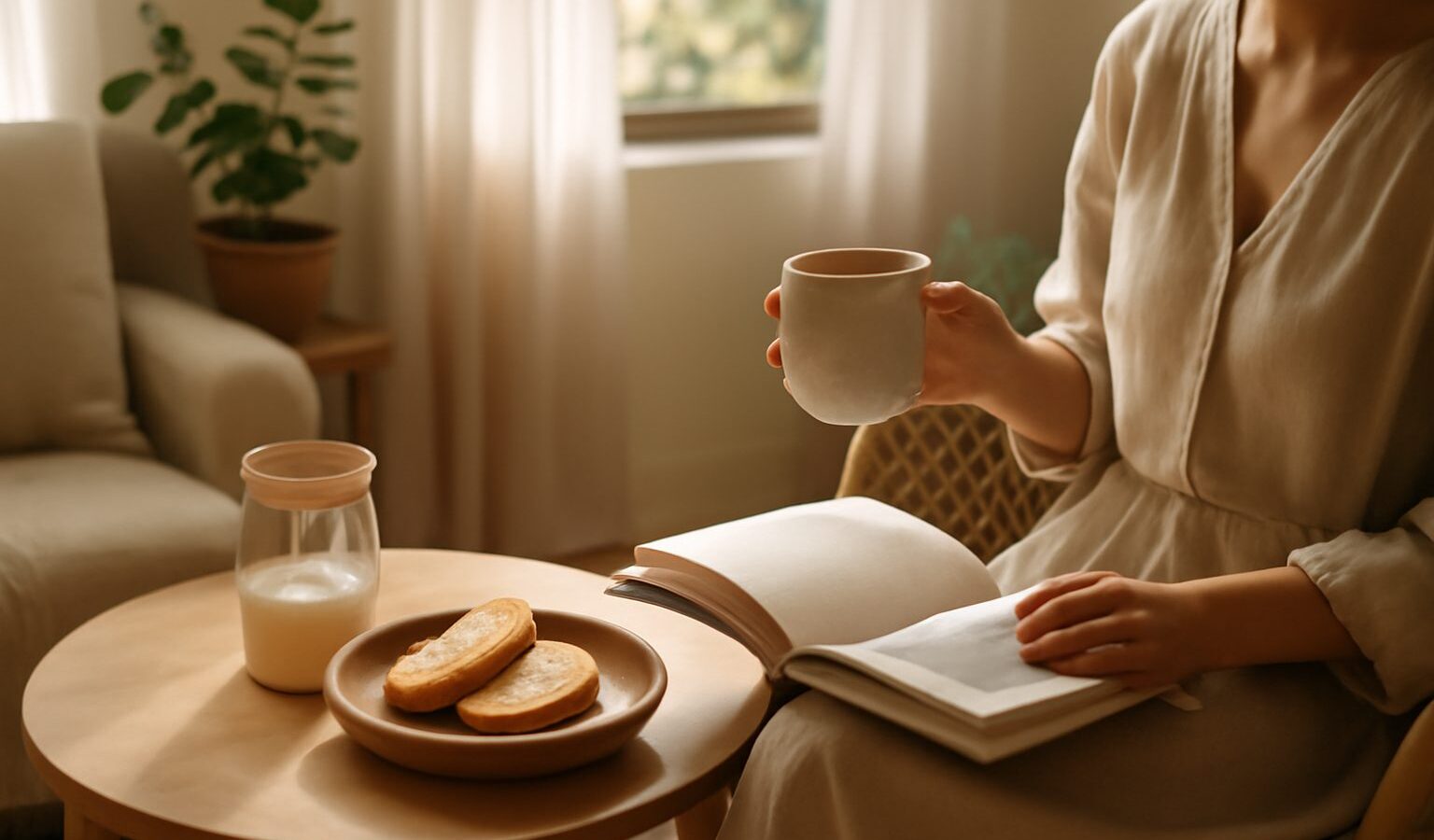
Slow living is not about doing everything at a snail’s pace or opting out of modern life. It is about doing fewer things with more attention, and letting your days feel less like a race. Slow living Singapore style is a gentle rebellion against the always-on rush, the packed calendars, and the quiet pressure to be constantly busy. You do not need a countryside cottage or a career break to practise it. Whether you live in a compact HDB flat, care for family, or work long hours, you can weave more calm and intention into the life you already have.
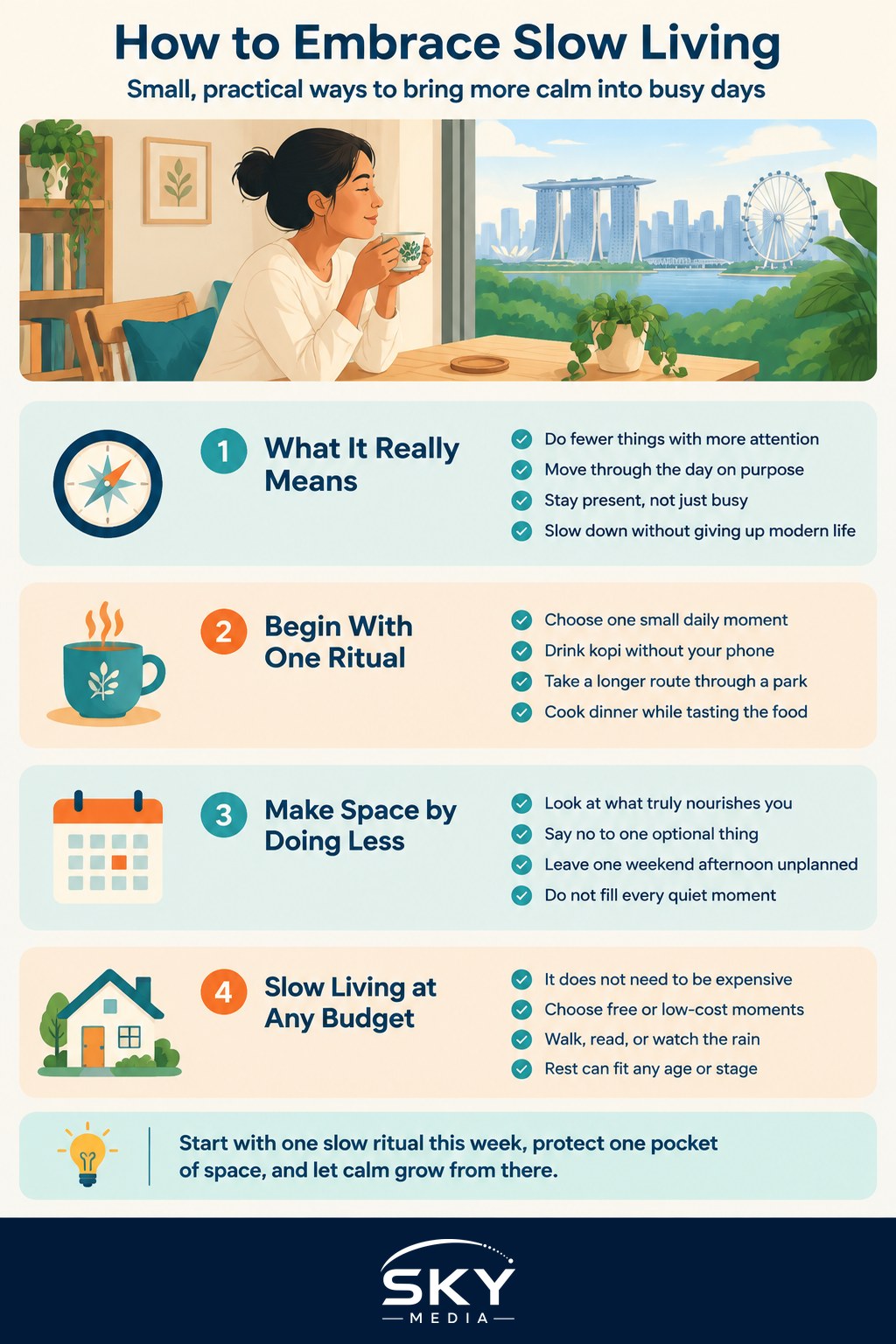
What Slow Living Really Means
At its heart, slow living is about intention. It asks a simple question: are you moving through your days on purpose, or just reacting to whatever demands your attention next? In a fast-paced city, it is easy to fill every gap with tasks, screens, and errands until there is no space left to simply be.
Choosing to slow down does not mean becoming unproductive or unambitious. It means noticing the difference between rushing and truly engaging. You can still work hard and get things done, but you do them with more presence and less frantic energy. A helpful companion here is learning how to slow down in a busy city, which offers grounded ways to ease off the accelerator without dropping the responsibilities that genuinely matter to you.
Start With One Slow Ritual
You do not need to overhaul your whole life to begin. In fact, trying to change everything at once is the opposite of slow living. Instead, choose one small daily moment and protect it from rushing. It might be drinking your morning kopi without your phone, taking the long way home through a park, or cooking dinner while actually tasting the food.
The point of a slow ritual is to give your attention somewhere to rest. When you do just one thing at a time, fully, you may notice a small but real sense of relief. Being fully in the moment is a skill you can strengthen, and practising how to be more present turns these small rituals into genuine pockets of calm rather than just another item on your to-do list. Start with one, and let it become something you look forward to.
Make Space by Doing Less
Slow living often means gently subtracting rather than adding. Many of us keep our schedules so full that there is no room to breathe, then wonder why we feel frazzled. Look honestly at your week and notice which commitments genuinely nourish you and which you keep out of habit, guilt, or a fear of missing out.
You do not have to cancel everything, and family or caregiving duties are not up for negotiation. But you can often find small pockets of space by saying no to one optional thing, leaving a weekend afternoon unplanned, or resisting the urge to fill every quiet moment. Learning how to simplify your life can help you decide what truly deserves your time. When your calendar has a little breathing room, slowness stops being a luxury and starts being your normal.
Slow Living on Any Budget
There is a common myth that slow living requires money: retreats, artisan goods, or a home that looks like a lifestyle magazine. In truth, the slow life is often cheaper, not pricier, because it leans away from constant consumption and towards simple, present pleasures.
Free or low-cost slow moments are everywhere in Singapore. A morning walk before the heat sets in, a home-cooked meal shared with family, reading a library book, watching the rain from your window, or a phone call with an old friend all count. Slow living adapts to every age and stage too. A busy parent might find it in five quiet minutes after the children sleep, while a retiree might build a whole gentle rhythm around it. The practice bends to fit your real life, not the other way round, and that is exactly what makes it sustainable.
Let Rest Be Productive Enough
One of the biggest obstacles to slow living is the guilt many of us feel when we are not being useful. Kiasu culture and comparison can whisper that resting is falling behind. Part of embracing slowness is unlearning that story and accepting that rest is not laziness; it is what allows you to show up well for everything else.
Give yourself permission to pause without earning it first. A slow Sunday, an unhurried meal, or an early night are not rewards for finishing your list. They are part of a healthy, well-lived life. When you stop treating rest as optional, the pace of your days softens on its own, and you may find you have more energy, not less, for the things you care about.
A Gentle Closing Thought
Embracing slow living is not a single decision but a series of small, kind choices to move through your days with a little more care. You will still have busy stretches, deadlines, and rushed mornings, and that is perfectly human. The invitation is simply to notice when you are racing and to gently ease off where you can. Start with one slow ritual this week, protect one pocket of space, and let calm grow from there. A slower life is not a smaller life; it is often a fuller and more contented one.
Frequently Asked Questions
Can I practise slow living while holding a demanding full-time job? Yes, slow living is about how you move through your day, not how much you do. Protect one or two moments, like a screen-free lunch or an unhurried commute, and do one task at a time. Small shifts add up even in a busy job.
Is slow living the same as minimalism or being lazy? No. Slow living is about attention and pace, minimalism is about owning less, and laziness is avoiding effort. You can work hard and still live slowly. They sometimes overlap, but each stands on its own.
How do I slow down when my family is always rushing? Start with your own habits, like a calmer morning routine, and invite others to join without lecturing. A shared slow meal or evening walk can become a family ritual. Change in a household tends to be gradual.
What are slow ways to spend a weekend in Singapore? Try a park or nature walk, a long meal at home, reading at the library, visiting a quiet neighbourhood or simply leaving an afternoon open. Pick activities with no schedule attached. Fewer plans make weekends feel longer.
Will slowing down hurt my career or productivity? Not necessarily. Doing fewer things with more focus and proper rest often improves the quality of work. If your workplace expects constant speed, discuss priorities with your manager rather than quietly burning out.
Further reading: How to Embrace Boredom