
Singapore rewards speed. Trains come every few minutes, food arrives in seconds, and the escalators seem to move faster than in most places. Learning how to slow down here is not about doing less overall, but about removing the constant sense of rushing so your days feel calmer and more yours.
Notice How Fast You Actually Move
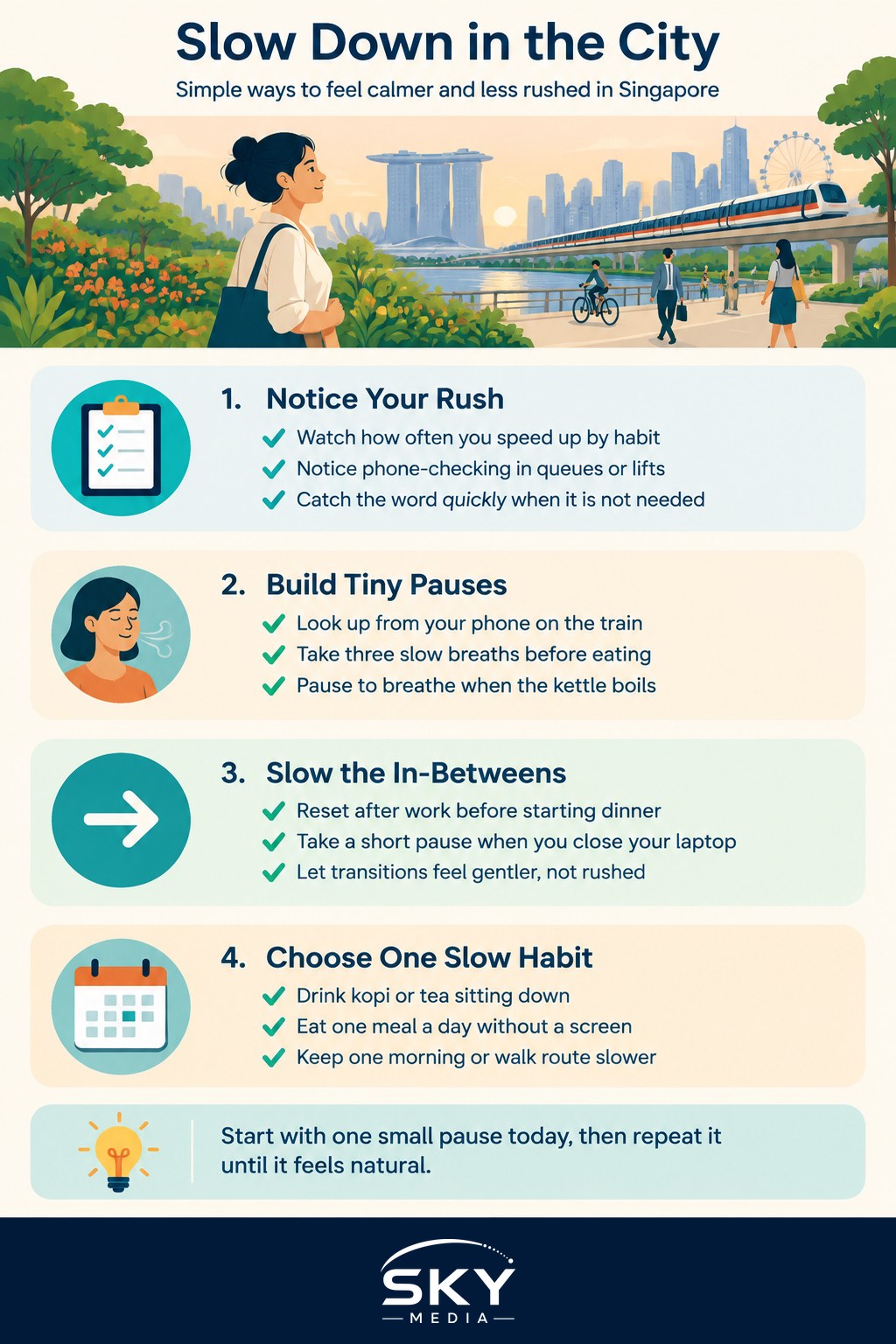
Before you change anything, watch yourself for a day. Most of the hurry in a busy city is a habit, not a real deadline. You speed up on the travelator when nobody is waiting for you. You reply to a message the instant it lands. You eat lunch while scrolling and finish without tasting it.
Try this small audit tomorrow:
- Count how many times you walk faster than you need to.
- Notice when you reach for your phone in a queue, a lift, or at a red light.
- Catch the moments you say “quickly” out of habit rather than necessity.
You are not judging yourself. You are simply recognising that a lot of the pace is self-generated, which is good news, because self-generated speed is something you can adjust.
Reflection prompt: Where in your day do you rush for no real reason?
Build Small Pauses Into Ordinary Moments
You do not need a retreat in the hills to slow down. You need a handful of tiny pauses stitched into the day you already have. The trick is to attach them to things you do anyway, so you never have to remember them separately.
- On the train: Look out of the window or at the map instead of your phone for two stops.
- Before you eat: Put the phone face down and take three slow breaths before the first bite.
- At your desk: When the kettle boils or the file loads, stand up and just breathe rather than filling the gap with more scrolling.
- Walking to the MRT: Match your steps to your breath for one block.
Each pause is only a minute or two. Strung together, they change the texture of the day from one long sprint into something with breathing room.
Slow the Transitions, Not Just the Rest
Most people try to slow down only during rest, then wonder why it does not stick. The real difference comes from slowing the transitions, the small crossings between one thing and the next.
The gap between finishing work and starting dinner, the walk from the bus stop to your flat, the moment you close your laptop, these are the hinges of your day. If you fly through them, the stress of one activity spills straight into the next. If you take even sixty seconds to reset, each part of the day starts fresh.
Here is how two approaches compare over a typical evening:
| Approach | What it looks like | How the evening feels |
|---|---|---|
| Rushing the transitions | Laptop shut, straight to cooking while replying to chats | Wound up, scattered, dinner tastes like nothing |
| Slowing the transitions | Two minutes on the balcony, phone away, then cook | Settled, present, actually enjoy the meal |
The activities are identical. Only the hinges change, and that is enough to shift the whole mood of the night.
Choose a Slower Default for One Thing
Trying to slow your entire life at once will fail. Pick one recurring activity and make its slow version the default, so you no longer decide each time.
Good candidates for a busy Singapore week:
- Kopi or tea in the morning drunk sitting down, not walked to the desk.
- One meal a day eaten without a screen.
- The walk home taken by the longer, greener route through the void deck garden or park connector.
- Sunday mornings kept free of any fixed appointment before ten.
Because the choice is made once, you protect it from the daily pull to hurry. Over a few weeks it stops feeling like effort and starts feeling like who you are.
Protect Your Slow Time From Guilt
The hardest part of slowing down in a fast city is not the traffic or the schedule. It is the guilt. Sitting still can feel lazy when everyone around you is optimising, hustling and levelling up. That guilt is the very thing that keeps the rush running.
Remind yourself that rest and slowness are not the reward for finishing everything, because in a busy city the list is never finished. They are the maintenance that lets you keep going without burning out. A slower pace often makes you sharper, kinder and more productive when you do work, not less.
If guilt still creeps in, name it plainly. Say to yourself, “This is me looking after my energy, not wasting time.” Learning how to slow down is partly a mindset shift, and mindset shifts respond well to being spoken out loud.
Reflection prompt: What would you do with fifteen unhurried minutes if you truly believed you had earned them?
Let the City Help You
You do not have to fight Singapore to feel calm in it. The city has more slow corners than it first appears. Green rooftops, quiet library floors, park connectors at dawn, hawker centres in the lull between meal rushes, a bench by the reservoir at dusk.
Keep a short mental list of your own slow spots near home and work. When the pace gets too much, you will know exactly where to go for ten minutes of stillness without a long journey. The point is not to escape the city but to move through it at a pace that keeps you well.
A Gentler Pace Is a Practice
Slowing down is not a single decision you make once. It is a practice you return to, especially on the days when everything speeds up again. Some days you will hurry through every transition and forget every pause. That is normal. The next moment is always a fresh chance to take a breath and drop back into a calmer gear.
Start with one small thing this week. Sit down for your coffee. Look out of the train window. Walk the long way home. The busy city will still be there, humming along at full speed, but you will be moving through it as a person, not a machine.
Explore more: How to Manage Your Energy, Not Just Time · How to Rest Properly in Singapore · How to Manage Everyday Stress
Frequently Asked Questions
How can I slow down if my job is fast-paced? You may not control the workload, but you can shape small things: single-task, take short breaks between meetings and slow your transitions. Pause before replying to non-urgent messages. If the pace is unsustainable, discuss priorities with your manager.
Will slowing down hurt my career? Not necessarily. Slowing your inner pace, with fewer hurried reactions and better rest, often improves judgement and focus. It does not mean missing deadlines. Choose where to slow down, such as breaks and transitions, and keep delivering what matters.
How can parents of young children slow down? Lower the bar for non-essentials, build in short pauses such as a few breaths before school pickup and share tasks where possible. Choose one unhurried ritual with your child, like bedtime reading. Perfect calm is unrealistic, so aim for small pockets.
How can I stop over-scheduling my weekends? Decide on one or two commitments and leave the rest of the weekend open. Block unplanned time in your calendar like any appointment. It is fine to decline invitations, and rest is part of what keeps the rest of your week going.
What can I do on a short lunch break to slow down? Step away from your desk, eat without a screen for the first few minutes and take a short walk if you can. Even five unhurried minutes outdoors or in a quiet corner can reset the afternoon. Make it a regular habit.
Further reading: How to Embrace Slow Living