

Long before you finish a sentence, people have already read your posture, your face and your hands. That is why learning how to improve your body language can change the way others respond to you, often more than the words themselves. Good body language does not mean performing or faking confidence. It means letting your body match the openness and steadiness you want to bring to a conversation.
You do not need to become an actor. A handful of small, honest adjustments can make you look more approachable, more grounded and easier to trust, whether you are in a job interview, a first date at a kopitiam, or a stiff meeting room.
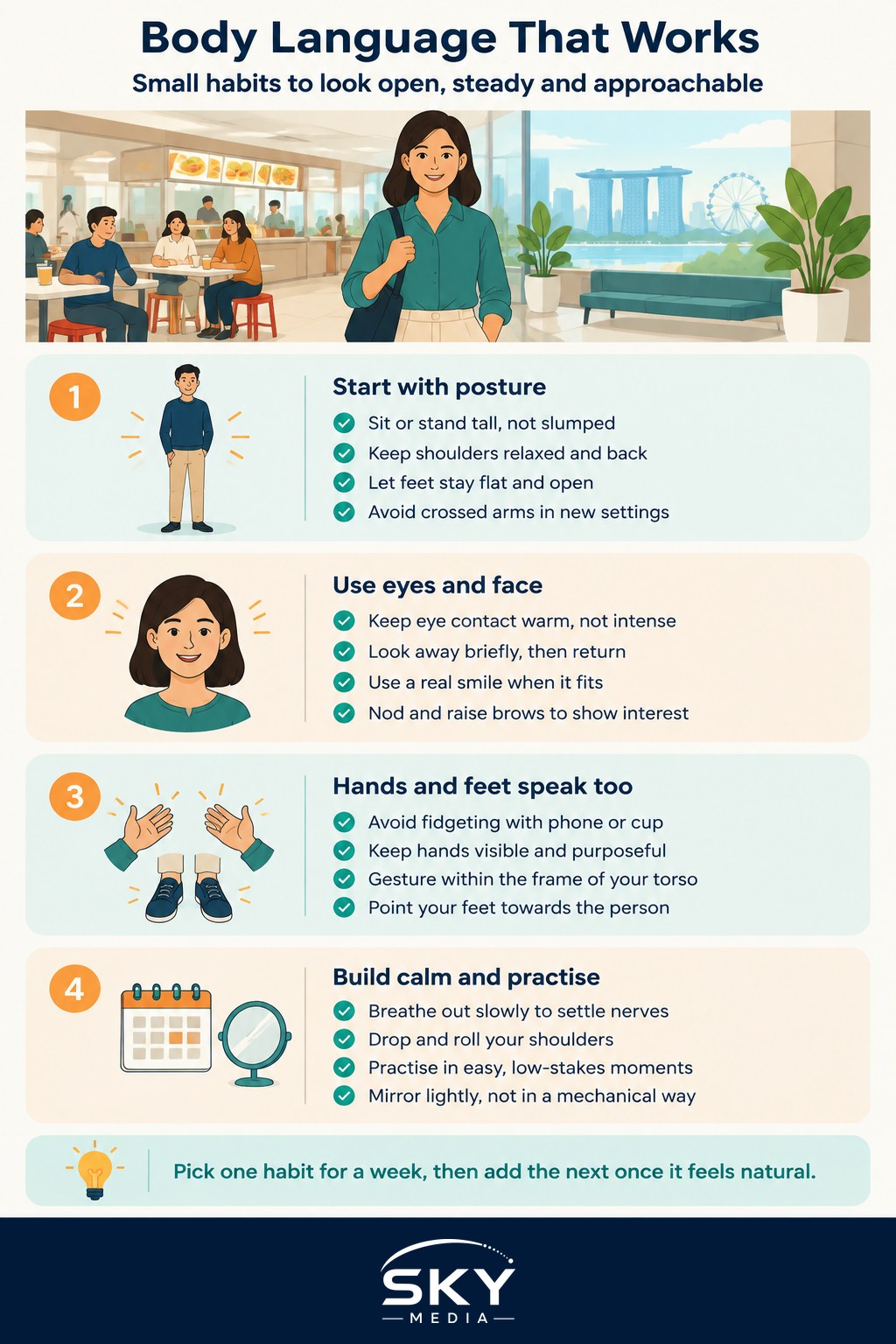
Start With Posture, the Quiet Foundation
Posture is the base that everything else sits on. When you slump, you signal low energy and low confidence, and you actually start to feel that way too, because your body and mind loop back on each other. Sitting or standing tall does the reverse.
You do not need to puff out your chest like a soldier. Aim for easy uprightness: feet flat, shoulders relaxed and drawn slightly back, crown of your head reaching gently upward, as if a string lifts you from above. Let your arms rest open rather than crossed. Crossed arms are not always defensive, but in a new setting they often read that way, so keep your torso visible and unguarded.
Make Eye Contact Warm, Not Intense
Eye contact is where many people struggle. Too little and you seem shifty or nervous; too much and you seem to be staring someone down. The aim is comfortable, natural contact that says “I am here with you”.
A simple approach is to hold someone’s gaze for a few seconds at a time, then look away briefly and naturally, perhaps as you gather a thought, before returning. In a group, spread your attention around rather than fixing on one person. If direct eye contact feels intense, resting your gaze on the bridge of the nose or between the eyebrows is a gentle stand-in that still reads as engaged.
Let Your Face Do Some Work
A still, blank face makes people uneasy because they cannot read you. You do not need a permanent grin, but a face that responds shows you are present. Nod when you follow a point. Let a real smile reach your eyes when something is genuinely warm or funny. Raise your eyebrows in interest. These small movements tell the other person that they are landing, which makes them relax and open up.
Use Your Hands With Purpose
Hands are one of the clearest signals of ease or nerves. Fidgeting with a phone, a ring or a cup broadcasts anxiety. Hidden hands, shoved in pockets or clamped under a table, make people subtly wary. Open, visible, purposeful gestures do the opposite.
When you speak, let your hands illustrate your point naturally rather than flapping randomly. Gesturing within the frame of your torso looks composed. Resting your hands loosely on the table or in your lap between gestures gives them a home so they are not searching for something to fiddle with.
Match the Signal to the Setting
The same gesture can mean different things depending on context. Here is a quick guide to reading and choosing signals well.
| Signal | Often reads as | Try instead |
|---|---|---|
| Crossed arms, leaning back | Closed, sceptical | Open torso, slight lean in |
| Constant nodding | Eager to please, anxious | Occasional, genuine nods |
| No eye contact | Disinterested or nervous | Comfortable, broken gaze |
| Fidgeting hands | Nervous, distracted | Still or purposeful gestures |
| Turned away, feet pointing to the door | Wanting to leave | Body squared to the person |
Feet are a detail people miss. We tend to point our feet towards what we want, so squaring them towards the person you are speaking with quietly signals genuine attention.
Mirror Gently to Build Rapport
When two people are at ease, they naturally fall into similar postures and pace. You can borrow this on purpose, lightly. If the other person leans in, you might lean in a little too. If they slow their speech, you slow yours. Done subtly, mirroring builds a sense of “we are in sync”. Done clumsily or mechanically, it looks like mimicry, so keep it soft and delayed rather than copying every move.
Manage Nerves in the Body
If you feel anxious before a big moment, your body will show it unless you settle it first. A few grounding habits help:
- Plant both feet on the floor and feel the contact; it pulls you into the present.
- Slow your out-breath, which calms the nervous system faster than deep in-breaths.
- Drop and roll your shoulders once to release the tension that creeps up towards your ears.
- Give yourself space; standing or sitting a touch more open tells your brain you are safe.
These are not tricks to fake confidence. They are ways to let real steadiness show through instead of being masked by nerves.
Practise Where It Is Easy
You improve body language the same way you improve anything, by repetition in low-stakes settings. Notice your posture while queueing for coffee. Practise warm eye contact with the hawker who serves your lunch. Watch how relaxed, well-liked people carry themselves and borrow what feels natural to you. Recording yourself in a short practice run, then watching it back, reveals habits you never knew you had.
Avoid trying to fix everything at once. Pick one thing for a week, perhaps keeping your arms uncrossed, or holding eye contact a beat longer. Once it feels automatic, add the next.
Let It Become Natural
The goal is not to think about your body constantly. That would make you stiff and self-conscious, which defeats the purpose. The goal is to build a few good habits until they run on their own, so that when you walk into a room, your posture, your gaze and your hands quietly say what you want them to say: I am steady, I am open, and I am glad to be here. Small changes, practised kindly, add up to a presence people find easy to warm to.
Explore more: Overcoming the Fear of Public Speaking · How to Build Self Confidence · Networking Tips for Introverts
Frequently Asked Questions
How should I use body language in a job interview? Sit upright, keep your hands visible and still, and make warm, broken eye contact. Nod when you follow a point and smile naturally. Avoid fidgeting or slouching. Calm, open posture suggests steadiness, which interviewers often notice as much as your answers.
How do I improve my body language on video calls? Position the camera at eye level, sit upright and keep your hands within view. Look towards the lens now and then, and let your face react with nods and smiles. Because less of your body shows, your face, voice and posture carry more of the message.
Does eye contact mean the same thing in every culture? No. Expectations differ across cultures and even families, so steady eye contact may read as respectful to one person and too intense to another. Read the person in front of you, soften your gaze if they seem uncomfortable, and avoid assuming that less contact means disinterest.
Can I rely on body language to tell if someone is lying or upset? Not on its own. Fidgeting or avoiding eye contact can come from nerves, culture or habit rather than dishonesty. Look at clusters of signals in context, compare with how the person usually behaves, and check by asking gently instead of drawing firm conclusions.
What can I do if I cannot stop fidgeting? Give your hands something purposeful, such as resting them loosely on the table or holding a pen. Slow your breathing and plant your feet to release nervous energy. Awareness helps more than force, and practising in low-stakes moments makes calmer habits easier to keep.
Further reading: Gestures and Body Language Etiquette · How to Be More Charismatic