
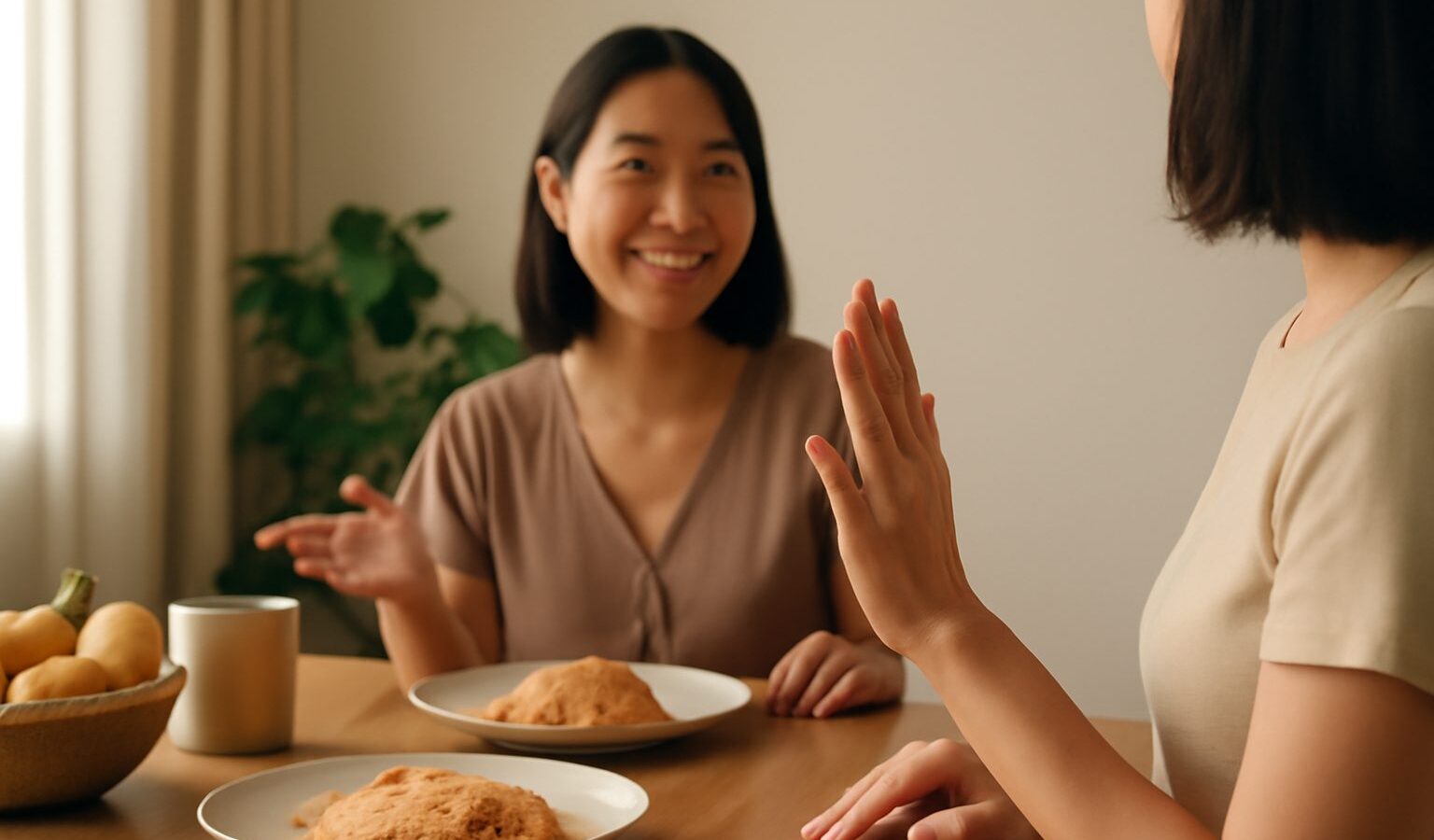
Much of the way people relate to one another is never spoken aloud. A nod, a handshake, the way you pass something or point at a place, all of these send signals, and in a society as diverse as this one they can carry different meanings for different people. Good body language etiquette singapore residents and visitors alike will appreciate simply means being aware of these unspoken cues and erring on the side of courtesy. This guide offers practical, respectful pointers that hold across the country’s many communities, without assuming that everyone follows the same customs.
Everyday Gestures and Respectful Habits
A few gentle habits go a long way. When it comes to pointing, using a single index finger to point directly at a person can feel impolite to many people here. A softer approach is to gesture with an open hand, or in some settings to indicate with the thumb resting over a loosely closed hand, and to point at objects or directions rather than at individuals. If you need to beckon someone, doing so with the palm facing down and the fingers waving inward is generally read as more polite than a single finger curled upward.
The head and the feet carry meaning in several cultural and religious traditions represented in the population. In particular, among some communities the head is regarded as special and the feet as the lowest part of the body. As a matter of general courtesy, it is wise to avoid touching another adult’s head casually, and to avoid pointing the soles of your feet directly at people, especially in homes or places of worship. Stepping over someone who is seated on the floor, or over food laid out on the ground, is also best avoided.
Handing and receiving things thoughtfully is another small courtesy that is widely appreciated. Using the right hand, or both hands, to give or receive an item, money or a name card is considered respectful in many contexts, since the left hand is traditionally regarded as unclean in some cultures. Offering a name card with both hands and taking a moment to look at one you receive is a graceful touch in business settings. When entering many homes, and always at temples and mosques, removing your shoes is expected, so it helps to watch what others do and follow suit.
Greetings, Personal Space and Reading the Room
Greetings vary from community to community, and the safest approach is to take your cue from the other person. A handshake is common and generally acceptable, though it is thoughtful to let the other party extend a hand first, since some people, for religious reasons, may prefer not to shake hands with members of the opposite sex. In such cases a warm smile and a slight nod, or a hand placed lightly over the heart, is a gracious alternative. With older people, a little extra deference, a softer voice and a small bow of the head, is always well received, reflecting the respect for elders that runs through local life.
Personal space and touch tend to be fairly reserved, particularly between people who have just met. Public displays of affection are usually kept modest, and casual touching, such as backslapping or lingering contact, may feel too familiar to some. Keeping a comfortable distance, and letting warmth show through friendliness rather than physical contact, is a reliable default. Voices are generally kept moderate in public, and open displays of anger or confrontation are uncomfortable for many, which connects to the local instinct for saving face and avoiding embarrassment for oneself or others.
Reading the room is perhaps the single most useful skill. Because the population brings together many traditions, no single rulebook fits every situation, and the courteous thing is to stay observant, mirror your hosts, and ask politely if you are unsure. People here are usually forgiving of an honest mistake made in good faith, and a sincere apology smooths over most small missteps. This attentiveness is at the heart of wider social etiquette and norms, and it reflects the give and take that allows a multiracial society to live closely and comfortably together.
None of this needs to feel like a test. The underlying principle is simple, treat others with consideration, notice the cues around you, and adjust with a light touch. Master that spirit and the specific gestures follow naturally, leaving both you and the people you meet at ease. In a place where so many cultures share the same small island, thoughtful body language is one of the quiet arts of getting along.