
Dogs are talking to us all the time, just not in words. Learning to read dog body language is one of the most useful skills an owner can build, because it lets you see how your dog feels before things escalate to a growl or a snap. This is general information to help you understand your dog better, and any sudden change in behaviour is worth a chat with a licensed vet, since pain and illness can change how a dog moves and reacts. Once you learn to read the whole dog, you will respond more calmly, prevent problems and build real trust.
In Singapore’s shared spaces, from lift lobbies to dog runs, being able to spot a stressed or happy dog at a glance keeps both people and pets safer. Here is how to tune in.
Read the Whole Dog, Not One Part
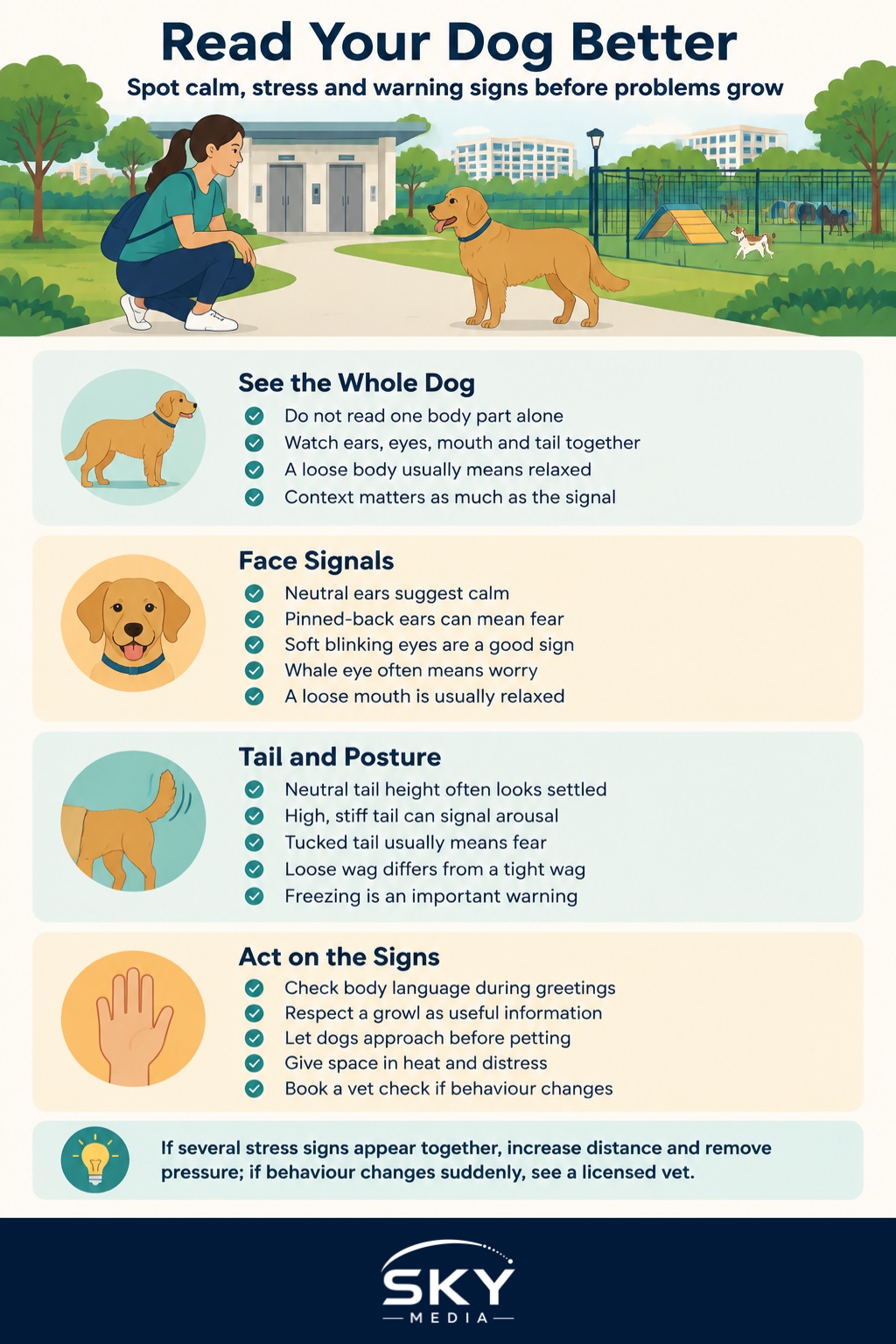
The most common mistake is reading a single body part in isolation. A wagging tail does not always mean a friendly dog, and a bark can mean many things. Body language is a package, so look at the ears, eyes, mouth, tail and overall posture together, and always consider the context. A dog that is stiff, staring and wagging a high, tight tail is telling a very different story from a dog with a soft body and a loose, low wag.
Think of it like reading a sentence rather than a single word. When several signals line up, such as a loose body, soft eyes and a wide wag, you can be fairly confident the dog is relaxed. When signals conflict or the body is tense, slow down and give the dog space.
Ears, Eyes and Mouth
The face carries a lot of information once you know what to look for. Breed differences matter, since floppy ears or a flat face can hide some signals, so learn your own dog’s normal first.
- Ears. Relaxed ears in a neutral position suggest calm. Ears pinned back can signal fear or appeasement, while ears pushed hard forward often mean intense focus or arousal.
- Eyes. Soft, blinking eyes are a good sign. A hard, fixed stare signals tension. Whale eye, where you see the whites in a half-moon shape, often means the dog feels trapped or worried.
- Mouth. A loose, slightly open mouth usually means a relaxed dog. A tightly closed mouth, especially if sudden, can signal stress. Lip licking when there is no food, and big yawns when the dog is not tired, are common calming signals that say I am uncomfortable.
Tail and Posture
The tail is famous but often misread. What matters is the height, speed and stiffness of the wag, not just the movement itself.
- Tail height. A tail held in a neutral, natural position suggests a settled dog. A high, stiff tail can signal arousal or a warning, while a tucked tail usually means fear.
- Wag quality. A loose, sweeping wag that moves the whole rear end tends to be friendly. A fast, tight, high wag can mean tension, not joy.
- Body weight. A dog leaning forward on its toes is focused or aroused. A dog leaning back, crouching or making itself small is worried and wants distance.
- Whole-body freeze. A sudden stillness is one of the most important signals to respect, because it often comes just before a bigger reaction.
Calm Signals vs Stress Signals
Grouping signals into relaxed versus worried helps you make quick decisions in the moment. The table below is a simple guide, always read alongside the context.
| Body part | Relaxed and comfortable | Stressed or worried |
|---|---|---|
| Eyes | Soft, blinking, almond shaped | Hard stare or whale eye |
| Ears | Neutral, natural position | Pinned back or rigidly forward |
| Mouth | Loose, slightly open | Tightly closed, lip licking, yawning |
| Tail | Neutral height, loose wag | Tucked, or high and stiff |
| Body | Loose, wiggly, weight even | Stiff, crouched, leaning away or frozen |
If you see several signs from the stress column, calmly increase distance and remove the pressure rather than pushing the dog to cope.
Using What You See Every Day
Reading your dog is only useful if you act on it. A few habits make a real difference:
- Watch during greetings. When your dog meets people or other dogs, check for loose, curvy bodies rather than stiff, still ones, and cut the interaction short if either dog looks tense.
- Respect the growl. A growl is valuable information, not something to punish. Punishing it can teach a dog to skip the warning and go straight to a bite.
- Ask before petting. Teach children and visitors to let a dog approach first, and to stop if the dog turns away, freezes or shows whale eye.
- Give space in the heat. Panting is normal cooling in our tropical climate, but heavy, frantic panting with a distressed body, especially in the midday sun, can signal heat stress and needs shade, water and cooling. Seek a vet urgently for signs of heatstroke such as collapse or extreme distress.
- Notice changes. A normally relaxed dog that suddenly becomes withdrawn, stiff or snappy may be in pain, so book a vet check rather than assuming it is only behaviour.
The more you watch, the faster this becomes second nature. Over time you will catch small signals early, respond before your dog feels cornered, and your dog will learn that you listen.
When to Seek Help
If your dog frequently shows stress signals, reacts fearfully, or the signals are hard to read, a licensed vet can rule out pain or illness first. For ongoing behaviour concerns, an accredited, positive-reinforcement trainer or a qualified behaviourist can help you interpret your individual dog and build a kind plan. Choose professionals who work with reward-based methods and never rely on fear or force. Understanding dog body language is the foundation for all of this, and it is a skill that keeps growing the more you practise.
Explore more
Once you can read stress early, you can act on it sooner, which is exactly what our guide to helping a reactive or fearful dog builds on. Clear signals also help you spot tension over food and toys, covered in resource guarding in dogs. And knowing when your dog is calm makes it easier to start teaching basic commands and tricks.
Frequently Asked Questions
How can I tell if my dog’s wagging tail means it is friendly? Look at the whole dog. A loose, sweeping wag with a soft body and relaxed face tends to be friendly, while a fast, stiff, high wag with a hard stare can signal tension. Never approach a dog on the strength of the tail alone.
What does it mean when a dog yawns or licks its lips? These are often calming signals showing mild stress or discomfort, especially when the dog is not tired or near food. Look at what is happening and ease the pressure by giving space. A yawn on waking is simply a yawn.
Is a growling dog always aggressive? Not necessarily. Growling is communication that something is worrying or unwelcome, and it can also be part of rough play. Treat it as a request for space, back off calmly, and never punish it. If growling is frequent or intense, a vet or behaviourist can help.
How can I tell if my dog is in pain from its body language? Possible signs include stiffness, limping, hunching, reluctance to move or be touched, panting while resting, and sudden irritability. Because pain can look like a behaviour problem, see a licensed vet when you notice changes rather than guessing.
Why does my dog show the whites of its eyes? This is called whale eye, and it often means the dog is anxious, uncomfortable or feeling cornered, such as when someone hugs it or reaches for its chew. Stop what you are doing and give space. Teach children not to hug dogs.