
Living well on a tight budget in Singapore is not about grim penny-pinching or missing out. It is about spending your limited money where it brings the most joy and quietly trimming everywhere else. Plenty of people here live full, comfortable, sociable lives on modest incomes, not because they deprive themselves, but because they have learned what is genuinely worth paying for in a high cost city.
This is everyday money guidance, not financial advice. And the first thing to know is the most encouraging: a tight budget is a constraint, not a sentence, and constraints often make life more intentional, not less enjoyable.
Start by Protecting the Essentials
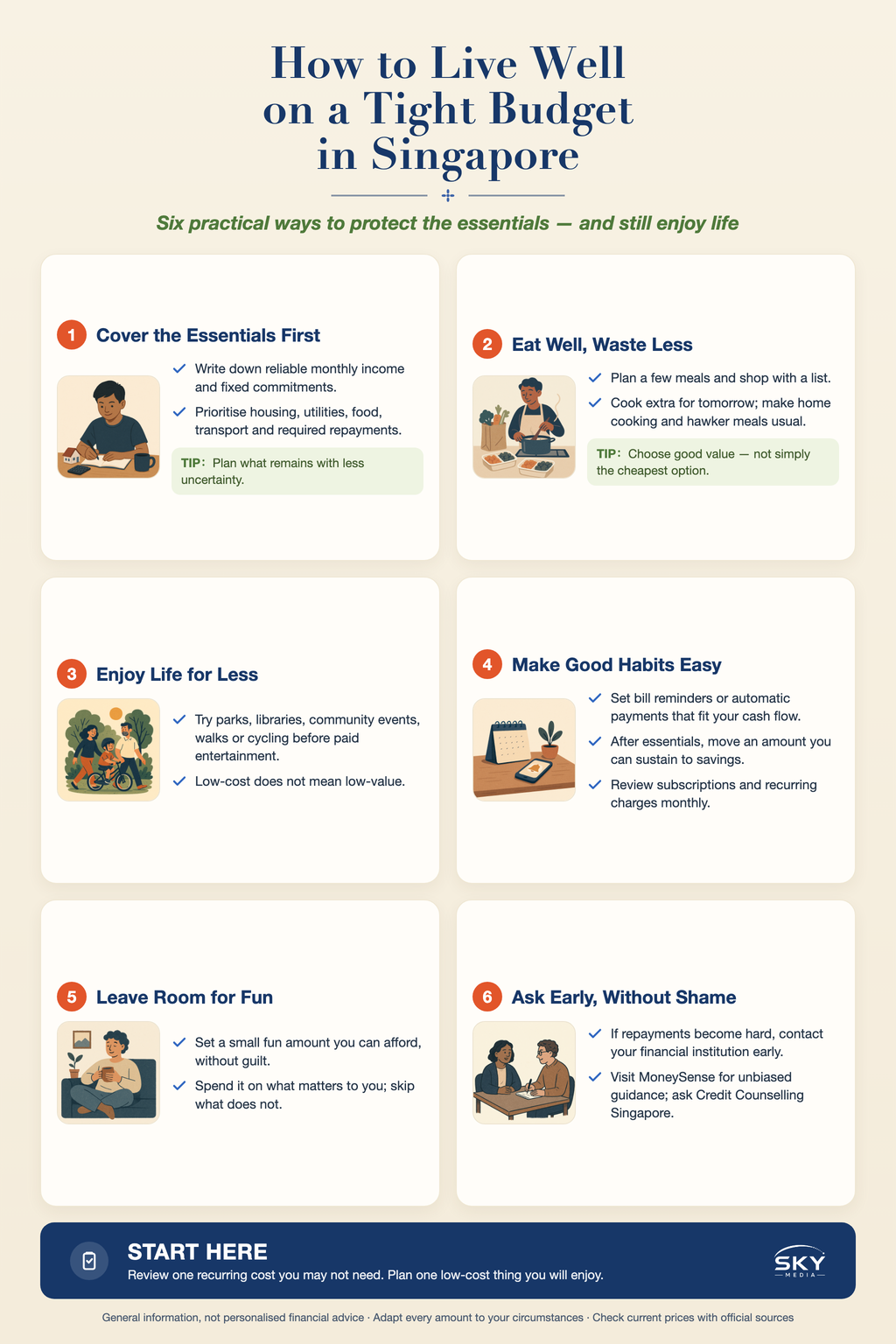
When money is tight, the goal is stability first, then enjoyment. Get clear on the essentials, the things that keep your life running, and make sure they are covered before anything else. In Singapore that usually means housing, HDB utilities, transport, food, phone and any loan or family commitments.
A simple move is to list your fixed monthly costs and set up automatic payments so nothing slips into late fees. Then look at each essential and ask whether it can be trimmed without hurting your quality of life. Telco plans, utility habits, and subscription services are common places to find easy savings that you will never miss.
The point of protecting essentials first is peace of mind. Once the non-negotiables are handled, whatever is left is yours to enjoy without anxiety, even if it is not a large amount.
Eat Well for Less in a Food-Loving City
Food is where Singapore makes living well on a budget genuinely easy. Hawker centres and food courts offer some of the best value eating anywhere, and cooking at home stretches your money even further. You do not have to give up eating well, you just shift the balance.
Practical habits that keep food costs down without sacrificing enjoyment:
- Make hawker and home-cooked meals your default, and treat restaurants as an occasional highlight.
- Plan a few meals a week and shop with a list to cut waste and impulse buys.
- Use supermarket loyalty apps and buy house brands where quality is fine.
- Cook in batches so leftovers become easy, cheap lunches.
- Use CDC and other government vouchers when available at participating stalls and shops.
Because GST applies to most purchases, small savings on groceries and dining add up over a month. Sharing dishes, eating seasonally, and drinking water instead of pricey beverages are tiny changes that barely register but keep more money in your pocket.
Enjoy Free and Low-Cost Singapore
One of the best-kept secrets of living well on a tight budget in Singapore is how much of the good stuff is free or nearly free. You are surrounded by parks, gardens, beaches, trails, libraries, and neighbourhood spaces that cost little to nothing to enjoy.
Instead of defaulting to spending on entertainment, build a habit of choosing low-cost fun first. Compare where your leisure money tends to go against the cheaper joys sitting right there.
| Leisure choice | Higher cost habit | Living-well-on-less version |
|---|---|---|
| Weekend outing | Mall, cinema, shopping | Parks, nature reserves, the coast |
| Catching up with friends | Bar or fancy cafe | Hawker supper or a home potluck |
| Staying entertained | Many paid subscriptions | Public library books and events |
| Keeping fit | Pricey gym membership | Running, ActiveSG facilities, home workouts |
| Getting around | Ride-hailing by default | Public transport, walking, cycling |
None of the right-hand options feel like sacrifice once they become normal. Many people find that simpler, more social plans are actually more fun than the expensive alternatives.
Build Habits That Keep the Budget Working
Living well on less is easier when your money runs on habits rather than willpower. The idea is to set up a few systems so good choices happen almost automatically, freeing you from constant hard decisions.
Try these:
- Automate a small savings transfer on payday, even a modest amount, so you always pay yourself first.
- Keep a tiny emergency buffer so a surprise bill does not derail everything.
- Give yourself a small guilt-free fun budget so the plan feels generous, not punishing.
- Do a quick monthly review to catch creeping costs like unused subscriptions.
- Time bigger wanted buys to seasonal sales such as the Great Singapore Sale, and only for things you already planned to get.
Small, steady wins compound. Saving a little consistently and cutting waste month after month does more over time than any single dramatic sacrifice.
Protect Your Wellbeing, Not Just Your Wallet
A tight budget can weigh on your mind, so it matters to be kind to yourself while you manage it. Money stress is real, and shame makes it worse, not better. The aim is a calmer relationship with money, not a perfect one.
A few things help. Focus on progress rather than comparison, since social media rarely shows anyone’s real finances. Celebrate small wins, like a lower bill or a no-spend weekend that was still fun. Talk openly with people you trust, because money worries feel lighter when shared, and friends and family often have practical tips of their own.
If money is genuinely stretched and debt is building, do not carry it alone. Credit Counselling Singapore can help with serious debt, and MoneySense, the national financial-literacy programme, offers free, neutral guidance on budgeting. For emotional strain, consider speaking to someone you trust or looking up a current support helpline. These are signs of good sense, not failure.
Living well on a tight budget is a skill, and it gets easier with practice. Start this week by picking one essential to trim and one free local activity to enjoy. Do the maths on joy, not just dollars, and you may find that a smaller budget still buys a genuinely good life.
Explore more
To keep a tight budget from getting tighter as you earn more, read our guide on avoiding lifestyle inflation. To make sure every limited dollar goes to what matters, see spending in line with your values. And if the pressure is weighing on you, our guide to coping with financial stress can help.