
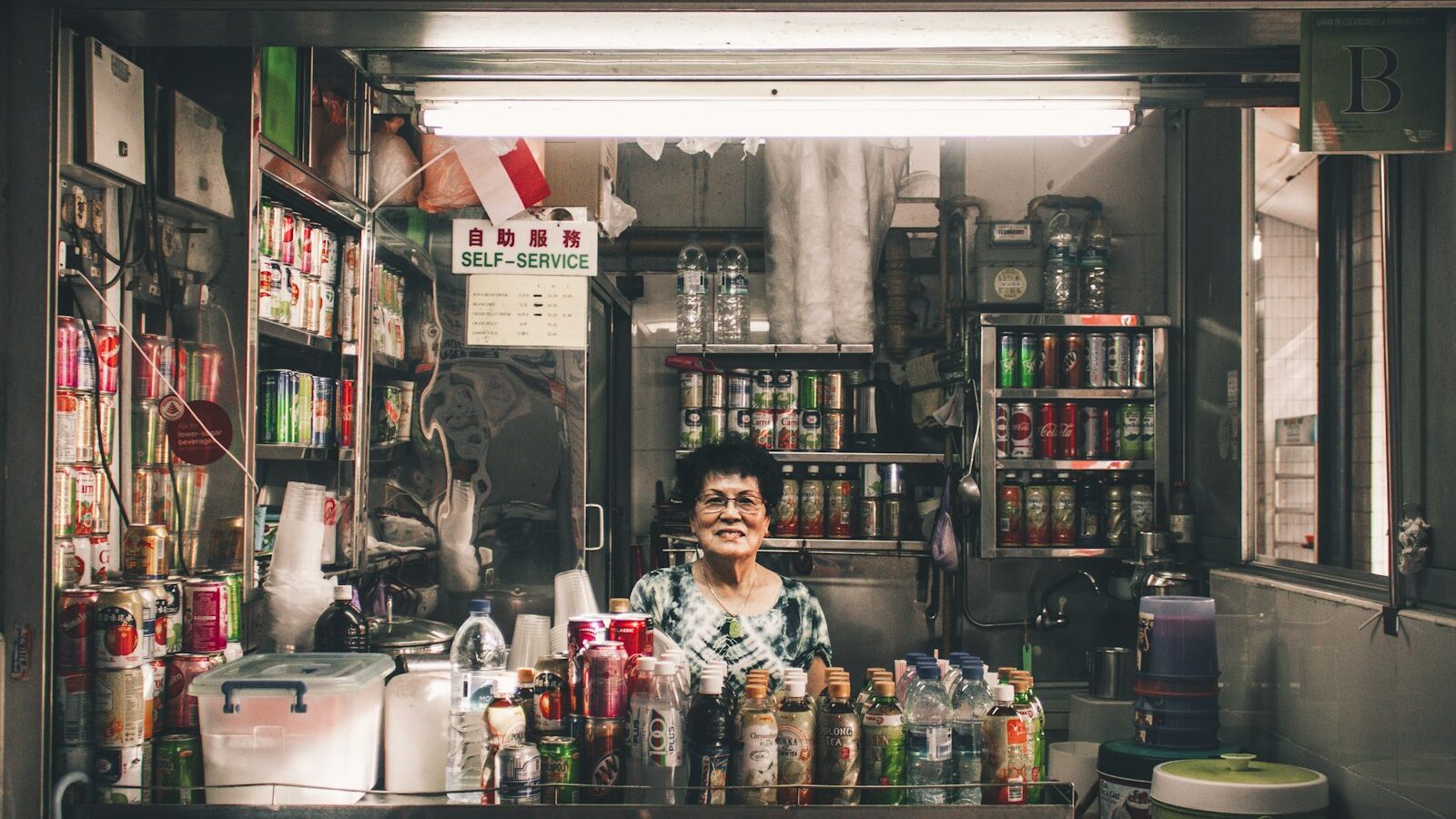
Every great hawker meal deserves a great drink, and the world of singapore drinks is as colourful and characterful as the food. Beyond the famous kopi, the local drinks stall offers a whole vocabulary of teh (tea), fizzy and sweet concoctions, fresh juices and iconic beverages that are part of the daily rhythm here. For newcomers, learning to navigate the drinks stall is almost as much fun as ordering food, and for locals these drinks are pure nostalgia. This guide introduces the essential local drinks, explains the ordering lingo, and helps you find your new favourite.
The drinks stall and its language
At hawker centres and coffee shops, a dedicated drinks stall serves both hot and iced beverages, and there is a whole shorthand for ordering, much like with kopi. A few universal terms are worth knowing:
- Peng means iced, so any drink can usually be ordered cold by adding it.
- Kosong means without sugar.
- Siew dai means less sweet, and gah dai means sweeter.
- O generally means without milk.
These modifiers apply across many drinks, so once you learn them for tea and coffee, you can apply them widely. Do not be shy about specifying, as the uncle or auntie at the stall is used to exact orders.
Teh and the art of pulled tea
Just as kopi is the local coffee, teh is the local tea, typically brewed strong and served with condensed or evaporated milk and sugar. It comes in the same variations as kopi:
- Teh. Tea with milk and sugar, the standard.
- Teh-O. Tea with sugar but no milk.
- Teh-C. Tea with evaporated milk.
- Teh peng. Iced milk tea, a hot-weather favourite.
- Teh tarik. The famous pulled tea, poured back and forth between vessels to create a frothy top and a smooth, well-mixed brew. Watching it made is a small performance, and drinking it is a local ritual.
Teh tarik in particular is iconic, and enjoying one at a coffee shop is a quintessential local experience.
Sweet and iconic concoctions
Beyond tea and coffee, the drinks stall offers a range of colourful, sweet favourites:
- Bandung. A striking pink drink of rose syrup and milk, sweet and floral.
- Milo dinosaur. A cold Milo (malted chocolate) drink topped with a generous mound of extra Milo powder, beloved by children and adults alike. A regular iced Milo is a staple too.
- Sugarcane juice. Freshly pressed, refreshing and subtly grassy-sweet, perfect in the heat.
- Barley. A soothing drink made from barley, mildly sweet and comforting.
- Soya bean milk (tau huay water) and grass jelly. Often available, sometimes combined as the popular “Michael Jackson” of soya bean and grass jelly.
- Lime juice and other fruit drinks. Tart, refreshing and thirst-quenching.
A hot-weather tip: when the humidity is high, an iced sugarcane, lime juice or barley is wonderfully refreshing, while a Milo dinosaur is the ultimate sweet pick-me-up.
Refreshers for the tropical heat
Given the climate, cold drinks are a way of life, and the drinks stall is your ally against the heat. Iced versions of nearly everything are available, and freshly made juices and traditional coolers are especially welcome after a hot walk or a spicy meal. Coconut water, where available, is another natural refresher. Ordering your drink iced (peng) is often the default choice when the weather is sweltering, which is most of the time.
How to order like a local
Putting it together, ordering is straightforward:
- Name the drink, such as teh, teh tarik, bandung or Milo.
- Add peng if you want it iced.
- Adjust sweetness with kosong, siew dai or gah dai.
- Specify milk using O for no milk or C for evaporated milk where it applies.
For example, “teh-C peng siew dai” is iced tea with evaporated milk and less sugar. It sounds complex at first, but the logic is consistent and quickly becomes second nature.
Quick ordering cheat sheet
- Peng equals iced.
- Kosong equals no sugar; siew dai less sweet; gah dai sweeter.
- O equals no milk; C equals evaporated milk.
- Teh tarik is the frothy pulled milk tea to try first.
- Bandung, Milo dinosaur and sugarcane are must-try local favourites.
Traditional favourites and modern twists
While the classic drinks stall favourites endure, the local drinks scene has also grown to include modern takes and new trends alongside the traditional. Bubble tea, with its chewy pearls and endless flavours, has become hugely popular and sits comfortably beside the old-school kopitiam drinks in the affections of younger Singaporeans. Fresh fruit juices and blended drinks have expanded, and cafes offer contemporary coffee culture alongside the traditional kopi. Yet the enduring appeal of a well-pulled teh tarik, an ice-cold sugarcane or a nostalgic Milo dinosaur shows that the classics are in no danger of fading. Part of the fun of drinks here is this range, from time-honoured hawker-stall staples to modern trends, so you can move between a traditional kopitiam drink and a modern bubble tea depending on your mood, all part of the same rich beverage culture.
Where to enjoy them
Local drinks are found wherever there is food, at hawker centres, coffee shops and food courts across the island, so they naturally accompany any meal out. Traditional coffee shops (kopitiams) are the classic setting, where the drinks stall is a fixture beside the food. Prices are very low, making it easy to try many over time, though treat any prices as a rough guide since they change. Part of the joy is experimenting until you find your regular order.
The world of singapore drinks is a delightful companion to the island’s food, from the ritual of teh tarik to the childhood joy of a Milo dinosaur and the refreshing hit of fresh sugarcane. Learn the simple ordering lingo, try the iconic favourites, and let the humble drinks stall become part of your daily pleasure here. As with all hawker fare, let your own taste guide you and treat any details as a rough guide.
Explore more: How to order kopi like a local, Kaya toast: the Singapore breakfast, Singapore desserts guide