
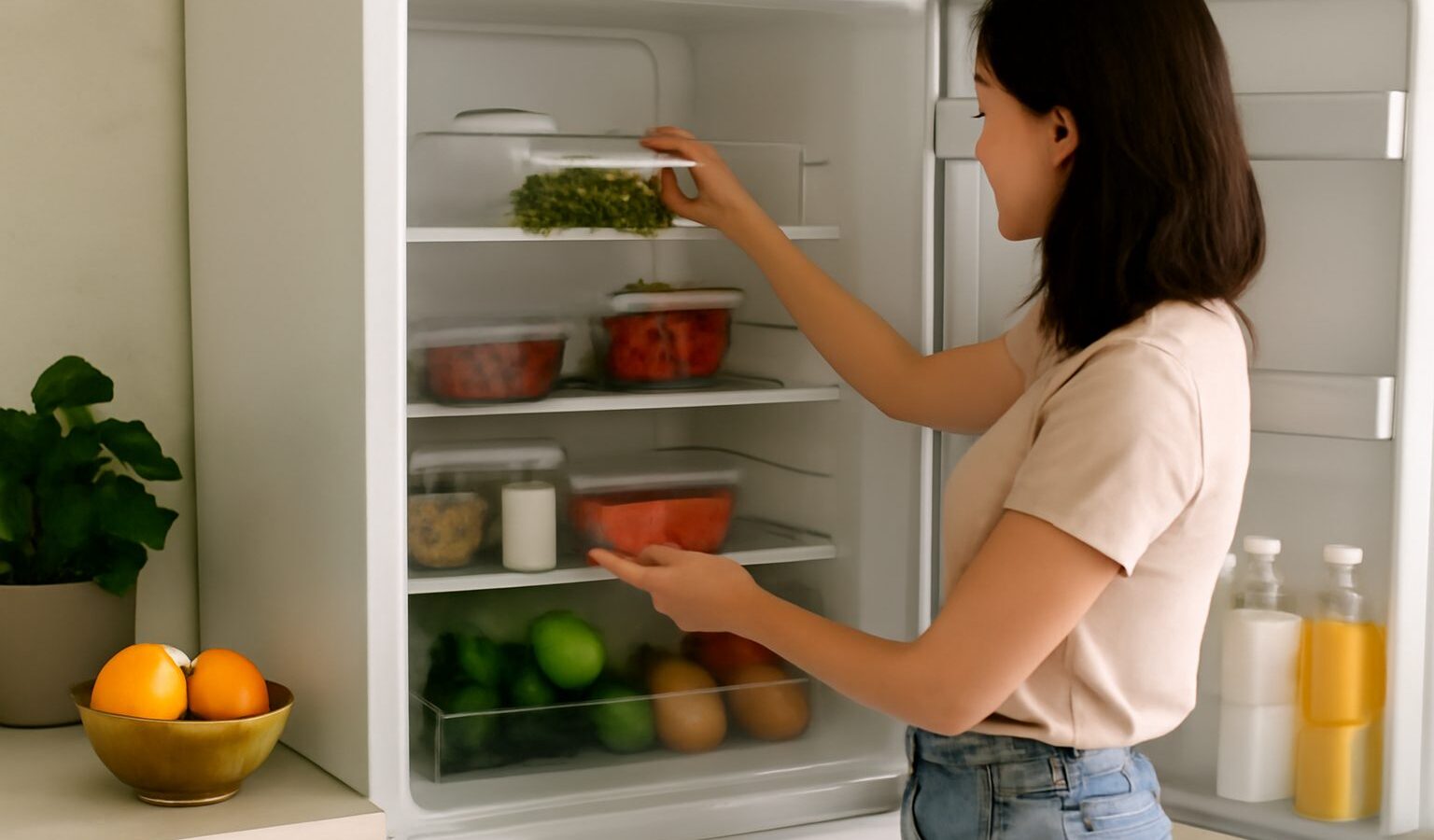
Learning to organise your fridge is one of the quickest wins in a Singapore kitchen. When every item has a home, you waste less food, spend less at the shops and stop that daily hunt behind the sauce bottles. This guide walks you through zones, containers, labelling and a simple routine that keeps everything cold, safe and easy to reach.
Start with zones, not shelves
A fridge is colder at the bottom and near the back, and warmer in the door. Working with that natural temperature map is the whole secret to keeping food fresh in our warm, humid weather. Assign a purpose to each area and put things back in the same place every time.
- Top shelves: ready to eat items such as leftovers, cooked dishes, yoghurt and drinks. These sit at a steadier temperature and are easy to see, so nothing gets forgotten.
- Lower shelves: raw meat, poultry and seafood, always in a sealed container or on a tray so drips cannot reach food below. This is the coldest zone and the safest spot for raw proteins.
- Crisper drawers: vegetables in one, fruit in the other. Keeping them apart slows spoilage because many fruits release gases that make greens wilt faster.
- Door shelves: the warmest area, so reserve it for condiments, sauces and jams that cope well with small temperature swings. Milk and eggs last better on an inside shelf, not the door.
Set the fridge to run cold enough that a thermometer reads around 4 degrees Celsius, and the freezer at about minus 18 degrees Celsius. A cheap fridge thermometer removes the guesswork, which matters most during a hot afternoon when the door is opened often.
Containers that earn their place
Clear, stackable containers turn a cluttered fridge into something you can actually scan in seconds. In a compact HDB kitchen, going vertical is how you find room you did not know you had.
- Use square or rectangular boxes rather than round ones. They tessellate neatly and waste far less space.
- Keep a clear bin for “eat me first” near the front. Anything close to its date goes here, which cuts waste dramatically.
- Decant opened packets of cold cuts, tofu and cut fruit into airtight boxes. This contains odours and stops the fridge smelling of last night’s curry.
- A lazy Susan on a deep shelf brings jars at the back within easy reach, so nothing expires unseen.
Labelling and dating
Labelling sounds fussy until the day you find a mystery container and cannot tell if it is safe. A roll of masking tape and a marker is all you need. Write the contents and the date you cooked or opened the item, then stick it on the lid facing outward. For the freezer, this is essential, because frozen food all starts to look alike under a layer of frost.
Keeping food safe and rotating stock
Good organisation is really about food safety and rotation. The principle is simple: first in, first out. When you unpack groceries, move older items to the front and place new ones behind, so you always reach for the oldest first.
Cool cooked food quickly before it goes in, ideally within a couple of hours, and never crowd hot dishes against the walls where they block airflow. Keep raw and cooked foods well separated to avoid cross contamination. When in doubt about whether something is still good, trust your senses and err on the side of caution rather than risk a bad stomach.
Freezer discipline
The freezer is where good intentions go to be forgotten. Treat it like a small warehouse with a system. Freeze items flat in bags so they stack like files and thaw faster. Portion meat and stock into meal sized amounts before freezing, so you defrost only what you need. Keep a simple list taped to the door of what is inside and roughly when it went in.
Quick reference: where things go
| Item | Best zone | Notes |
|---|---|---|
| Cooked leftovers | Top shelf | Airtight box, eat within a few days |
| Raw meat and seafood | Lowest shelf | Sealed, on a tray to catch drips |
| Vegetables | Crisper drawer | Keep slightly loose, not sealed tight |
| Fruit | Separate crisper | Away from vegetables to slow wilting |
| Milk and eggs | Inside shelf | Not the warm door |
| Condiments and sauces | Door shelf | The warmest, most forgiving spot |
| Meat and stock for later | Freezer, flat | Portioned and labelled with dates |
A humidity note for Singapore homes
Our climate is the enemy of a fridge that is opened too often. Every time the door swings wide, warm damp air rushes in and forces the compressor to work harder, which also raises your bill. Decide what you want before you open the door, close it promptly, and check the rubber door seal now and then. If a folded piece of paper slips out easily when the door is shut, the seal may need cleaning or replacing.
Wipe up spills as they happen rather than letting them dry into sticky patches. A monthly wipe down with a mild solution of water and a little vinegar keeps odours and stickiness at bay without harsh chemicals near your food.
A simple weekly routine
Organisation only works if it is easy to keep up. Build a light habit around your grocery run.
- Before you shop, spend two minutes clearing anything past its best and wiping the shelf.
- Move older items forward as you unpack the new haul.
- Refill the “eat me first” bin with whatever is closest to its date.
- Once a week, plan a meal or two around what is already sitting in the fridge and freezer.
Done regularly, this takes only minutes and saves both money and food. A tidy fridge is not about looking pretty for a photo. It is about reaching in, finding what you need, and trusting that it is safe to eat. Start with the zones this week and let the rest fall into place.
Explore more: Kitchen Organisation and Storage · Storage and Organisation Solutions · Decluttering Your Home