
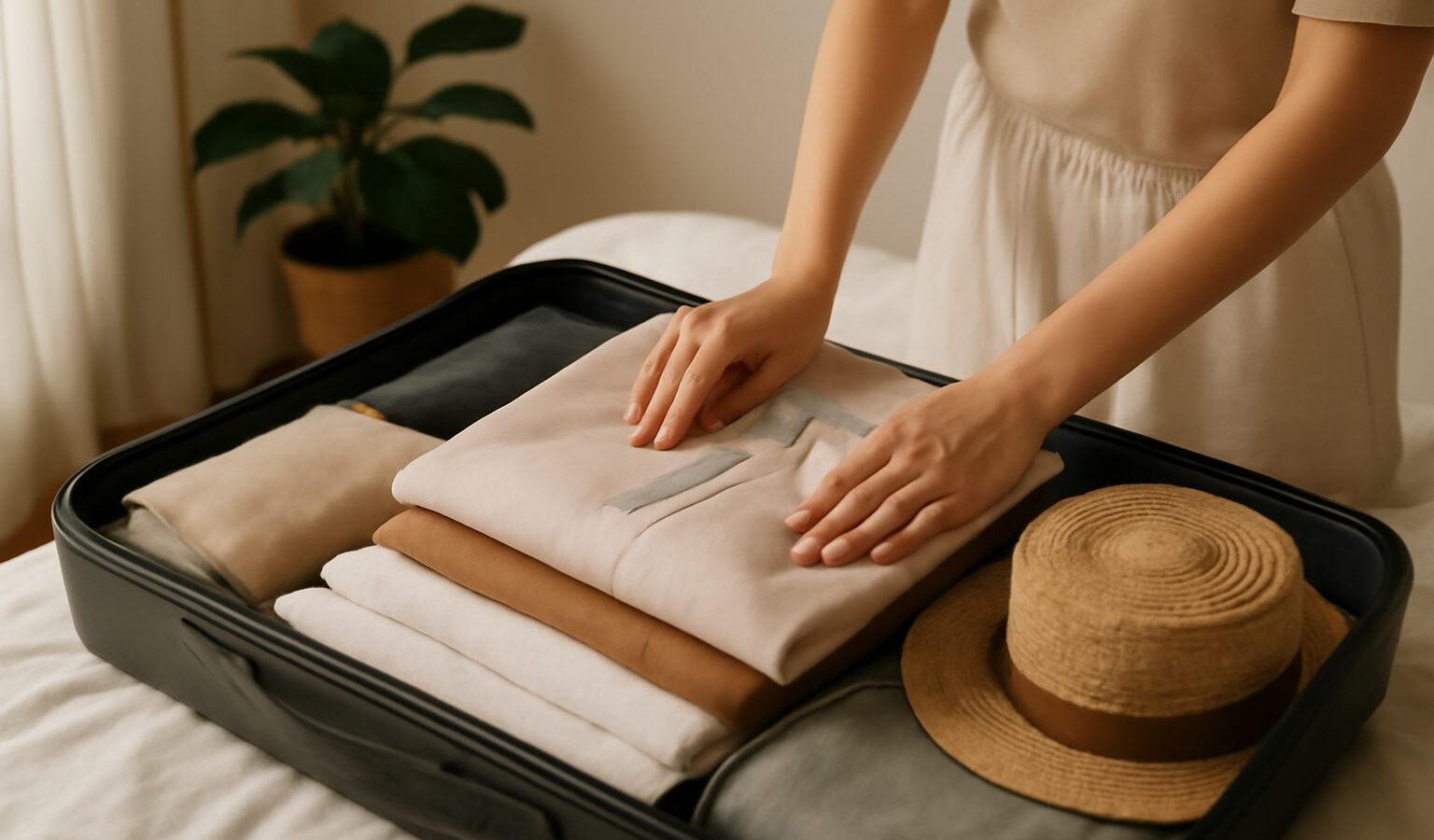
There are few things more deflating than opening your suitcase at your destination to find your carefully chosen outfits crushed into a mass of wrinkles. Whether you are heading off on a short getaway to the region or a longer trip somewhere cooler, packing clothes without creasing is a genuinely useful skill that saves you from ironing in a cramped hotel room. The secret is not one magic trick but a combination of the right folding technique, smart layering and a few simple tools.
This guide walks you through choosing travel-friendly fabrics, the rolling and folding methods that actually work, and how to organise your suitcase so everything arrives ready to wear.
Start Before You Fold: Fabric and Prep
Half the battle against creasing is won before you pack a single item. Some fabrics resist wrinkles far better than others, so if you want low-maintenance travel, choose accordingly.
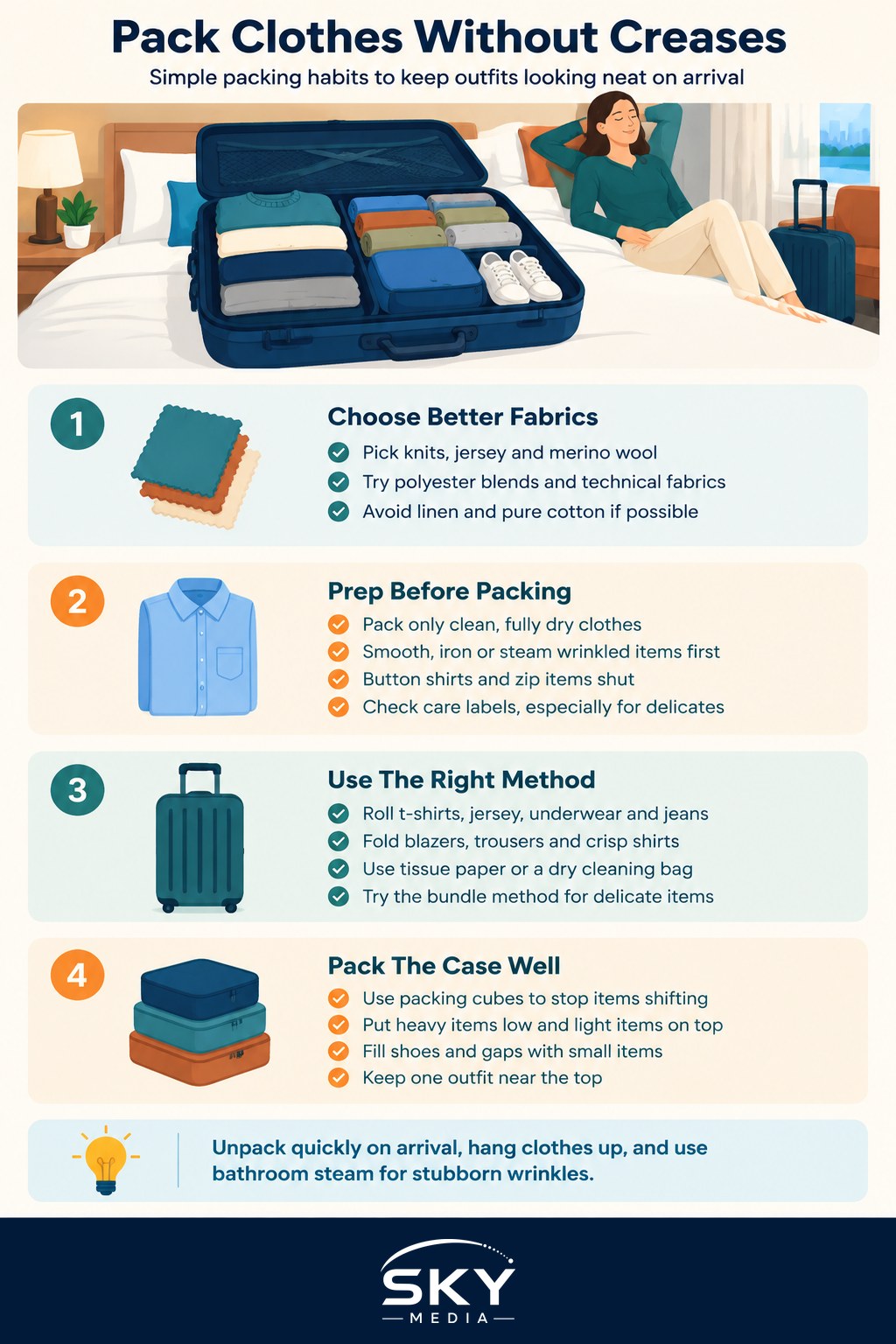
- Wrinkle-resistant choices: knits, jersey, merino wool, polyester blends and technical performance fabrics tend to bounce back after being packed.
- Crease-prone choices: linen and pure cotton, especially crisp cotton shirts, wrinkle easily and need more care or a quick steam on arrival.
Our guide to clothing fabrics and materials can help you understand how different textiles behave, which is handy when you plan a travel wardrobe. If you are building a set of pieces specifically for travelling, our guide on how to build a travel capsule wardrobe shows you how to pack fewer, more versatile items.
Prep your clothes properly before packing:
- Make sure everything is clean and completely dry. Packing even slightly damp clothes invites creases and, in a warm climate, mildew and odours.
- Iron or steam anything that is already wrinkled before it goes in, since it is far easier to pack smooth clothes than to fix them later.
- Button shirts and do up zips, which helps garments hold their shape.
- Always glance at the care label first, especially for delicates, so you know what each item can and cannot take.
Rolling, Folding and the Bundle Method
There is no single best technique, because the right one depends on the garment. Here is how to match the method to the item.
Rolling
Rolling is excellent for soft, casual and knit items such as t-shirts, jersey dresses, underwear, activewear and jeans. Rolled clothes have no hard fold lines, so they resist the sharp creases that folding can create, and they pack tightly to save space. Lay the item flat, smooth out any wrinkles with your hand, then roll firmly from one end. Roll snugly but not so tight that you crush the fabric.
Folding
Structured items such as tailored trousers, blazers and crisp shirts often do better folded, ideally along their natural seams. To reduce the crease line, place a sheet of tissue paper or a thin plastic dry cleaning bag inside the fold, as the smooth layer lets the fabric slide rather than crimp. Fold along existing creases like the trouser front, and fold as few times as the suitcase allows.
The bundle method
For minimising creases across a whole wardrobe, the bundle method is hard to beat. You wrap your clothes around a soft central core, such as a packing pouch of socks and underwear, layering the largest and most crease-prone items first and smaller ones on top. Because nothing is sharply folded, wrinkles are dramatically reduced. It takes a little practice but is worth learning for delicate or formal pieces.
Organise the Suitcase for a Wrinkle-Free Arrival
How you arrange everything inside the case is just as important as how you fold each piece. A well-ordered suitcase keeps clothes from shifting and crushing in transit.
- Use packing cubes. They keep rolled and folded items compact and stop everything sliding around, which is a major cause of mid-journey creasing. They also make unpacking painless.
- Layer by weight. Place heavier items like jeans and shoes at the bottom, near the wheels, and lighter, more delicate pieces on top so nothing heavy presses down on them.
- Fill the gaps. Tuck socks, underwear and small accessories into shoes and empty corners. A tightly packed case has less room for clothes to move and wrinkle.
- Protect tailoring. Lay a folded blazer or dress across the very top, or use a dedicated garment folder, so it stays flat.
- Keep one outfit accessible. Pack a fresh, ready-to-wear outfit near the top for your first day.
When you arrive, unpack as soon as you can and hang everything up, since clothes left compressed in a closed case will only set their creases deeper. For any stubborn wrinkles, hanging a garment in the bathroom while you run a hot shower lets the steam relax the fabric gently, no iron required. If you travel often for work, our guide to airport and travel outfits has more ideas for looking sharp on the move.
The Takeaway
Packing clothes without creasing comes down to a simple sequence: choose forgiving fabrics, prep and smooth everything before it goes in, roll the casual pieces, fold or bundle the structured ones, and pack the case tightly with cubes so nothing shifts. Unpack and hang your clothes as soon as you arrive, and use a steamy bathroom for any last touch ups. Master these habits and you will step off the plane with your wardrobe looking as good as it did at home, ready to enjoy your trip rather than hunting for an iron.
Frequently Asked Questions
Is rolling or folding better for packing a suitcase? Neither wins every time. Rolling suits soft items such as t-shirts, jersey dresses and jeans, while structured pieces like blazers, tailored trousers and crisp shirts usually do better folded along their seams. Many travellers combine both methods in one case.
Do packing cubes really help prevent wrinkles? They help by keeping clothes compact and stopping them sliding around during transit, which is a major cause of creasing. They also make unpacking easier. Cubes work best when packed snugly but not so tightly that the clothes are crushed.
How do I get creases out of clothes in a hotel room? Hang the garment in the bathroom while you run a hot shower, and let the steam relax the fabric. Unpack and hang everything as soon as you arrive, since clothes left compressed in a closed case set their creases deeper.
Which fabrics are best for travelling without an iron? Knits, jersey, merino wool, polyester blends and technical performance fabrics tend to bounce back well. Linen and crisp pure cotton wrinkle easily, so they need more care or a quick steam on arrival.
How should I pack a blazer so it does not crease? Fold it along its natural lines, or lay it flat across the very top of the case so nothing presses on it. A sheet of tissue paper inside the fold reduces the crease line. A garment folder is another option.