
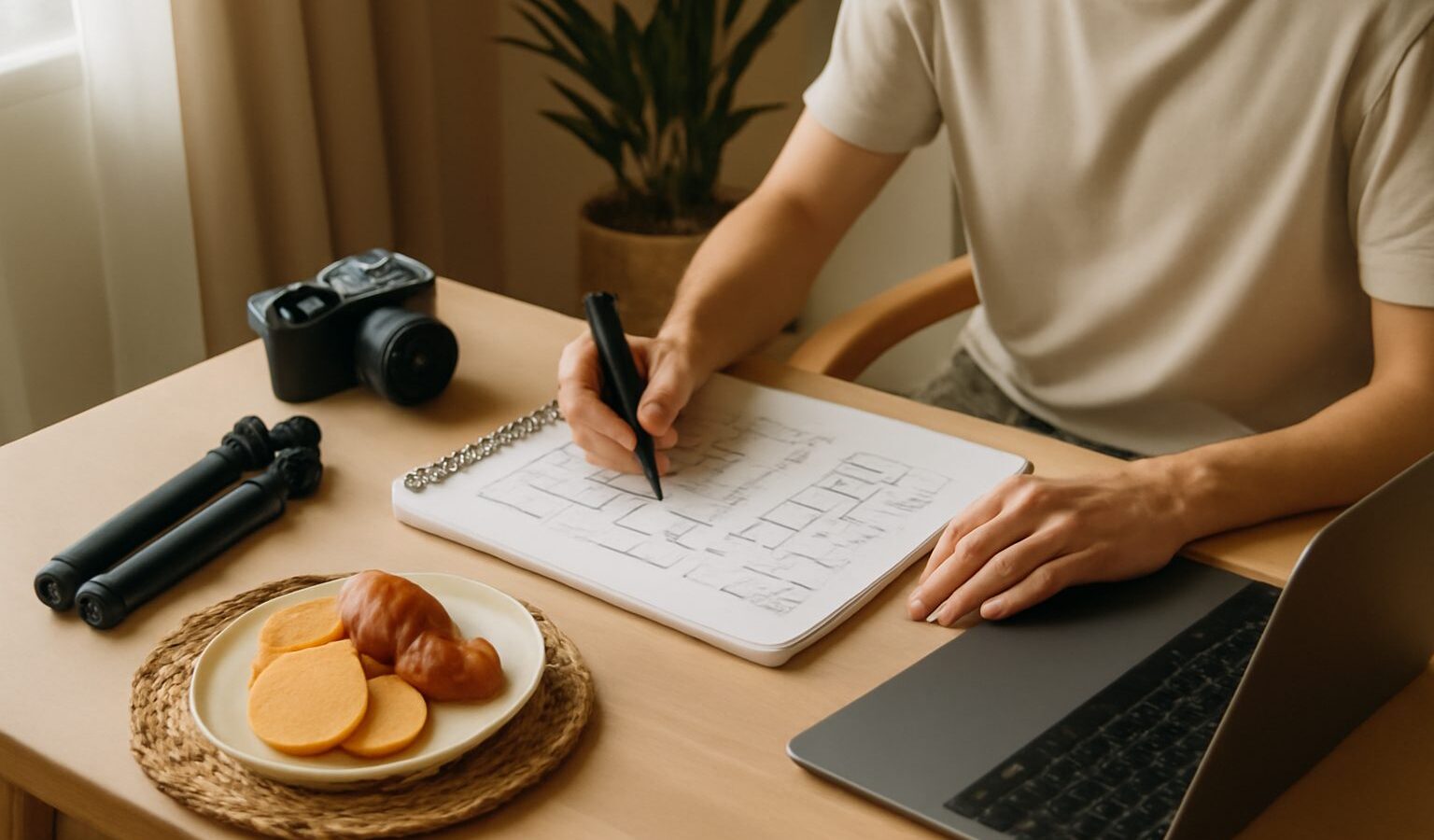
Great videos rarely happen by accident. Behind almost every clip that flows well is a plan that was worked out before the camera rolled. Learning to storyboard a video in Singapore, whether it is a short reel, a wedding highlight, or a corporate explainer, saves you time on the day, reduces stress, and gives your edit a shape to follow. A storyboard is simply a visual plan of your shots, drawn or described frame by frame, and you do not need to be an artist to make one.
This guide walks you through planning from the first idea to a shot-ready storyboard, so your next shoot feels calm and organised rather than a scramble.
Start With the Story and the Message
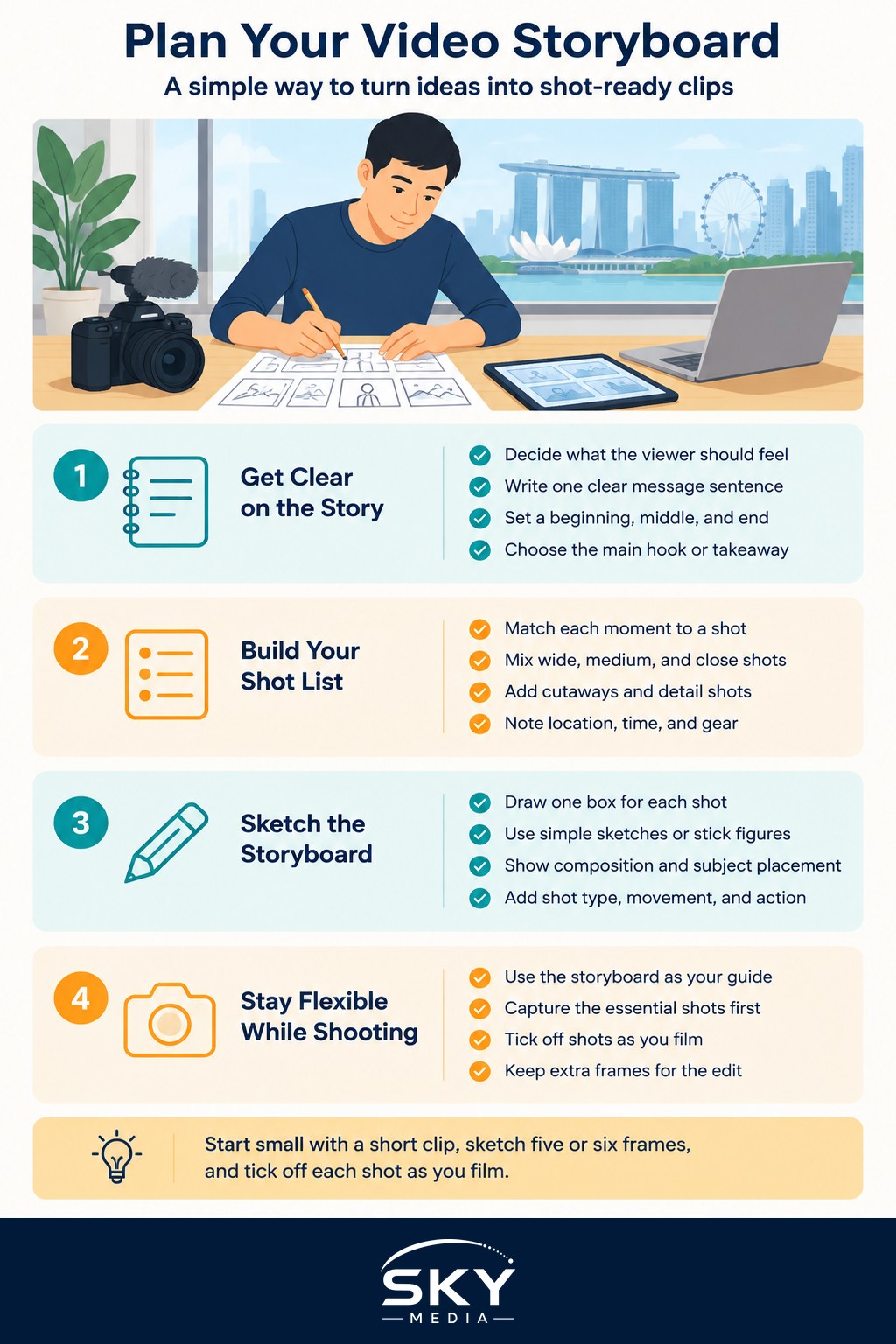
Before you think about shots, get clear on what your video is actually about. Ask yourself one plain question: what should the viewer feel or understand by the end? A birthday video might aim for warmth and nostalgia. A product clip might aim to make something look desirable and easy to use. Write that goal down in a single sentence and keep it in front of you, because every shot you plan should serve it.
Next, outline the beginning, middle, and end. Even a thirty-second video benefits from a structure: a hook that grabs attention, a middle that develops the idea, and an ending that lands the message or the call to action. If storytelling is new to you, our guide on storytelling and shot types in video is a useful companion and shows how deliberate shots build mood.
Once the story is clear, write a simple script or a list of the moments you need to capture. For interviews or voiceovers, jot down the key lines. For a montage, note the feelings and locations. This becomes the backbone of your storyboard.
Turn the Script Into a Shot List
A shot list is the practical bridge between your idea and your storyboard. Go through your script or outline and, for each moment, decide how you want to show it. Note the framing, such as a wide establishing shot, a medium shot, or a close-up, and any camera movement like a slow pan or a static hold.
Think in variety. A sequence feels alive when you mix wide, medium, and close shots rather than filming everything from one distance. Plan a few cutaways and detail shots too, since these give your editor room to breathe and hide any joins. Our guide on how to make a shot list for a shoot goes deeper into building a thorough one, and how to shoot b-roll footage explains how to gather those all-important extra clips.
For each shot, add practical notes: the location, the rough time of day, and anything you need to bring. In Singapore this is worth taking seriously. Golden hour near the equator is short, harsh midday sun can be unflattering, and a sudden downpour can end an outdoor shoot in minutes, so plan your outdoor frames for softer light and have an indoor backup in mind.
Sketch Your Storyboard, Frame by Frame
Now turn your shot list into a storyboard. Draw a row of boxes, one per shot, and in each box sketch a rough picture of the frame. Stick figures and simple shapes are completely fine. The point is to show composition: where the subject sits, how much space is around them, and where the eye should go. Under each box, write the shot type, any camera move, and the line of dialogue or action that goes with it.
You can storyboard on paper, on a tablet, or even with quick photos taken on your phone at the location during a scout. If you cannot draw at all, a written storyboard that describes each frame in a sentence works nearly as well. The goal is that anyone could pick up your plan and know what to film.
Storyboarding also reveals problems early. You might notice two shots that look too similar, a jump that will feel jarring, or a missing transition. Fixing these on paper costs nothing, while fixing them after a shoot can be impossible. If you are scouting real spots, take reference photos on your phone so you can plan framing before the shoot day.
Keep It Flexible on the Day
A storyboard is a guide, not a cage. On the shoot, conditions change, better ideas appear, and light does its own thing. Use your storyboard to make sure you capture the essential shots first, then give yourself permission to grab extra frames that inspire you. Tick off each shot as you get it so nothing is forgotten in the rush.
When you sit down to edit, your storyboard becomes a map. You already know the order and the intent, so assembling a rough cut is far quicker. If editing is new to you, basic video editing for beginners will help you turn your planned clips into a finished piece.
Planning and storyboarding might feel like extra work at first, but it quickly becomes second nature and pays off every single time. Start small with a short clip, sketch out even five or six frames, and notice how much smoother the shoot feels. The more you plan, the more confident and creative you can be when the camera finally rolls.
Frequently Asked Questions
How detailed does a storyboard need to be for a short reel? Not very. For a short reel, five or six rough frames with a note on shot type and action is enough. Stick figures work fine, and a written description of each frame does almost as well.
Is a shot list the same thing as a storyboard? They are related but different. A shot list is a written checklist of the shots you need, while a storyboard shows each frame visually. Using both is ideal, but either one is better than arriving with no plan.
Should I scout the location before the shoot? Yes, if you can. A short visit lets you check light, space, background noise and where you can stand. Take reference photos on your phone and plan framing around them, with an indoor backup in mind for outdoor shoots.
How do I plan a video for an unpredictable event like a wedding? List the must-have moments first and storyboard around them, then leave room for surprises. Tick shots off as you capture them so nothing essential is missed, and treat the plan as a guide rather than a script.
What should I do if my shoot goes differently from the storyboard? Capture the essential shots first, then follow any better ideas that appear. In the edit, the storyboard still shows the intended order and purpose, so you can adapt rather than start from nothing.