

Sometimes life just does not cooperate. A packed CCA schedule, back-to-back tests, or a topic you left a little late, and suddenly you have far less time to prepare than you would like. Learning how to revise in a short time in Singapore is a genuinely useful skill, not because last-minute study is ideal, but because everyone faces a time crunch now and then. The key is to be strategic and honest with yourself rather than trying to cram every page into your head the night before, which rarely works and leaves you exhausted for the exam itself.
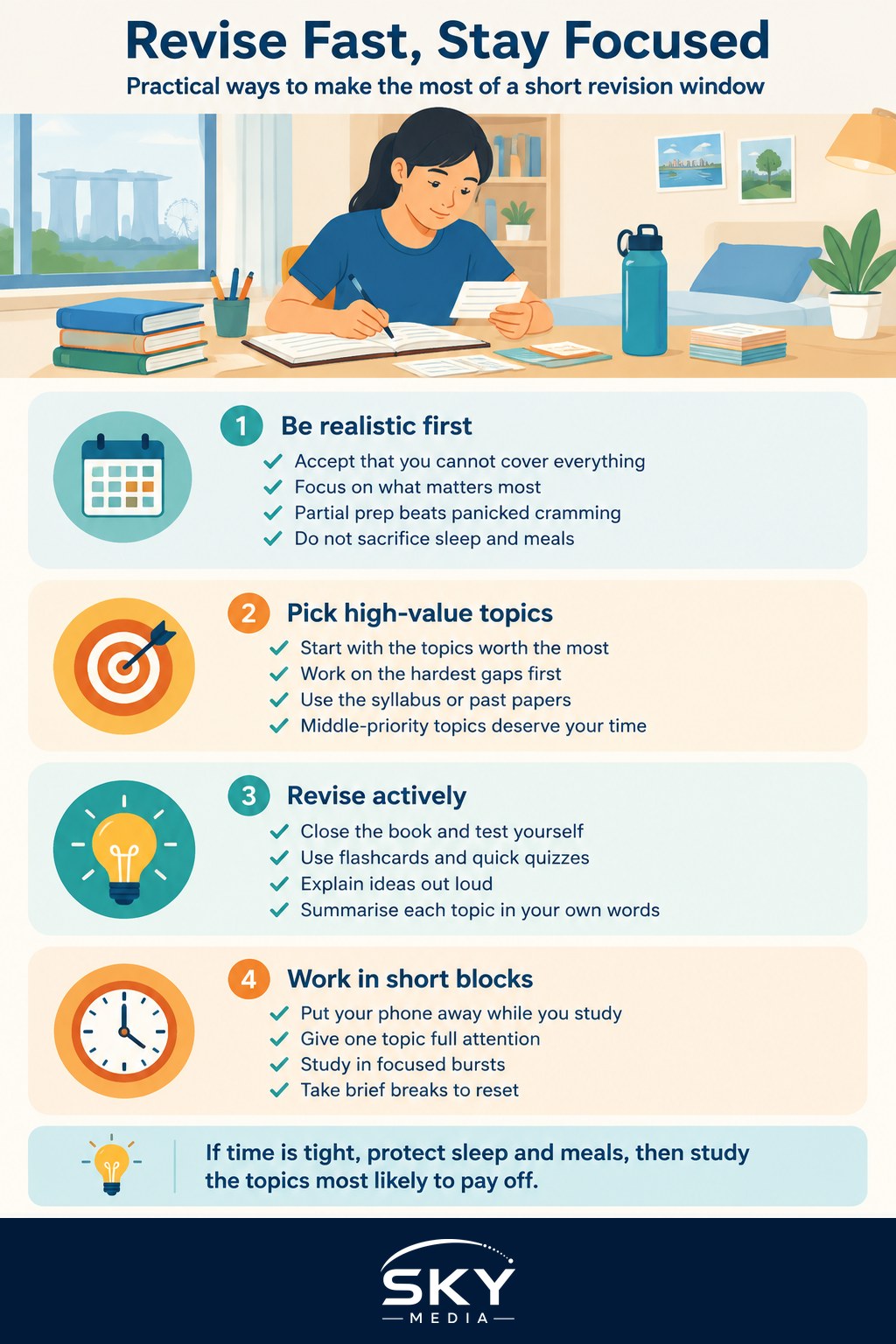
First, be realistic about what you can do
Before you open a single book, accept the situation calmly. You cannot cover everything deeply in a short window, so trying to will only scatter your effort and raise your stress. The smarter move is to decide what matters most and put your limited hours there.
Panic is the enemy of efficient revision. When you feel overwhelmed, take a breath and remember that partial, focused preparation always beats frantic, unfocused reading. You are aiming to walk in able to answer the questions most likely to appear, not to become an expert on the whole syllabus overnight.
It also helps to protect your basics. Even under pressure, a reasonable night’s sleep and a proper meal will do more for your recall than a few extra bleary hours of reading. The link between rest and memory is real, and staying up all night usually costs you more than it gains, as sleep and learning explains.
Prioritise ruthlessly
With limited time, choosing what to study is more important than how you study it. Look at the topics that carry the most marks, come up most often, or that you find hardest, and start there. A quick look at the syllabus outline or your school’s past papers tells you where the marks usually sit.
Try sorting your material into three rough buckets:
- Things you almost know and can lock in quickly with a little review.
- High-value topics you are shaky on, where focused effort will earn the most marks.
- Low-probability or very difficult areas you may have to accept you will skim or skip.
That middle bucket is where your best hours should go. It is tempting to revise what you already feel comfortable with because it feels productive, but that is comfort, not strategy. Practising on past year papers is one of the fastest ways to see which topics are worth your time and to get used to the question style.
Use fast, active methods
How you revise matters even more when time is tight. Passive rereading is slow and gives a false sense of security, since recognising words on a page is not the same as being able to produce the answer. Active methods pack far more learning into each minute.
Test yourself instead of reading. Close the book and try to write down or say what you remember, then check and fill the gaps. This is uncomfortable precisely because it works, and using active recall to study shows why retrieving information is so much more powerful than reviewing it. Flashcards, quick self-quizzes, and answering past questions from memory all count.
Work with the material rather than just looking at it. Explain a concept out loud as if teaching it, and you will quickly find the parts you do not really understand. Summarise a topic onto a single sheet in your own words. These methods force your brain to engage, which is exactly what makes short revision stick.
Focus and pace yourself
A short window only helps if you actually concentrate through it. Put your phone in another room, silence notifications, and give one topic your full attention for a set block before switching. Even a home flat with family around can become workable if you claim a corner and set clear expectations. If focus is a struggle for you, improving focus and concentration has techniques worth borrowing.
Short, focused blocks with brief breaks tend to beat long, foggy sessions. Study hard for around twenty five to forty minutes, then take five to stretch or drink some water, and repeat. Breaks are not wasted time. They keep your mind fresh enough to keep learning, which matters most when every minute counts.
After the crunch
Revising in a short time can rescue a particular test, but it is worth reflecting afterwards on how you got here. If last-minute scrambles are becoming a habit, a lighter, steadier routine over the term would save you a lot of stress and usually produces better results. There is no shame in the occasional crunch, though, and knowing how to handle one calmly is a real advantage.
So if the clock is against you, do not despair. Choose your priorities, revise actively, protect your sleep, and give it your honest best. You will often surprise yourself with how much you can hold together when you work with the time you have rather than mourning the time you do not.