
The kitchen is where a surprising amount of household waste is created, and it is also where small changes add up fastest. Building a low waste kitchen in Singapore does not mean going fully zero-waste overnight or spending a fortune on matching glass jars. It means buying a little more thoughtfully, storing food so it actually gets eaten, and sorting what is left over so more of it is recycled instead of tossed. This guide walks through practical steps that fit an HDB or condo kitchen, our tropical heat, and a busy weekday routine.
Start By Wasting Less Food
Food waste is the biggest single problem in most kitchens, and it is also the easiest place to save money. In our climate, fresh produce wilts quickly, so the goal is to buy what you will realistically use and to keep it in good condition.
A few habits make a real difference:
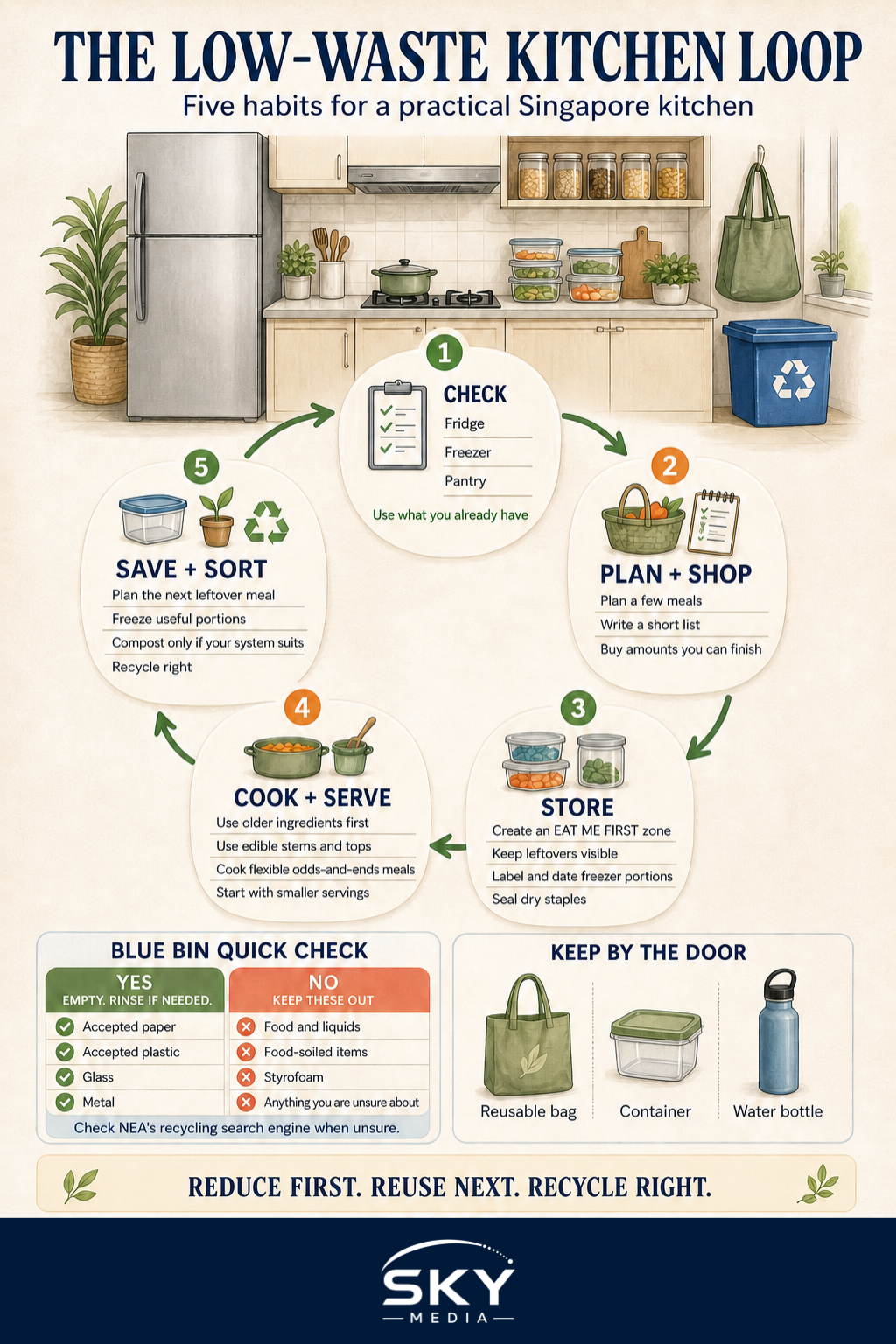
- Plan two or three meals before you shop, and write a short list so you are not buying on impulse.
- Buy loose vegetables and fruit in the amount you need rather than large pre-packed trays.
- Do a quick “eat me first” check of the fridge every few days and cook what is on its way out.
- Learn to use the whole ingredient, from broccoli stems to the green tops of spring onions.
- Store leftovers in clear containers at the front of the fridge so they are seen, not forgotten.
Freezing is your friend in a hot country. Bread, curry leaves, ripe bananas, cooked rice, and portions of stock all freeze well and cut down on last-minute takeaways. Labelling containers with the date helps you use them in good order.
Store Food So It Lasts in the Heat
Good storage is half the battle, because humidity and warmth spoil food fast. Keeping your fridge at the temperature recommended by the manufacturer, and not overpacking it, helps cold air circulate. Leafy greens last longer wrapped loosely and kept in the crisper drawer, while herbs stay fresh standing in a little water like a bouquet.
Move away from single-use cling film and foil where you can. Reusable options work well and pay for themselves over time:
- Airtight containers in glass or sturdy food-grade plastic for leftovers and prepped ingredients.
- Beeswax or vegan wraps for covering bowls and wrapping cut vegetables.
- Silicone lids and pouches that go from fridge to freezer and back.
- Clean glass jars, saved from sauces and jams, for dry goods and homemade stock.
Dry staples like rice, flour, and biscuits keep best in sealed containers, which also keeps ants and pantry pests out, a real concern in our climate. If you buy from a refill or bulk store, bring your own clean, dry containers and note the tare weight so you only pay for the contents.
Recycle Kitchen Waste the Right Way
Once you have bought and stored well, the last step is sorting what is left. Singapore uses a commingled system, so most recyclables go together into the blue recycling bins found at HDB blocks and condos. The catch is contamination: one greasy pizza box or half-full bottle can spoil a whole batch, so a little care matters.
The table below covers common kitchen items and where they usually belong. When in doubt, check NEA’s guidance rather than “wish-cycling” and hoping for the best.
| Kitchen item | Blue recycling bin? | What to do first |
|---|---|---|
| Rinsed plastic bottles and food tubs | Yes | Empty, rinse, and leave the cap on |
| Clean paper, cardboard, cereal boxes | Yes | Flatten; keep dry and grease-free |
| Metal cans and clean aluminium foil | Yes | Rinse out food residue |
| Soft plastics like cling film and bags | No | Reuse, or check for special drop-off points |
| Used cooking oil | No | Cool, seal in a container, use a designated point |
| Food scraps and soiled tissues | No | General waste, or compost the food scraps |
A quick rinse of containers is usually enough, and they can drip dry on the rack. Remember that soft plastics, styrofoam, and food-soiled paper are generally not accepted in the blue bin, so they go into general waste unless a specific collection exists. Because rules and accepted items are updated from time to time, it is worth checking the official NEA source now and then.
Try Composting, Even in a Flat
Composting sounds like something for people with gardens, but many HDB and condo households manage it in a small way. Turning fruit peel, coffee grounds, and vegetable trimmings into compost keeps them out of the incinerator and gives you free food for plants on the corridor or balcony.
If you have limited space, consider these approaches:
- A compact bokashi bin, which ferments food scraps in a sealed pail with very little smell, suits indoor use.
- A small worm bin kept in a shaded, ventilated spot handles fruit and vegetable scraps quietly.
- Some community gardens and residents’ networks accept food scraps or run shared composting, so ask around your estate.
Keep meat, oily food, and dairy out of most home systems, as they attract pests and smell in the heat. Done right, composting closes the loop on a big part of your kitchen waste and reduces the weight of your general rubbish.
Build Habits That Actually Stick
The greenest kitchen is the one you can keep up with on a tired Tuesday, so aim for progress rather than perfection. Pick one or two changes to start, such as a weekly fridge check and swapping cling film for reusable containers, and let them become routine before adding more.
Keep a small kit ready by the door and in your bag: a couple of reusable bags, a container or two, and a bottle. That way, refusing extra packaging at the market or wet market becomes automatic. Celebrate the wins you can see, like a lighter rubbish bag and a smaller grocery bill, because those are the things that keep a habit alive.
No one runs a perfect kitchen, and you do not need to. Every meal cooked from what you already have, every bottle rinsed and recycled, and every peel that becomes compost is a small, genuine contribution to the goals set out in the Singapore Green Plan 2030.
Explore More
Ready to go deeper on the food side of things? Start with meal planning to cut food waste and pair it with eco-friendly food storage that lasts. When you shop, our guide to reducing food packaging when you shop helps stop waste before it reaches your kitchen at all.