

Turning up to a location cold and hoping it works out is a gamble, and it often costs you the shot. Scouting, which simply means visiting and assessing a place before the shoot, is one of the habits that separates prepared photographers from stressed ones. Location scouting in Singapore is a real pleasure because we are packed with variety, from colonial shophouses and glassy skylines to lush parks and quiet coastlines, often within a short walk of each other. This guide shows you how to find promising spots, judge them properly, and shoot there responsibly, with due respect for NParks, venue rules, and any permits that may apply.
Finding inspiration is a natural first step, and our roundup of the best places to photograph in Singapore is a good place to gather ideas before you narrow down.
Finding and Choosing Locations
Scouting starts long before you arrive, with a bit of research, and finishes with your own eyes on the ground.
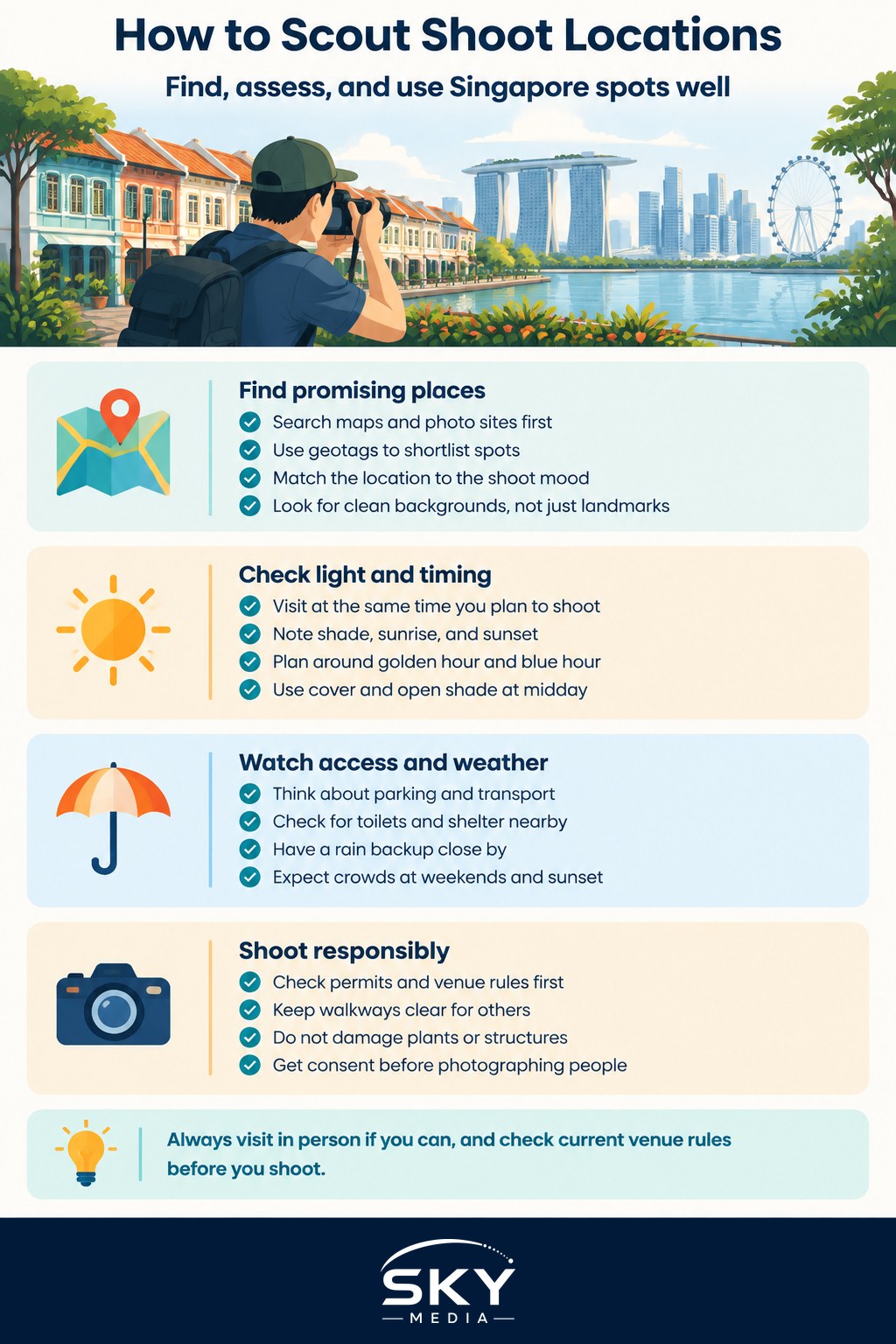
- Research online first. Maps, photo-sharing sites, and geotags give you a sense of a place, its angles, and what others have found there. Treat this as a shortlist, not a substitute for visiting.
- Match the place to the shoot. A moody portrait needs different surroundings from a bright product shot or an energetic family session. Let the mood you want guide where you look.
- Look for backgrounds, not just landmarks. A clean, uncluttered background often serves a portrait better than a famous but busy icon. Textured walls, greenery, and simple architecture all work hard for you.
- Consider the practicalities. Think about parking, public transport, toilets, shelter from sudden rain, and how far your subjects will have to walk in the heat. Comfortable subjects photograph better.
Once you have a shortlist, visit in person if you can. Photos online rarely tell you about crowds, noise, smells, or how the light actually moves through the space.
Assessing Light, Timing, and Access
A location is only as good as the light falling on it, and light changes through the day. This is the heart of scouting.
Check the light at the right time. Visit, if possible, at the same time of day you plan to shoot. Our sun is high and harsh near the equator, so a spot that is glorious at 8am may be brutally contrasty by noon. Note where shade falls, where the sun rises and sets relative to your background, and whether nearby buildings block or bounce light. Planning around golden hour and blue hour can transform an ordinary location, though remember our golden hours are short.
Plan for our harsh midday sun. If you can only shoot in the middle of the day, scout for covered walkways, tree cover, and open shade so you are not fighting hard shadows. Our guide on how to shoot in harsh midday sun has tactics for exactly this.
Watch the weather and the crowds. Rain arrives fast here, so have a sheltered backup nearby. Popular spots fill up, especially at weekends and sunset, so note quieter times and alternative angles.
Test your compositions. While scouting, take reference photos on your phone from different positions and heights. Thinking about framing and composition on the recce means you arrive on shoot day knowing exactly where to stand.
Permissions, Rules, and Shooting Responsibly
This part is easy to overlook and important to get right. Public and shared spaces come with expectations, and respecting them keeps these places open to photographers.
Many of our loveliest green spaces and gardens are managed by NParks or other bodies, and some sites, especially for commercial shoots, tripods, or larger setups, may require permits or have specific rules. Malls, private estates, places of worship, and heritage sites often have their own conditions too. As a general rule, check the current requirements for the specific venue before you go, seek permission where it is needed, and follow whatever conditions apply. Rules change, so verify the latest information rather than relying on what was true last year.
Beyond formal permits, shoot considerately:
- Keep walkways clear and do not block others who are sharing the space.
- Do not damage plants, climb on structures, or leave anything behind.
- Be respectful at cultural, religious, and heritage sites, and photograph people there only with permission.
- Get consent before photographing identifiable strangers, and be especially careful around children.
- Keep noise and disruption low, particularly in quiet residential or natural areas.
Treating locations and the people in them with care is not just courteous, it protects access for everyone who comes after you.
Wrapping Up
Good scouting turns a hopeful outing into a confident, productive shoot. Research widely, visit in person, study how the light moves, and plan around our heat, quick weather, and short golden hours. Just as importantly, respect NParks and venue rules, sort out any permits in advance, and behave as a guest in shared spaces. Do this and you will arrive on shoot day calm and ready, knowing your location will deliver rather than surprise you. The effort you put in beforehand is invisible in the final photos, but you will feel it in every relaxed, well-lit frame.
Frequently Asked Questions
Do I need a permit to shoot at a Singapore park or garden? It depends on the venue and the type of shoot. Commercial work, tripods or larger setups may need approval, and rules change. Check the current requirements with NParks or the venue before you go.
How can I scout a location if I cannot visit beforehand? Use maps, geotagged photos and street-level views to build a shortlist, and check how the light might fall at your planned time. It is no substitute for visiting, so arrive early on shoot day to walk around first.
What should I look for in a backup location for rainy days? A sheltered spot close to your main location, such as a covered walkway, indoor space or atrium, saves the day. Check access and venue rules in advance, since indoor sites often have their own conditions.
Is it better to scout at the same time of day as the shoot? Yes. Light changes through the day, so a spot that looks lovely in the morning can be harsh by noon. Visiting at your planned time shows where the shade, glare and reflections will be.
Can I photograph strangers who happen to be in my location shots? Be careful. Get consent before photographing identifiable people, take extra care around children, and avoid including anyone who objects. Wider shots where nobody is recognisable are safer, particularly if the images will be used commercially.
Further reading: Planning a Maternity Photoshoot in Singapore · How to Run a Mini Photoshoot Session