

Singapore is a very photographed city, and most of the time you can raise your phone or camera and shoot without asking anyone. But the moment you bring in a client, a model, lighting stands, a film crew or a drone, the rules change. Knowing when a photography permit in Singapore is needed saves you from being stopped halfway through a pre-wedding shoot or a paid product session.
This guide walks through the main types of places, from parks and MRT stations to malls, condos and the sky above them, and explains who usually gives permission. It is general information, not legal advice. Processes and fees change, so always confirm the current requirements with the agency or landowner before you shoot.
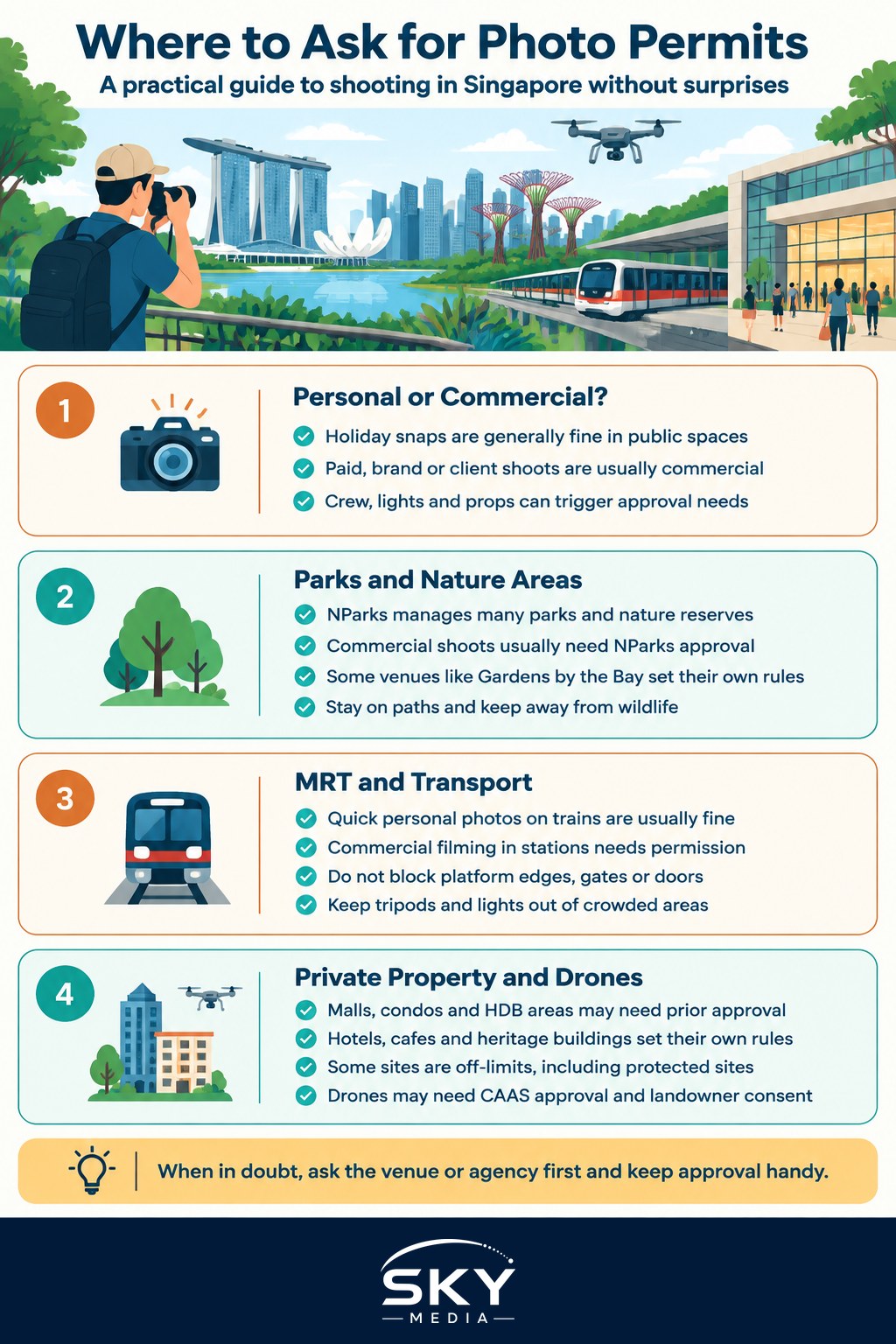
The Key Question: Personal or Commercial?
Almost every rule turns on one distinction.
- Personal photography means holiday snaps, family outings, hobby street or landscape shots, and casual photos for your own social media. In public spaces this is generally fine without a permit, provided you follow the venue’s rules and do not obstruct others.
- Commercial photography generally means a shoot done for payment, for a business, or for marketing. Examples include pre-wedding and wedding sessions with a hired photographer, fashion and product shoots, corporate videos, influencer content made for a brand, and film or TV production.
Size matters too. A shoot with a crew, props, reflectors, lights, tripods blocking a path or a cordoned-off area draws attention and is far more likely to need approval, even on public land. If you are unsure which side of the line you fall on, ask the venue. It costs nothing and avoids awkward conversations on the day.
Parks, Gardens and Nature Areas
Most parks, park connectors and nature reserves are managed by the National Parks Board (NParks). NParks has an application process for commercial photography and filming in the areas it manages, and the rules in nature reserves are stricter because of sensitive habitats. Check the NParks website for the current application steps, lead time and any charges.
Some major attractions and green spaces are run by their own operators rather than NParks, for example Gardens by the Bay and the attractions on Sentosa, which is managed by the Sentosa Development Corporation. These venues set their own rules for commercial shoots and filming, so contact the operator directly. Our Gardens by the Bay photography guide covers the creative side once you are cleared to shoot.
Even for personal shoots in green spaces, keep to the basics:
- Stay on paths and do not trample plants or enter closed areas for a better angle
- Do not move, touch or bait wildlife, and do not use flash on animals
- Keep tripods and bags out of the way of joggers and cyclists
MRT Stations, Buses and Transport Areas
Taking a quick personal photo on a train or platform is common. Organised shoots are different. Rail stations and trains are run by the public transport operators, SMRT and SBS Transit, under the Land Transport Authority (LTA). Commercial filming or photography in stations or on trains generally needs prior permission from the relevant operator.
Whatever the purpose, avoid:
- Blocking platform edges, escalators, fare gates or doors
- Using tripods or lights in crowded areas
- Photographing staff or passengers in a way that makes them uncomfortable
Station staff may ask you to stop if a shoot causes congestion or a safety concern, so cooperate politely.
Malls, Condos, HDB Estates and Other Private Property
Many places that feel public are actually private property.
- Shopping malls belong to their owners and are managed by mall management. Security often stops tripods, lighting and posed shoots, even personal ones. For any organised shoot, contact the mall’s management office in advance.
- Private condominiums are managed by the MCST (Management Corporation Strata Title, the body that runs a condo’s common property) through its managing agent. Residents usually need approval for shoots in common areas like the pool or lobby, especially with outside crews.
- HDB estates have common property such as void decks and corridors maintained by the town council. A commercial shoot that uses these spaces, or blocks them, should be cleared with the town council first.
- Hotels, restaurants, cafes and heritage buildings set their own policies. Ask before you arrive with equipment.
Places You Should Not Photograph at All
Some locations are off-limits regardless of purpose. Military camps, certain government installations and other sites declared protected under Singapore law display signs prohibiting photography. Treat those signs seriously. Checkpoints and the security areas around them are also not places for photos. If a security officer asks you to delete images or stop, comply and do not argue.
Drones Need Their Own Approvals
Drone flying is regulated by the Civil Aviation Authority of Singapore (CAAS). Depending on the drone’s weight, where you fly and whether the flight is for work or recreation, you may need to register the drone, hold a pilot licence or obtain specific permits. Large parts of Singapore sit near airports, airbases or protected areas where flying is restricted. Before any drone shot, recreational or commercial, check the current rules and the permitted zones on the CAAS website, and also get permission from the landowner of the place you take off from.
Quick Reference: Who to Ask
| Location | Casual personal photos | Commercial or crew shoot | Who to contact |
|---|---|---|---|
| Parks and nature reserves | Generally fine, follow park rules | Approval generally required | NParks |
| Gardens by the Bay, Sentosa attractions | Generally fine | Approval from the operator | The venue or its operator |
| MRT stations and trains | Quick snaps usually fine, no obstruction | Permission generally required | SMRT or SBS Transit |
| Shopping malls | Often allowed without tripods or lights | Prior approval needed | Mall management office |
| Condos and HDB common areas | Residents should check house rules | Approval needed | MCST or town council |
| Drones anywhere | Rules apply even for hobby flights | Rules and permits apply | CAAS and the landowner |
Planning a Shoot Without Surprises
A short checklist for photographers, couples and small businesses:
- Decide early if the shoot is commercial. If money, a brand or a client is involved, assume you need permission somewhere.
- Contact venues well ahead. Many processes take time, and popular spots get booked out. Ask what lead time they need.
- Ask what is included. Check whether approval covers tripods, lights, props, drones, the number of people and specific time slots.
- Keep the approval handy. A screenshot or printout helps if security asks.
- Respect people in your frame. Ask before photographing strangers up close, and be especially careful with children. Get written consent from models, and from parents for minors, if images will be used commercially. Our guide to school event photography covers sensitivity around children’s photos.
- Check copyright and trademarks if a recognisable building, artwork or brand is central to a commercial image. Ask the owner or seek professional advice.
- Have a weather plan. Afternoon storms are common, so agree on a backup date or an indoor option such as a home studio setup.
Night and Hobby Photography
Many photographers head out after dark for skylines, light trails and long exposures. For personal work, the same principles apply: you can usually shoot from public spaces, but keep tripods clear of walkways, respect closing times and do not climb barriers or rooftops without permission. If you are chasing star trails in a park or beach area, check when the area closes and stay in permitted zones.
When in doubt, ask first. A polite email to a venue or agency takes minutes, and it lets you focus on the light rather than on who might walk up and stop you.
Frequently Asked Questions
Do I need a permit for a pre-wedding shoot in Singapore? Often yes, since a shoot with a hired photographer counts as commercial photography. Parks, MRT stations, malls and condos each have their own approval process. Ask the venue or operator in advance, as many processes take time.
Can I use a tripod when taking personal photos at a mall? Often not. Malls are private property, and security often stops tripods, lighting and posed shoots, even personal ones. Contact the mall’s management office in advance for anything organised.
Do I need to register a hobby drone before flying it? You might, depending on the drone’s weight, where you fly and whether the flight is for work or recreation. Large parts of Singapore sit near airports, airbases or protected areas where flying is restricted. Check the current rules and permitted zones on the CAAS website.
Who do I ask about shooting in an HDB estate or condo? For HDB common property such as void decks and corridors, ask the town council. For a private condo, approach the MCST through its managing agent. Residents usually need approval for common areas like the pool or lobby, especially with outside crews.
Do I need consent before using photos of people commercially? It is wise to get it. Get written consent from models, and from parents for minors, if images will be used commercially. Ask before photographing strangers up close, and take extra care with children.
Further reading: Photography Courses in Singapore: Options and How SkillsFuture May Help