
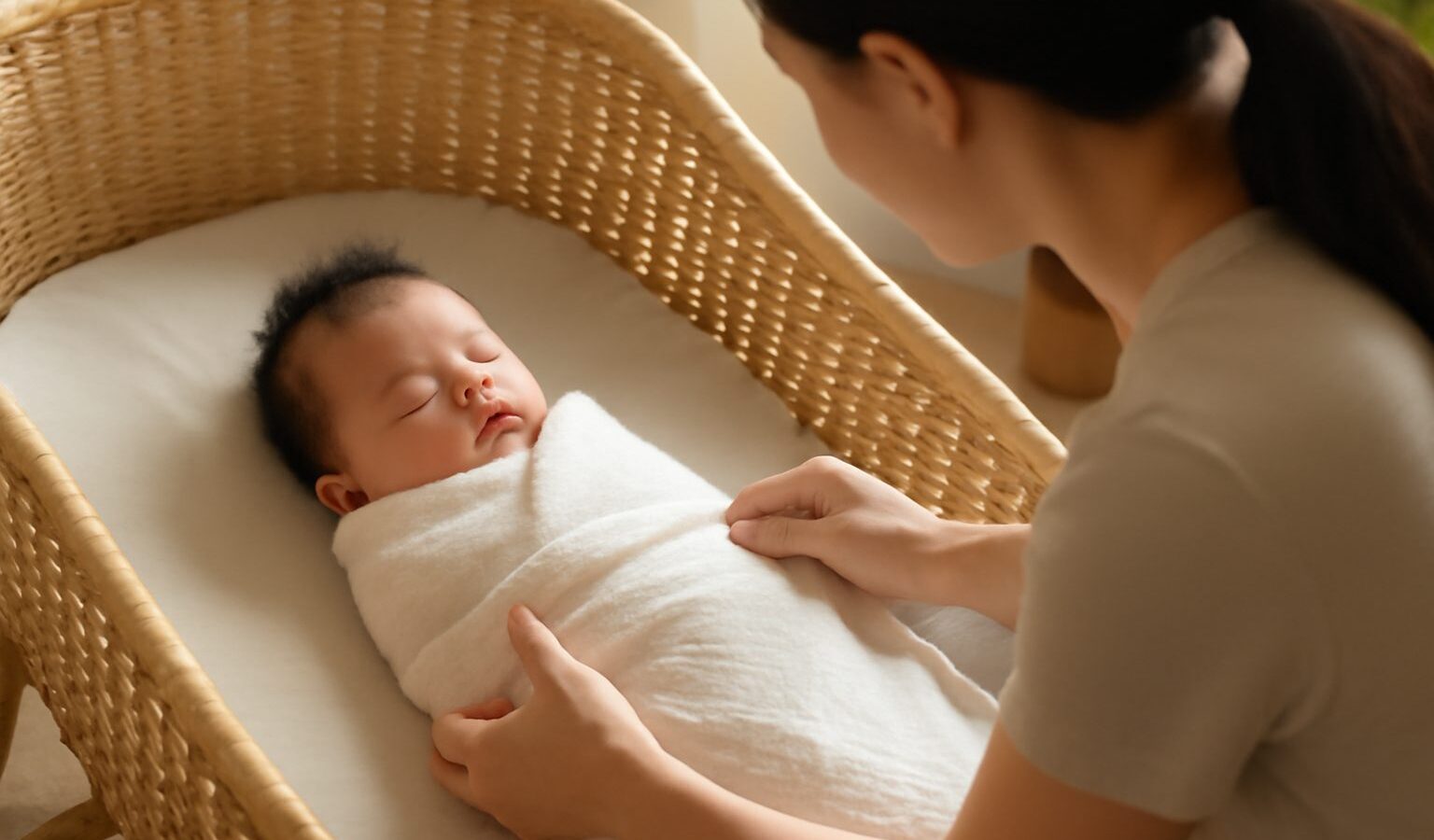
Bringing home a tiny, wriggly baby can feel wonderful and overwhelming at the same time. One of the oldest and most soothing comfort techniques is the swaddle, a snug wrap that helps your little one feel held. This guide to swaddling newborn singapore parents can use covers the safe technique step by step, how to keep hips healthy, when to stop, and how to stay cool in our warm, humid climate. Please treat this as general information and not medical advice. If you have any concerns about your baby, speak with your doctor or paediatrician.
Newborns are born with a startle reflex, sometimes called the Moro reflex. Their arms fling out suddenly, often waking them just as they drift off. A gentle wrap can calm this reflex, mimic the cosy feeling of the womb, and help some babies settle for sleep. Swaddling is not compulsory, and not every baby loves it, so watch your own child and follow their cues.
Why Some Babies Love a Swaddle
A good swaddle can offer a sense of security in the first weeks of life. Many parents find it helps during fussy evening periods and before naps. The wrap keeps those flailing arms contained, so your baby is less likely to startle themselves awake. It can also give you a calmer moment to feed, cuddle, and recover from the whirlwind of early parenthood.
That said, swaddling is a tool, not a rule. Some babies prefer to have their hands near their face or like to self-soothe by sucking on their fingers. If your baby fights the wrap, cries more when swaddled, or seems too warm, it is perfectly fine to skip it or try a lighter version.
The Golden Rule: Back to Sleep
Before we cover technique, remember the single most important safety point. Always place your baby on their back for every sleep, both naps and night-time. A swaddled baby should never be put down on their tummy or side to sleep. Back sleeping is strongly linked with a lower risk of sudden unexpected death in infancy, and the swaddle does not change that. Keep the sleep space clear of loose blankets, pillows, bumpers, and soft toys.
Hips-Healthy Swaddling
A safe swaddle is firm around the shoulders but loose around the hips and legs. Your baby needs room to bend their legs up and out at the hips, in a natural frog-like position. Wrapping the legs tightly and straight can strain the developing hip joints and is linked with hip problems. So think snug on the arms, roomy on the legs.
You should be able to slip two to three fingers between the wrap and your baby’s chest. If the fabric feels like a tight band around the legs, loosen it.
A Simple Step-by-Step Method
You can use a thin, breathable square blanket made of cotton or muslin, or a purpose-made wrap. Here is a straightforward diamond method.
- Lay the blanket flat as a diamond and fold the top corner down to make a straight edge.
- Place your baby on their back with their shoulders just below the folded edge.
- Gently tuck one arm down by their side. Take the blanket on that same side, bring it across the body, and tuck it snugly under the opposite side. Keep it firm over the arm but not tight over the tummy.
- Bring the bottom corner up, leaving plenty of room for the legs to bend and move.
- Tuck the other arm down, wrap the last corner across the body, and tuck it in securely.
Check that the wrap is neat, that the hips can move, and that your baby’s face is clear and uncovered. Never wrap above the shoulders or near the neck.
Keeping Cool in Singapore
Overheating is a real risk in our climate, so dress lightly. In an air-conditioned room, a single thin layer under a light muslin wrap is usually plenty. In a warm room without aircon, your baby may need only a nappy and singlet under a very thin wrap, or no swaddle at all.
Watch for signs of overheating such as sweating, damp hair, flushed cheeks, rapid breathing, or a hot chest and back. Feel the chest or the back of the neck rather than the hands and feet, which often run cool. If your baby feels too warm, unwrap a layer.
| Situation | Suggested layers | Watch for |
|---|---|---|
| Air-conditioned room (about 24 to 26 degrees) | Thin bodysuit plus a light muslin swaddle | Cool hands, so add socks if needed |
| Warm room, no aircon | Nappy and singlet, very light wrap or none | Sweating, flushed cheeks, damp hair |
| Daytime nap in the living area | Single thin layer, keep out of direct sun | Hot chest or back of neck |
| Feeling unwell or feverish | Ask your doctor before swaddling | Any change in breathing or feeding |
When to Stop Swaddling
This is the part many parents miss, so it matters. Stop swaddling as soon as your baby shows any signs of trying to roll over, such as rocking side to side, pushing up, or turning towards their tummy. For many babies this happens somewhere around eight to twelve weeks, but every baby is different, so go by what you see, not the calendar. A swaddled baby who rolls onto their tummy cannot easily push up or turn their head, which is dangerous.
When it is time, you can move to a sleep sack or wearable blanket that leaves the arms free. Some parents transition gradually by leaving one arm out first, then both. Keep placing your baby on their back, and keep the cot bare.
Little Tips That Help
Warm hands make the job easier, so a calm, unhurried approach settles both of you. If your baby hates the arms-in wrap, try an arms-up style wrap designed to keep the hands near the face. If swaddling never quite clicks for your family, that is completely fine, as plenty of babies sleep well without it.
Trust yourself, learn as you go, and reach out for support when you need it. Parenthood is a steep learning curve for everyone, and asking questions is a sign of good care, not failure.
If your baby seems unwell, is very hard to wake, is feeding poorly, or you are simply worried, please see a doctor or paediatrician promptly. When in doubt, get it checked.
Explore more
Baby Sleep and Routines
Newborn Essentials Checklist
Baby Massage and Bonding
Baby Development and Milestones