

Most of us move through the day without really noticing how we feel until a mood tips over into something loud. We snap at someone, feel flat for no clear reason, or realise at 10pm that we have been tense since lunch. Tracking your mood is a simple habit that helps you catch these things earlier. You jot down how you feel, when, and maybe why, and over time you start to see patterns you would otherwise miss. It is a reflective self-awareness tool, not a diagnosis, and used gently it can make your inner weather a lot easier to understand.
Why tracking your mood helps
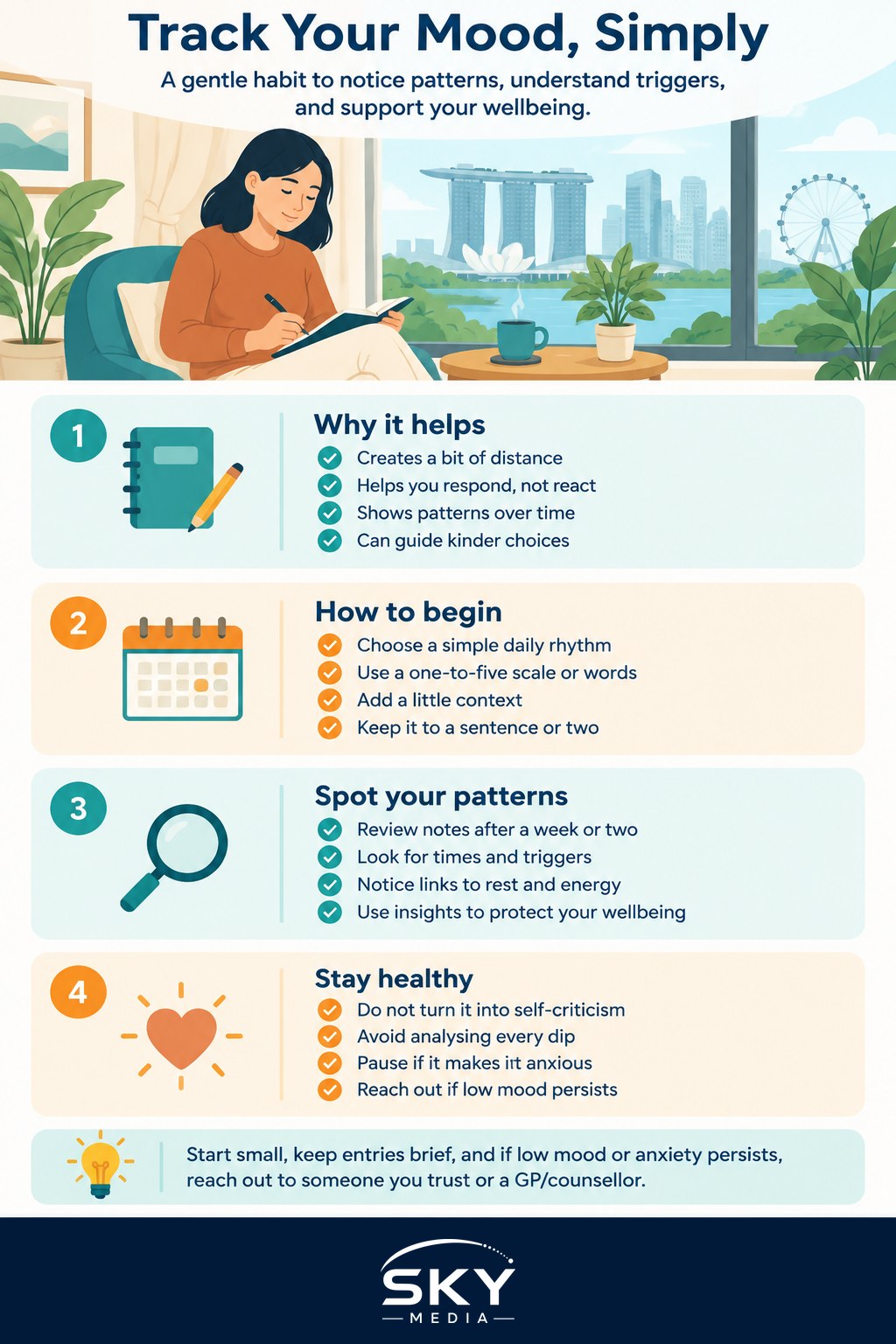
The main gift of tracking your mood is distance. When you write “feeling anxious, 3pm, after that email,” you shift from being fully inside the feeling to observing it a little. That small step often takes some of the sting out and helps you respond rather than just react.
Over days and weeks, the notes add up into patterns. You might notice you are consistently low on Sunday evenings, that you feel best after a walk, or that certain meetings reliably leave you drained. None of this is about labelling yourself. It is about gathering honest information so you can make kinder, wiser choices, such as protecting your energy before a known low point or building in more of what lifts you.
It is worth being clear about what this is not. Tracking your mood is a tool for self-awareness, not a clinical assessment. It cannot diagnose anything, and a run of bad days on paper does not define who you are. Treat your log as a friendly notebook of observations, not a verdict.
How to start tracking your mood
You can keep this refreshingly simple. Fancy systems often get abandoned, so start with the least effort that still works.
- Pick a rhythm. Once a day is plenty to begin. Many people like the evening, looking back over the day, or a couple of quick check-ins, say midday and night.
- Choose a simple scale. A one to five rating, or a few words like calm, tense, flat, or bright. Consistency matters more than precision.
- Add a little context. One line on what was happening helps: “tired, skipped lunch,” or “good chat with a friend, felt lighter.”
- Use whatever is nearest. A notes app, a small notebook, or a line in your journal all work. The best method is the one you will actually keep.
Keep each entry to a sentence or two. If it starts feeling like homework, shrink it. The habit only helps if it survives a busy week, and this connects naturally to how to track your habits, where the same “keep it tiny” principle applies.
Making sense of your patterns
After a week or two, read back over your notes with curiosity rather than judgement. You are not looking for something to fix so much as trends to understand. Ask gentle questions. When do I tend to feel best? What comes just before my low points? Is there a time, place, or activity that keeps showing up?
In a Singapore context, patterns often tie to our rhythms: long working hours, the crush of a packed commute, sleep that gets sacrificed, or too many weekends with no real rest. You might find your mood dips when you have gone days without a proper break, or lifts after time outdoors or with people you like. Once you can see the link, you can act on it, perhaps by protecting your rest more fiercely. If that resonates, how to rest properly is a natural next read.
Tracking also pairs well with processing what you find. Noticing a feeling is the first step; understanding and working with it is the next. For that, how to process your emotions and understanding your emotional triggers go a step deeper than a daily log can.
Keeping it healthy, and knowing when to reach out
A few gentle guardrails keep this habit helpful rather than heavy. Do not turn tracking into another stick to beat yourself with. If a day is hard, note it plainly and move on, without adding a layer of guilt about the number being low. Avoid over-analysing every single fluctuation; moods naturally rise and fall, and not every dip needs a reason. And if the practice itself starts making you more anxious or self-critical, it is completely fine to pause it. This is meant to serve you, not the other way around.
Most importantly, be honest with yourself about what your notes are showing. If, over several weeks, you see persistent low mood, ongoing anxiety, a lasting sense of hopelessness, or that daily life feels genuinely hard to manage, please treat that as a nudge to reach out. Talk to someone you trust, and consider seeing a GP or a counsellor. Tracking your mood can help you notice when something deserves proper support, and reaching out for that is a sign of strength, not weakness.
Used with a light touch, tracking your mood becomes a quiet form of self-respect. You give your feelings a name, watch for the patterns, and slowly learn what helps you feel steadier. Start small, stay kind to yourself, and let the notebook be a companion rather than a critic.
Frequently Asked Questions
Should I use a mood tracking app or a paper notebook? Either is fine, and the best one is whichever you will keep using. Apps can send reminders and show charts, while paper feels slower and more reflective. Choose any app with care and check its privacy settings before logging sensitive details.
How long should I track my mood before looking for patterns? Two to four weeks of regular notes usually gives enough to spot simple trends, such as low Sundays or a lift after exercise. There is no fixed amount. Read your notes with curiosity rather than hunting for problems.
Can mood tracking help me describe my symptoms to a doctor? Yes, a short log of how you felt, when and for how long can make it easier to explain things to a GP or counsellor. It supports the conversation but does not replace an assessment. Bring the notes, not a self-diagnosis.
What if tracking my mood makes me feel worse? Pause or simplify it. Some people become over-focused on every dip, which defeats the purpose. Try noting only once a day, or switch to simple observations. If you feel more anxious overall, speak with a counsellor.
How do I track mood if I have trouble naming my feelings? Begin with simple words such as good, flat, tense or tired, or notice where you feel it in your body. A basic list of feeling words can help. Naming gets easier with practice and nobody needs to see your log.