

Have you ever reacted to something small with a surprisingly big feeling? A short reply from a colleague, a comment from a relative at a family dinner, a certain tone of voice, and suddenly your chest tightens or your face goes hot. Understanding emotional triggers in Singapore life, where full schedules and constant comparison keep many of us on edge, can help you make sense of these moments. A trigger is simply something that sparks a strong emotional reaction, often out of proportion to the situation in front of you. Learning yours does not make you weak. It gives you a head start, so you can respond thoughtfully instead of being swept along.
This is everyday self-understanding, not therapy. The aim is to notice your patterns with curiosity and kindness, and to build a little space between what happens and how you react.
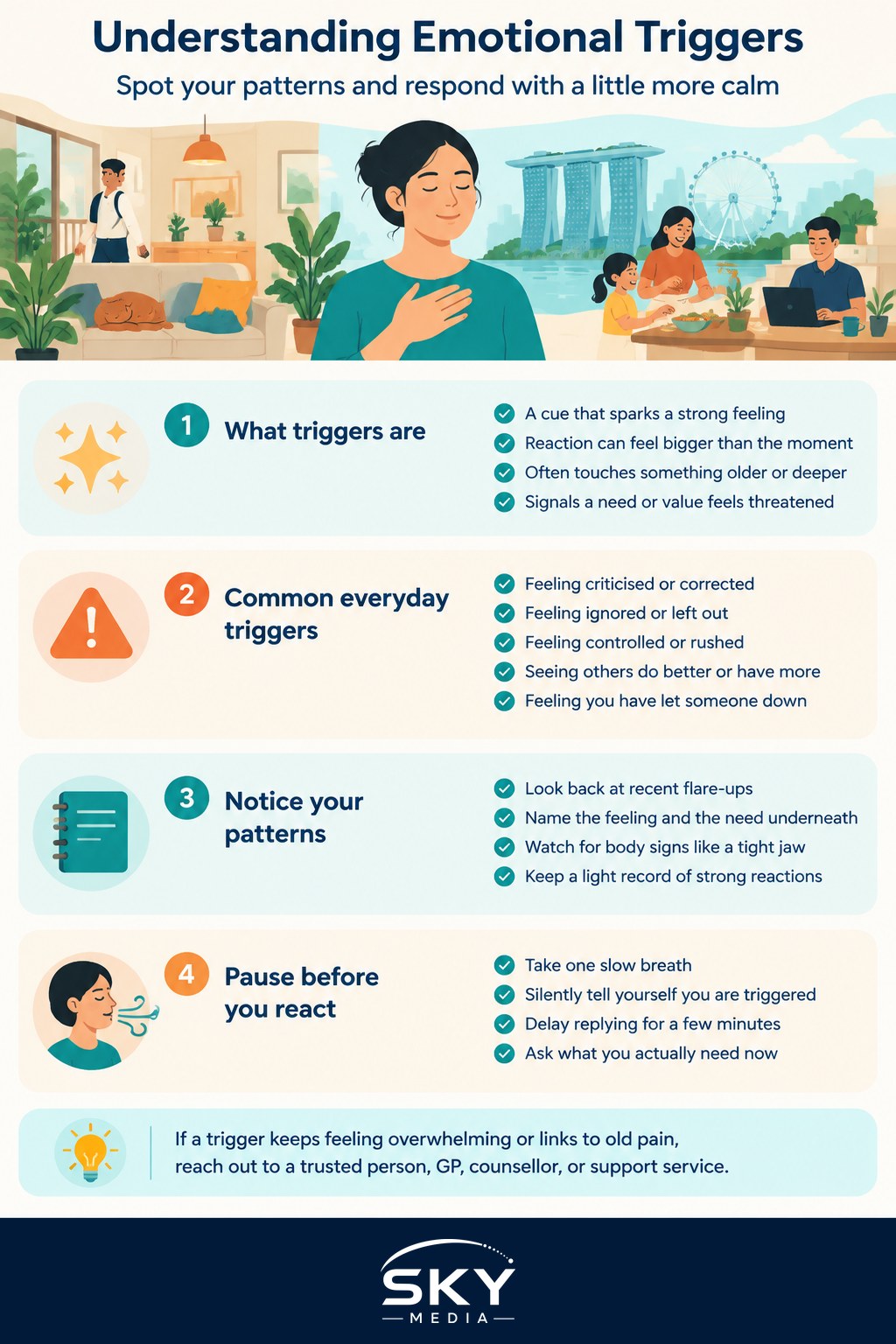
What emotional triggers are
A trigger is a cue that sets off a quick, strong feeling, such as anger, hurt, anxiety, or shame. Often the reaction is louder than the moment deserves because the cue touches something older or deeper. A dismissive tone might land hard because it echoes times you felt unheard. Being interrupted might sting because you already worry your ideas are not valued.
Triggers are not the enemy. They are signals. A strong reaction is often your mind pointing at something that matters to you, a value or a need that feels threatened. Seen this way, a trigger becomes useful information rather than just a nuisance.
Common everyday triggers
Everyone’s map is different, but some themes come up often:
- Feeling criticised, judged, or corrected in front of others.
- Feeling ignored, left out, or taken for granted.
- Feeling controlled, rushed, or told what to do.
- Comparison, especially seeing others seem to do better or have more.
- Feeling like you have let someone down or failed to meet expectations.
In a fast, always-on city, tiredness and time pressure make all of these sharper. The same comment can barely register on a rested Saturday and completely wind you up on a stressful Monday night.
How to identify your triggers
You cannot manage what you have not noticed. The goal is to become a calm observer of your own patterns.
- Look back at recent flare-ups. Think of the last few times you felt a sudden surge of emotion. What had just happened? Who was there? What was said or implied?
- Name the feeling and the need underneath. Was it anger protecting a bruised sense of respect? Anxiety guarding a need for security? Naming it takes some of the heat out.
- Notice your body’s early warning signs. A clenched jaw, a fast heartbeat, holding your breath. These physical cues often arrive before your thoughts catch up, giving you an early alert.
- Keep a light record. A few lines after a strong reaction can reveal patterns over time. Many people find the reflective habit behind the benefits of journaling makes triggers far easier to see.
You do not need to analyse every feeling. You are simply gathering enough to spot your two or three most common triggers.
Responding instead of reacting
The space between trigger and response is where your power lives. It is usually only a second or two, but you can widen it with practice.
- Pause and breathe. Even one slow breath before you speak or type can change everything. Learning some simple breathwork for calm gives you a reliable tool to steady yourself in the moment.
- Name it silently. Telling yourself “I am triggered right now” instantly creates distance. You become the observer rather than the reaction.
- Delay the response. You rarely have to reply immediately. Stepping away from the phone or the room for a few minutes lets the wave pass.
- Ask a grounding question. “What do I actually need here?” or “Will this matter next week?” pulls you back to the present.
Over time, this is really about handling feelings well rather than bottling them up or exploding. Building your ability to process your emotions means the same triggers gradually lose their power to hijack your day.
Be kind about the slips
You will still get caught out sometimes. Everyone does, especially when tired, hungry, or stretched thin. When you react in a way you are not proud of, treat it as information, not failure. Notice what set it off, make amends if needed, and file it away for next time. Progress here looks like reacting a little less often and recovering a little faster, not becoming perfectly unflappable.
If certain triggers feel overwhelming, keep returning long after the moment, or are tied to painful past experiences that weigh on you daily, that is a sign to reach out to trusted people, and there is real value in speaking with a GP, a counsellor, or a support service. Asking for support is a strength, not a weakness.
A warm wrap-up
Understanding emotional triggers in Singapore is not about becoming a person who never feels anything. It is about knowing your soft spots so life catches you off guard less often. Watch your flare-ups with curiosity, name the need underneath, and practise pausing before you respond. Little by little, you gain a steadier, calmer relationship with your own emotions, and that steadiness quietly improves nearly every part of your day.
Frequently Asked Questions
Why do I overreact to small things when I am stressed or tired? Stress, poor sleep and hunger lower your tolerance, so small cues feel bigger. Your mind is already stretched, leaving less room to pause. Looking after rest, meals and workload makes you less reactive.
How can I handle triggers when they come from family? Decide beforehand what you can let pass, and prepare a calm line such as I need a moment. Step away if you feel the surge rising. Pick a quieter time to explain what hurts, and keep it about your feelings, not their faults.
What is the difference between a trigger and a boundary being crossed? A trigger is your strong inner reaction, which may come from old patterns. A crossed boundary is something that actually breaks a limit you need, such as disrespect. Both can happen at once, so check whether the reaction fits the situation.
Can emotional triggers affect my work performance? Yes. They can lead to snapping at colleagues, avoiding feedback or replying in haste. Learning your triggers helps you delay replies, take a short break and respond calmly. If it persists, discuss support options with a trusted manager or professional.
How do I help a child who gets easily triggered? Stay calm yourself, name the feeling together and wait until they settle before discussing what happened. Teach simple tools like slow breathing. If outbursts are frequent or intense, speak to the school counsellor or a doctor.
Further reading: How to Build Emotional Independence in Adult Life · Understanding Your Partner’s Triggers