
The difference between a snapshot and a portrait that makes someone go wow is usually not the camera, it is the light. A bare bulb or a hard flash gives you harsh shadows and shiny highlights, while shaped, softened light wraps gently around a face or product and flatters it. That shaping is exactly what a softbox and light modifiers do. In this guide we will demystify the main tools, show you how to use them, and keep it realistic for small Singapore spaces like an HDB flat or a corner of a bedroom. You do not need a big studio to make beautiful light.
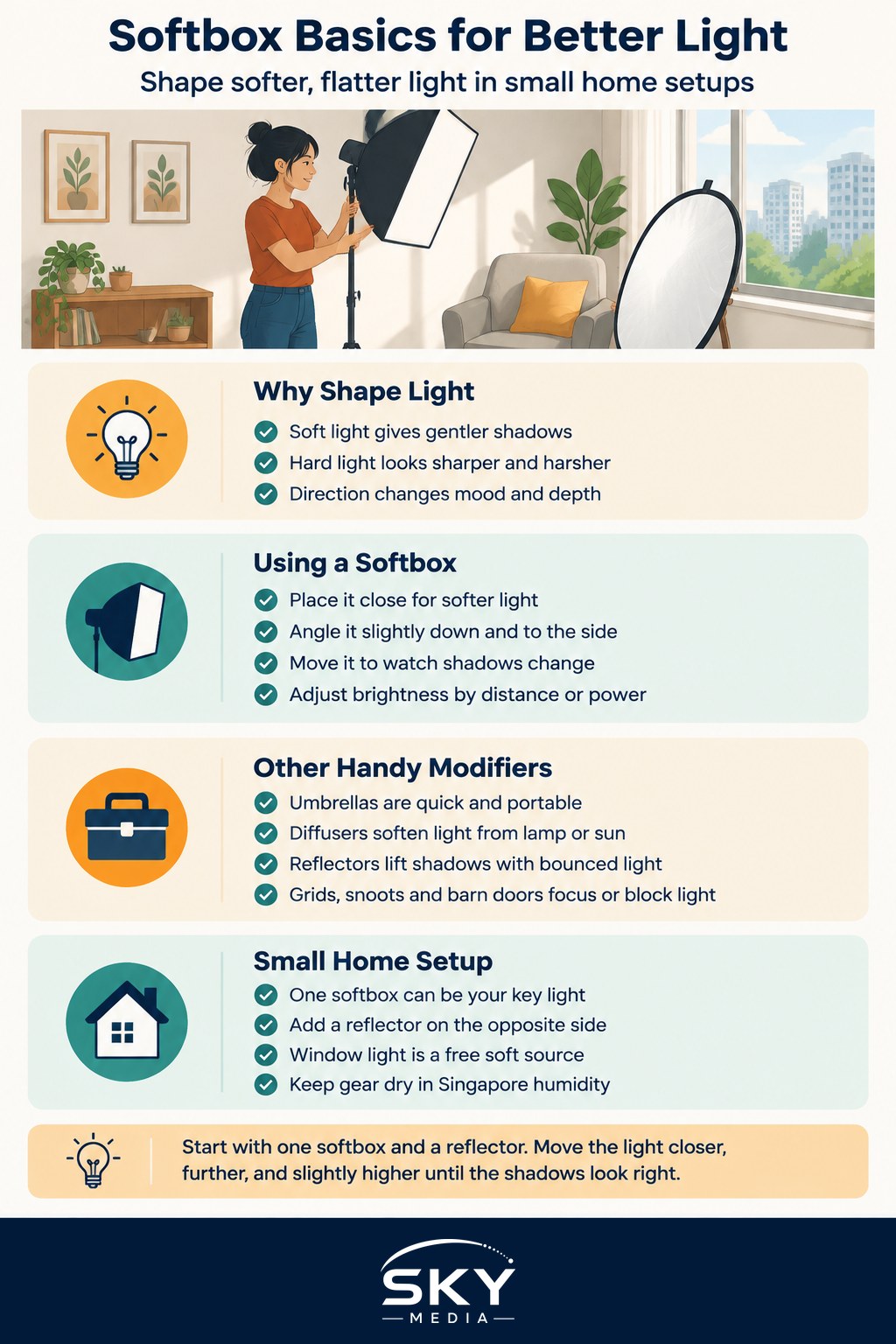
Why We Shape Light at All
Light has a few key qualities we can control, and modifiers are the tools that let us control them:
- Softness or hardness. Soft light has gradual shadows and is flattering. Hard light has sharp, defined shadows and more drama.
- Direction. Where the light comes from shapes the mood and the sense of depth.
- Spread. Whether the light is broad and even, or narrow and focused.
The single most useful idea for beginners is that a bigger light source, relative to your subject, gives softer light. That is the whole reason a softbox exists. It takes a small, harsh light and spreads it across a large, glowing surface, so shadows become gentle. If lighting is new to you, lighting basics for video and photo lays the groundwork that this article builds on.
The Softbox, Your Everyday Workhorse
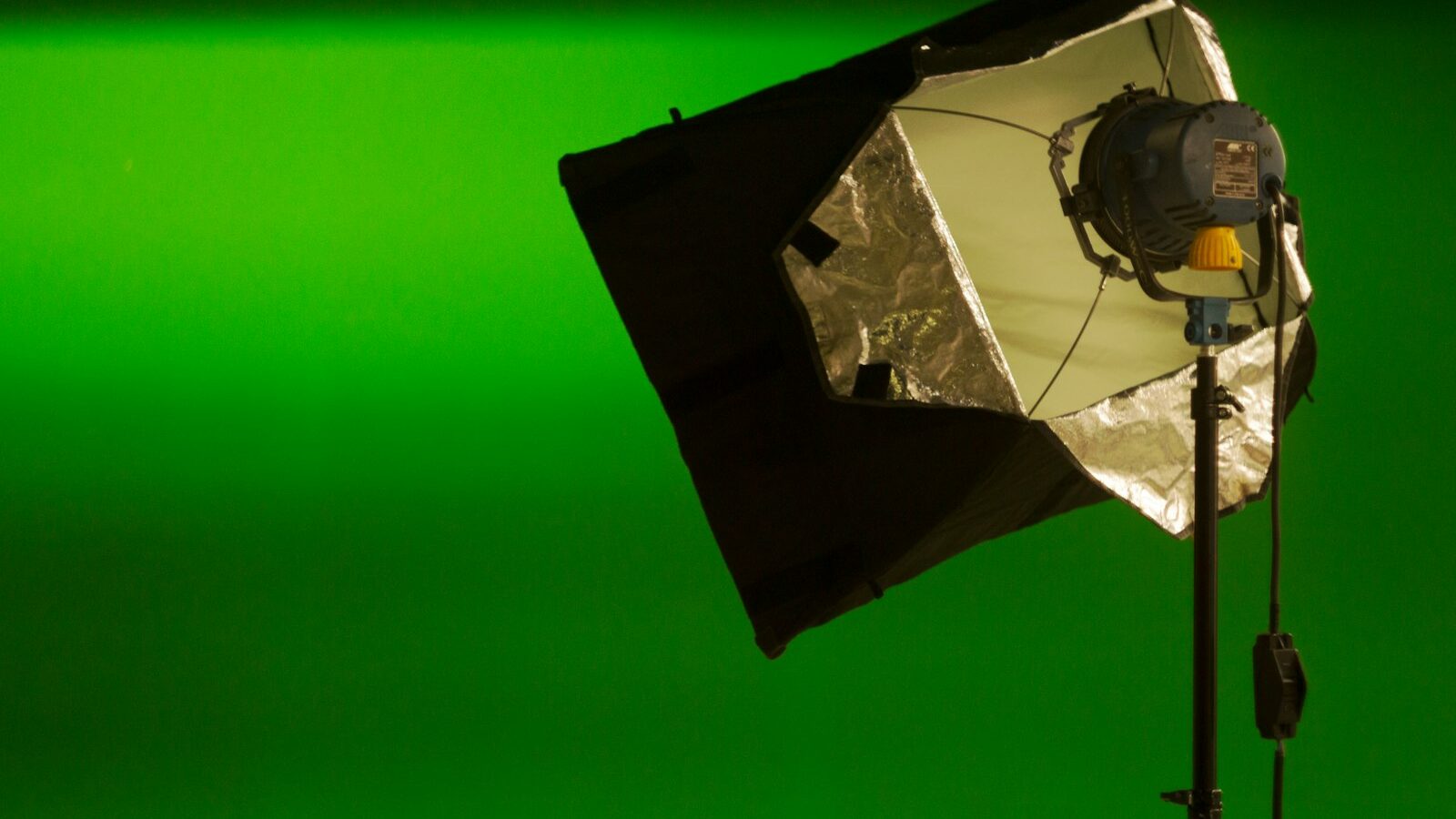
A softbox is a fabric box that fits over a light, with a diffusion panel on the front. It turns a small bulb into a big, soft rectangle of light. It is the most versatile modifier and the one most people reach for first, for portraits, food, products, and video interviews alike.
To use one well:
- Place the softbox close to your subject. The closer it is, the softer and more wrapping the light becomes.
- Angle it slightly down toward the face or product, roughly at forty five degrees to the side and above, for a natural, flattering look.
- Watch the shadows. Move the softbox around and observe how the shadows shift on your subject until you like the shape.
- Control the brightness by moving the light nearer or further, or by lowering its power.
Softboxes come in shapes. Rectangular and square ones are all rounders, while long, thin strip boxes are great for edge lighting and for narrow spaces. An octagonal softbox gives round, natural looking catchlights in the eyes.
Other Modifiers Worth Knowing
A softbox is not the only tool. Each modifier shapes light differently, and knowing a few gives you range:
- Umbrellas. Cheap, portable, and quick to set up. A shoot through umbrella softens and spreads light widely, which is forgiving but harder to control precisely.
- Diffusers. A translucent panel placed between a light, or the sun, and your subject to soften it. Simple and effective. See how to use a reflector and diffuser for practical ways to apply these.
- Reflectors. Bounce light back into the shadows to lift them and reduce contrast. A white surface gives soft fill, silver gives a brighter punch.
- Grids and snoots. These narrow and focus the light into a controlled beam, useful for lighting just one area, like a background or a rim of hair.
- Barn doors. Flaps that let you block and shape where light falls, keeping it off areas you want dark.
You do not need all of these at once. A single softbox and a reflector can handle a huge range of portrait and product work.
Building a Simple Home Setup
You can create lovely light in a small room. Start with one light in a softbox as your main, or key, light, placed to one side of your subject. Add a reflector on the opposite side to gently fill the shadows. That two piece setup, one light and one bounce, is enough for flattering portraits and clean product shots.
When you are ready to buy, focus on general categories rather than chasing specific brands, and check current models and prices yourself. A helpful overview of what to prioritise is essential lighting gear for beginners. If you want to turn a spare corner into a proper little workspace, how to shoot in a home studio walks through arranging a small space effectively.
Local Tips for Singapore Shooters
A few realities to keep in mind here. Space is tight in many homes, so strip softboxes and umbrellas that fold down are practical, and shooting against a plain wall saves room. Our bright windows are a free, beautiful soft light source, so combine window light with a reflector before you even switch on a lamp.
Watch out for heat and humidity. Continuous lights can get warm in an already warm room, so give yourself ventilation and take breaks. Humidity is hard on gear, so after a shoot, pack lights and modifiers away dry, and keep your camera and lenses in a dry cabinet to prevent fungus. Fabric softboxes can grow mould too, so store them somewhere dry and airy.
Start With One Light
The best way to learn a softbox and light modifiers is to start with a single light and really study it. Move it around a willing subject, watch how the shadows change, add a reflector, and notice the difference. That kind of hands on play teaches you faster than any rulebook. With just one soft light and a bounce, you can already create images that look polished and professional, right from a small Singapore home. Set it up, invite a friend to sit, and start shaping light today.