

A written contract is one of the kindest things you can do for both you and your client. It is not a sign of distrust; it is a shared understanding of what will happen, written down while everyone is calm and friendly, so that nobody is guessing later. A clear photography contract in Singapore protects you from scope creep and non-payment, and it protects your client by spelling out exactly what they are getting. If you are charging money for photography, you should be using a written agreement for every job, no exceptions.
Please treat this article as general information rather than legal advice. Contracts touch on law, and every situation is different, so for anything significant you should consider having a lawyer review your agreement.
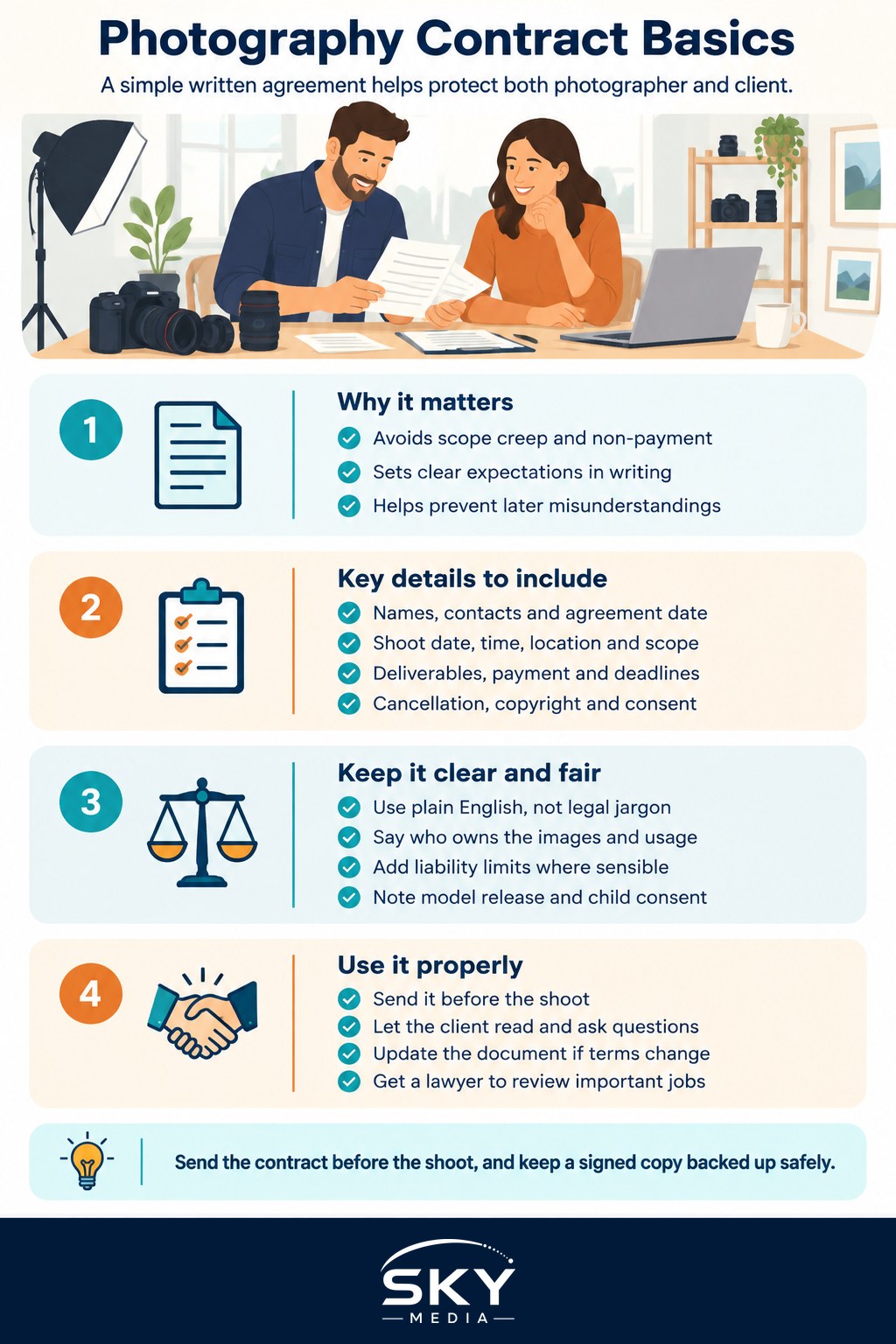
Why You Need One at All
Verbal agreements and friendly text messages feel easier, but they fall apart the moment memories differ. Did the price include editing? How many photos were promised? Who can use them, and where? When a disagreement arises, a handshake gives you nothing to point to. A written contract turns vague expectations into clear, agreed terms.
A good contract does three quiet jobs at once. It sets expectations so the client knows precisely what they are paying for. It protects you if things go wrong, such as a cancellation or a client who wants endless free re-edits. And it looks professional, which reassures clients that they are dealing with someone serious. Even for a small shoot, a simple one-page agreement is far better than nothing. This becomes even more important once photography is a real income stream, as covered in our guide to photography as a side hustle in Singapore.
The Key Clauses to Include
You do not need dense legal jargon. Plain, clear English that both sides genuinely understand is usually better. The essentials to cover include the following.
- The parties and the date. Full names and contact details of you and the client, and the date of the agreement.
- Scope of work. Exactly what you will do: the date, time, and location of the shoot, how long you will be there, and what kind of coverage is included. Be specific.
- Deliverables. How many edited images, in what format, and how they will be delivered. Our guide on how to deliver photos to clients is a useful companion here.
- Payment terms. The total fee, any deposit, when each payment is due, and the accepted payment methods. Set your own numbers based on your costs and market; do not copy figures from anywhere blindly. Our piece on how to price your photography services can help you think it through.
- Cancellation and rescheduling. What happens if either side cancels or the date changes, including whether a deposit is refundable and how weather or illness is handled.
- Copyright and usage. Who owns the images and how the client may use them. Typically the photographer keeps copyright and grants the client a licence to use the photos for agreed purposes. Be clear about personal versus commercial use.
- Model release and consent. If people are identifiable, note how consent and any release are handled, especially for children.
- Liability. A sensible limit on your responsibility if something beyond your control goes wrong, such as equipment failure.
Copyright is the clause beginners most often get wrong, so it is worth understanding the copyright basics for photographers in Singapore before you write yours. Being clear here prevents the most common and awkward disputes.
Putting It to Work
Once you have a solid template, most jobs only need small edits to the date, scope, and fee. Send the contract before the shoot, not after, and give the client time to read it and ask questions. A deposit paid on signing is a common way to confirm a booking, but decide your own terms. Keep a signed copy safely stored and backed up alongside your other important files.
A contract only works if both people actually understand and agree to it, so walk your client through anything that might be unclear. If they want changes, discuss them and update the document rather than relying on a side conversation that contradicts the paperwork. Every promise that matters should live in the written agreement.
Finally, resist the temptation to copy a random contract off the internet and use it unchanged. It may not suit Singapore, your work, or your specific situation. Use templates as a learning tool, adapt them thoughtfully, and for important or high-value work, get a lawyer to look it over. That small investment can save you a great deal of stress. A clear, fair photography contract in Singapore sets the tone for a smooth job and a happy client, and it lets you focus on what you do best, which is taking great photographs.
Frequently Asked Questions
Can I use a free contract template I found online? Use it only as a learning tool. A template copied unchanged may not suit Singapore, your type of work or your situation. Adapt it carefully, and have a lawyer review it for significant or high-value jobs.
When should I send the contract to a client? Before the shoot, not after. Give the client time to read it and ask questions, then get it signed before you commit the date. Many photographers pair signing with a deposit, though you set your own terms.
What happens if a client cancels or reschedules at the last minute? Whatever the contract says, so spell it out beforehand. Cover whether a deposit is refundable, how rescheduling works and how weather or illness is treated. Without those terms, you are left negotiating from memory.
Do I need a contract for a friend or a small favour shoot? A short written agreement is still wise if money is involved. Even a one-page document avoids misunderstandings about edits, usage and delivery, and writing things down does not signal distrust. Agree the basics before the shoot, not after.
Who owns the copyright to wedding or event photos I take? Typically the photographer keeps copyright and grants the client a licence for agreed uses, but the contract decides. Spell out personal versus commercial use, and check copyright rules with a lawyer if you are unsure.