
Sooner or later, someone will ask you to bring your camera to a birthday, a housewarming, a work function or a family celebration. Event photography can feel daunting, because the moments happen once and you cannot ask everyone to do it again. The good news is that the basics are learnable, and you do not need a professional kit to come home with warm, memorable photos. What matters most is being prepared, staying ready and reading the room.
This guide covers the essentials for photographing parties and gatherings as a keen beginner: the gear that helps, coping with tricky indoor light, capturing the moments that matter, and the manners and safety nets that keep everyone happy. A quick word first on expectations. Even seasoned photographers miss a moment now and then, so aim to tell the story of the day rather than to capture every single second, and never promise a perfect result.
Get Ready Before The Day
Most event photos are won or lost before you arrive. A little preparation frees you to concentrate on people rather than fumbling with settings.
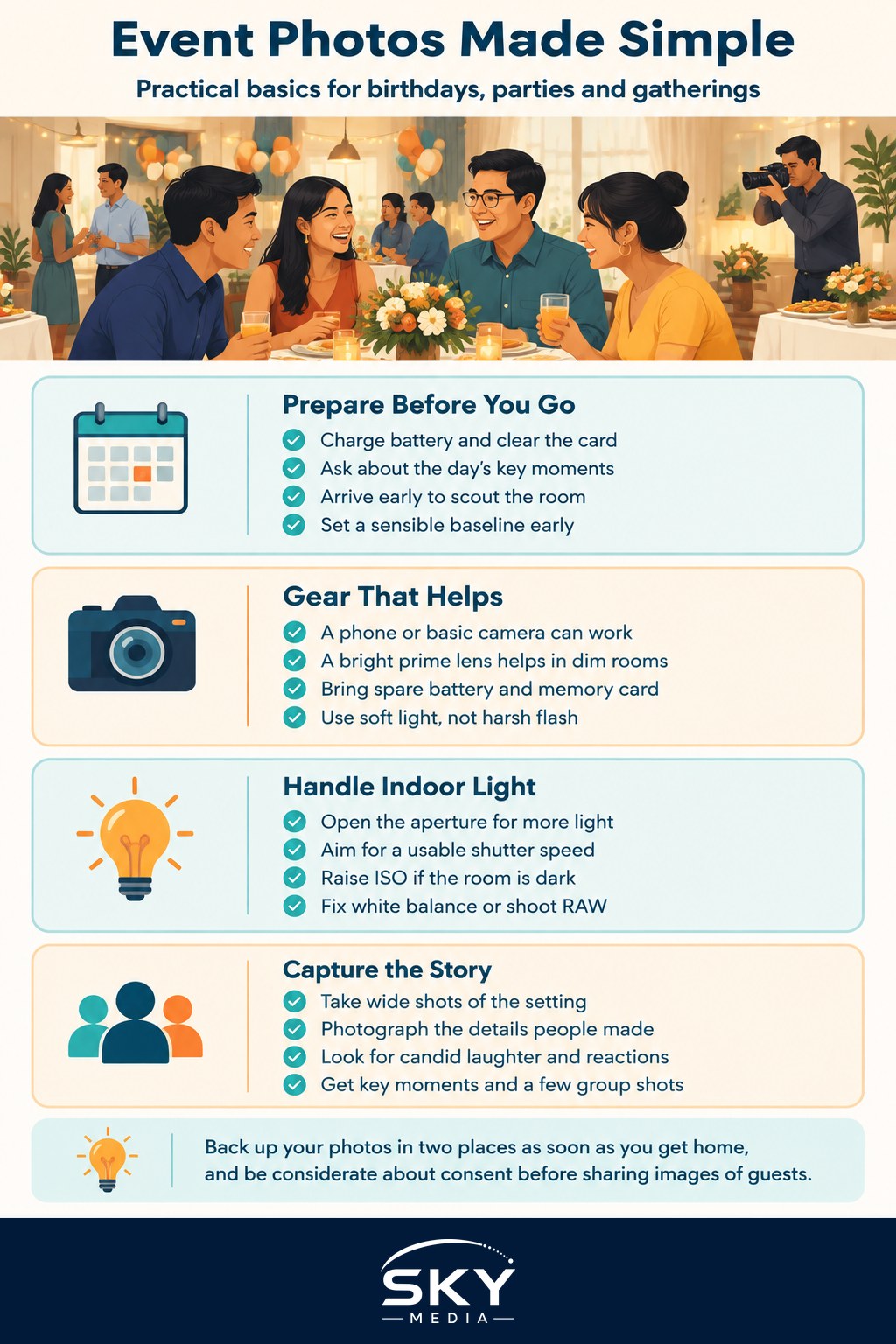
- Charge and clear. Fully charge your battery, bring a spare if you have one, and empty or format a fresh memory card so you do not run out of space midway.
- Know the shape of the day. Ask the host about the key moments: the cake cutting, speeches, a surprise entrance, group photos. Knowing the running order means you are in position rather than scrambling.
- Scout the space. If you can, arrive early to see the room, the light and the likely backgrounds. Note where windows are and where it gets dark.
- Set a sensible baseline. Dial in settings for the conditions before guests arrive, then adjust as the light changes. Being roughly ready beats a blank screen when the candles are lit.
Preparation also lowers your stress. When you are not worried about the technical side, you can relax, chat and blend in, which is exactly when the best candid moments appear.
Gear That Helps At Events
You can shoot a lovely event on a phone, so do not let gear anxiety stop you. That said, a few pieces make life easier, and because prices and models change quickly, always check current specifications before buying.
- A camera or capable phone. Any modern phone or an entry-level mirrorless or DSLR works. Cameras with larger sensors handle dim rooms better, but a good phone in a well lit space does fine.
- A bright prime lens. A nifty-fifty style prime with a wide aperture gathers more light and blurs busy backgrounds, which flatters portraits in a cluttered room.
- Extra power and cards. A spare battery and a second memory card are cheap insurance against the two most common ways to miss the finale.
- A small light, used gently. A soft, bounced light or a modest LED can lift a dark corner. Avoid blasting a harsh direct flash into faces, which flattens features and kills the mood.
Keep your kit light enough to carry all evening. A photographer who is comfortable and mobile catches far more than one weighed down by a bag of extras.
Handling Low Light Indoors
Indoor events are often dim, with mixed lighting from warm bulbs, fairy lights and the odd window. This is the single biggest technical challenge, so it helps to understand the exposure triangle of aperture, shutter speed and ISO.
- Open your aperture. A low f-number lets in more light and separates your subject from the background. This is where a bright prime lens earns its keep.
- Keep shutter speed usable. Aim for around 1/125 of a second or faster to freeze people who are talking and moving. Slower than that and gestures blur.
- Raise ISO without fear. To keep that shutter speed in a dark room, push ISO higher. A little grain in a sharp, well timed photo always beats a clean but blurry one.
- Fix white balance. Warm indoor bulbs can make skin look orange. Set white balance to match the room, or shoot in RAW so you can correct the colour later.
- Bounce your light. If you use flash, angle it off a pale ceiling or wall for a soft, natural look rather than a harsh, direct blast.
If it is truly dark, seek out pockets of better light, such as near a window, under a spotlight or beside the glow of the cake, and gently guide key moments there when you can.
Capturing The Moments That Matter
An event is a story, so photograph it like one. Aim for a mix of shots that, together, bring the day back to life.
- The setting. Wide shots of the decorated room, the table, the venue and the arriving guests set the scene.
- The details. Close-ups of the cake, the flowers, the food, the handwritten card and the little touches the host worked hard on.
- The people. Candid frames of guests laughing, chatting and reacting. These honest, unposed moments are usually the keepers.
- The key events. The cake cutting, the speeches, the toast, the first dance or the group cheer. Be in position early and shoot a short burst so you can pick the best frame.
- A few group portraits. People love a tidy photo with their friends and family. Gather them near good light, count to three and take two or three frames in case of blinks.
Move around, shoot from different heights, and do not forget to include the host and yourself in a frame or two. Balance staying ready with actually enjoying the event, because a relaxed photographer puts everyone else at ease.
Manners, Backups And Managing Expectations
The social and practical side of event photography matters as much as the settings. Being considerate keeps you welcome and protects the memories you capture.
| Do | Don’t |
|---|---|
| Ask the host what they most want captured | Assume you know the priorities |
| Photograph people respectfully and read the mood | Shove a lens into private or emotional moments |
| Ask before posting photos of guests online | Share images publicly without consent |
| Back up your photos in two places that night | Leave the only copy on one card |
| Be honest that you cannot capture everything | Promise flawless, professional results |
Copy your photos to two places as soon as you get home, such as a computer and a cloud or external drive, so a lost card or a failed disk cannot erase the day. Be gracious about permission: ask before sharing images of others, and delete anything a guest is uncomfortable with. If this ever grows from favours for friends into paid work, treat it seriously by agreeing what is expected in writing and being clear about what you can and cannot deliver. Above all, keep practising. Every event teaches you something, and the more you shoot, the more relaxed and capable you become.
Explore more
Sharpen your instinct for real moments by shooting everyday scenes around Singapore, then sort your take with how to cull and organise your photos. Finish your favourites with photo editing basics for beginners, and if you enjoy the work, look into photography as a side hustle in Singapore.
Frequently Asked Questions
Should I use flash at a party or rely on available light? Use available light when you can, since it looks more natural, and use flash gently when the room is too dark. Bounce the flash off a pale ceiling or wall instead of firing it straight at faces, which flattens features. A mix of both is common.
How many photos should I take at a typical party? There is no set number. Shoot enough to cover the setting, details, people and key moments, and take a short burst of the important ones so you can choose the best. Taking more frames costs little, but you will need time afterwards to sort them.
How do I take good group photos at an event? Gather the group near good light, keep the background tidy and make sure everyone can see the lens. Count down, then take two or three frames in case of blinks. Check the screen quickly before releasing the group, since fixing it later is impossible.
Can I photograph a friend’s party if I am also a guest? Yes, as long as you agree with the host what they want captured and you still allow yourself to enjoy the event. Tell them you cannot cover every moment. Keep gear light and simple so you can mingle, and ask before posting photos of other guests online.
What should I do if guests do not want to be photographed? Respect it straight away and avoid pointing the camera at them. If a photo of them has already been taken, delete it when asked and do not post it. Some people are shy or private, and being considerate keeps you welcome at future gatherings.
Further reading: Hiring an Event Photographer or Videographer in Singapore · Is It Legal to Photograph Strangers in Public in Singapore? · How to Shoot School Event Photos Parents Will Keep