
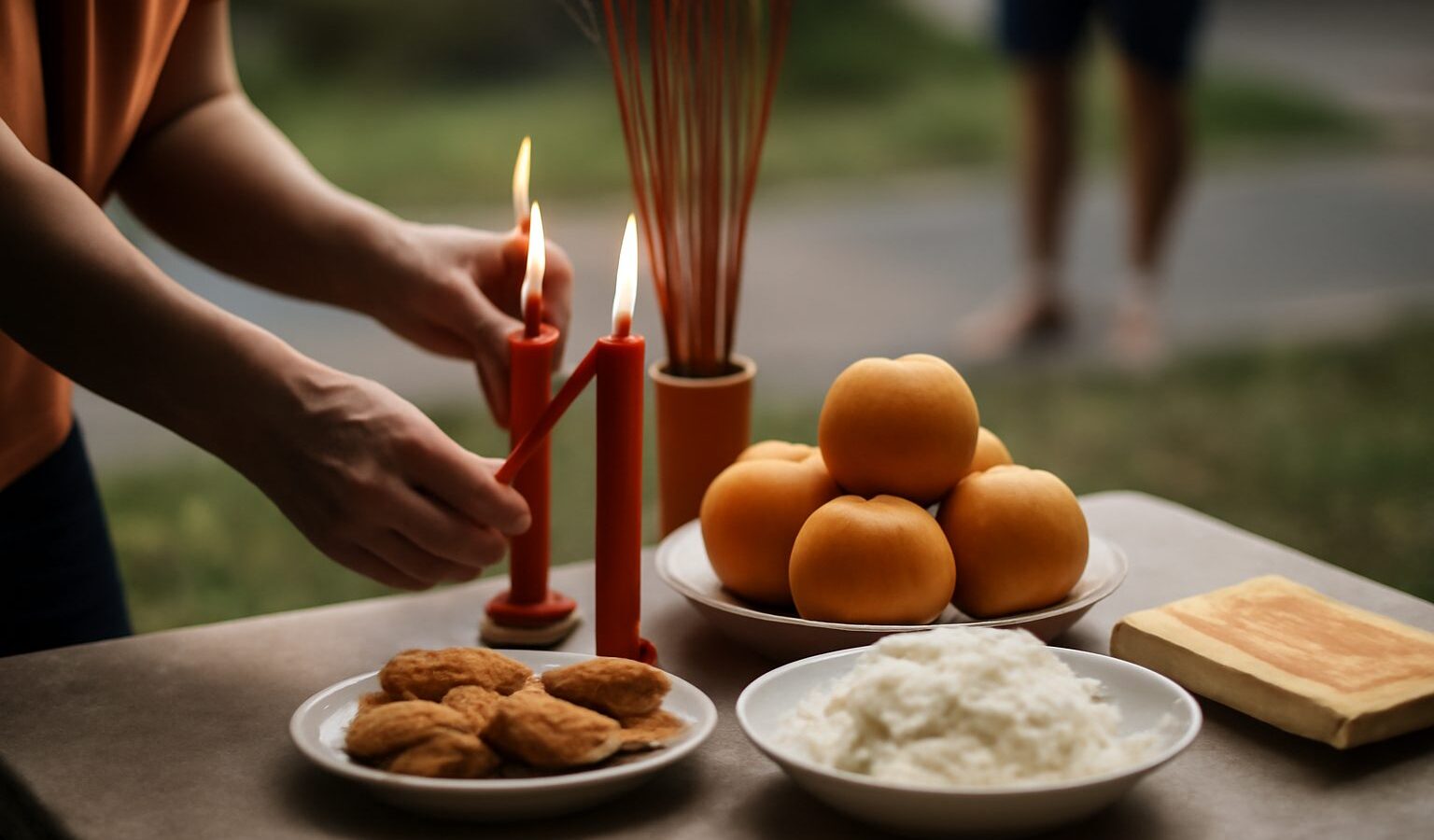
If you notice small fires by the roadside, incense in the void decks, and open-air concerts on temporary stages around the middle of the year, you are seeing the hungry ghost festival singapore communities mark during the seventh month of the Chinese lunar calendar. It is a period observed mainly by many in the Chinese Taoist and Buddhist communities, and its customs are a familiar part of the local landscape. This guide explains what the month is about, the practices you are likely to see, the taboos some people keep, and how to be a considerate neighbour, without either mocking or endorsing any belief.
What the Seventh Month Marks
In Chinese tradition, the seventh month of the lunar calendar is a time when, according to custom, the gates of the afterlife are said to open and spirits are able to roam among the living. The fifteenth day is often called Zhongyuan Jie, sometimes rendered as the Ghost Festival or Yulan, and it sits at the heart of the month. Different families and temples frame the meaning in different ways. For many, it is above all a season of remembering ancestors and showing filial respect, offering food and comfort to the departed, including wandering spirits thought to have no family to care for them.
It helps to hold two ideas at once. The seventh month carries folk beliefs and cautions that some people take seriously, and it is also a genuine expression of care, memory, and community for those who observe it. We describe these customs as practised locally; we do not claim any of them as literal fact, and the depth of observance varies widely from household to household.
Practices You Will See Around Singapore
Observance is public and visible here, so even residents who do not take part will encounter it. Common sights include:
- Burning joss paper and offerings. Folded paper “money” and paper models of everyday goods are burned in metal bins or on the ground, sent as offerings to ancestors and spirits. You will often see chalk circles drawn around the ashes.
- Food offerings. Plates of rice, fruit, and cooked dishes, along with lit candles and incense, are placed at void decks, outside homes, and at temples and roadside altars.
- Getai performances. Getai, literally “song stage”, are lively open-air concerts on temporary stages, with singing, comedy, and hosting, staged for the living and the spirits alike. The front row of seats is traditionally left empty, reserved as a courtesy for the spirits, so visitors are asked not to sit there.
- Auctions and dinners. Many clan associations and community groups hold seventh-month dinners with charity auctions of auspicious items, which also raise funds for temples and good causes.
- Temple ceremonies. Taoist and Buddhist temples hold prayers and rituals through the month, and some Buddhist observances centre on Ullambana, which emphasises repaying the kindness of one’s parents and ancestors.
Getai has evolved over the years, and in some places live stages have been supplemented or replaced by other formats, but the communal spirit of the events remains.
Taboos and Superstitions Some People Observe
A number of cautions are associated with the seventh month. It is important to say that these are folk beliefs, and people relate to them very differently. Some keep them carefully, some observe a few out of habit, and many pay them little attention at all. Among the more commonly mentioned:
- Avoiding major life events during the month, such as weddings, moving house, or starting a big new venture.
- Not swimming or staying out very late at night.
- Not stepping on or kicking roadside offerings, and not picking up money found on the ground.
- Avoiding whistling at night or hanging washing out after dark.
- Some prefer to postpone big purchases like a car or property until the month has passed.
Presenting these as beliefs, rather than rules everyone follows, matters. Treat them as you would any personal or family custom: with courtesy, and without pressure on anyone to keep or drop them.
How the Dates Move Each Year
Because the festival follows the Chinese lunar calendar, it does not fall on the same Western calendar dates from year to year. The seventh lunar month usually lands somewhere in the August to September window, and the fifteenth day, Zhongyuan Jie, is its focal point, but the exact dates shift annually. The table below sets out the essentials rather than any fixed future date.
| Aspect | What to know |
|---|---|
| Calendar used | Chinese lunar calendar, so dates shift each year |
| Rough timing | The seventh lunar month, usually falling around August to September |
| Key day | The 15th of the seventh month, Zhongyuan Jie or the Ghost Festival |
| Public holiday status | Not a gazetted public holiday in Singapore; a normal working period |
| Where to check | Confirm the current year’s public holidays on the Ministry of Manpower list |
Because it is not a public holiday, offices, schools, shops, and transport run as usual. If you want to be sure of holiday dates for any given year, the Ministry of Manpower publishes the official public-holiday list, which is the reliable reference.
Being a Considerate Neighbour
You do not need to take part to be respectful, and a little awareness goes a long way. A few simple courtesies help everyone share the same spaces:
- Leave offerings undisturbed. Food, candles, incense, and burning bins by the roadside or at void decks are acts of remembrance. Walk around them, and avoid stepping on or moving them.
- Mind the front row at getai. If you stop to watch a performance, leave the reserved front row of seats empty, as intended.
- Give burning bins space. Keep children and pets away from lit bins and hot ashes, and do not disturb them.
- Be mindful of the environment. The National Environment Agency encourages burning offerings in the metal bins and designated braziers provided, which keeps common areas safe and clean. If smoke or ash near your home is a concern, town councils and the NEA are the right points of contact.
Singapore’s mix of faiths and customs works because people extend one another the same basic consideration. The seventh month is a good, everyday example of that: many observe it earnestly, others simply make room for it, and both are part of living well together. For the bigger picture, see our guide on racial and religious harmony in Singapore.
Explore more
The Hungry Ghost Festival is a visible, meaningful part of Singapore’s seventh-month calendar, observed most by the Chinese Taoist and Buddhist communities through offerings, getai, and quiet acts of remembrance, with dates that move each year. To understand how the country holds space for many beliefs, read our overview of racial and religious harmony in Singapore and our guide to Singapore public holidays.