

Every year around the seventh month of the lunar calendar, children in Singapore start noticing new things on the way to school. There are small offerings of food on the pavement, metal bins with smoke and flickering paper, and colourful stages with loud singing at night. Questions follow quickly. Explaining the hungry ghost festival for kids does not have to be scary. With calm words and a little preparation, it becomes a chance to talk about family, kindness and the many cultures your child lives alongside.
This guide is written for parents of all backgrounds, whether your family observes the festival or simply lives near neighbours who do. Customs vary from family to family, so treat what follows as commonly seen practices rather than fixed rules.
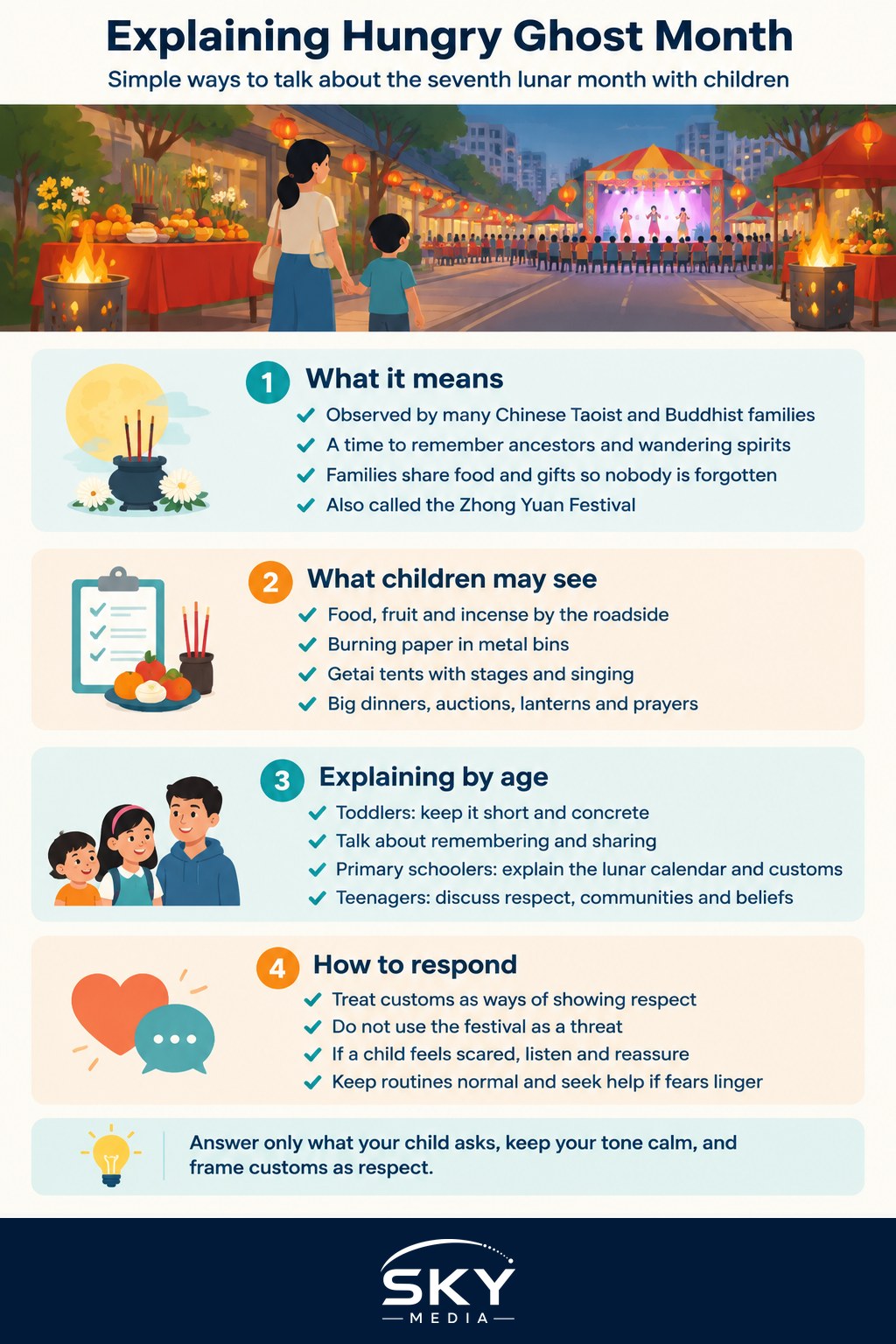
What the Festival Is About, in Child-Sized Words
The Hungry Ghost Festival, also called the Zhong Yuan Festival, is observed by many Chinese Taoist and Buddhist families. Traditionally, it is believed that during the seventh lunar month, the spirits of the departed are allowed to visit the world of the living. Families make offerings to remember their own ancestors and to show care for wandering spirits who may have no one to remember them.
For young children, the heart of the festival can be summed up simply: it is a time when some families remember people who have passed away, and share food and gifts so that nobody is forgotten.
If you want more background for yourself first, our explainer on the Hungry Ghost Festival covers the history and traditions in more depth.
What Your Child Will See and How to Explain Each Thing
Children usually learn best by connecting an idea to something they can see. The table below matches common sights to simple explanations you can adapt.
| What your child sees | What it is | A simple way to explain it |
|---|---|---|
| Food, fruit and incense by the roadside | Offerings for spirits | “Some families leave food as a kind gift, to share with people who are remembered.” |
| Burning paper in metal bins | Joss paper and paper offerings | “Some people believe burning paper sends gifts to family members who have passed away.” |
| Big tents with stages and singing (getai) | Live shows held during the month | “It is a concert to entertain everyone, and the front row is left empty as a polite welcome for the spirits.” |
| Large dinners and auctions in tents | Community celebrations and fundraising | “Neighbours gather to eat, pray for good luck and raise money for the community.” |
| Lanterns or prayers near rivers or the sea | Ceremonies to guide spirits | “It is like leaving a light on so everyone can find their way.” |
You do not need to cover everything. Answer the question your child actually asked, and stop when their curiosity is satisfied.
Choosing Words by Age
Toddlers and preschoolers (around 2 to 6). Keep it short and concrete. Focus on remembering and sharing. Words like “remembering grandpa’s grandpa” or “a festival about kindness” work better than talk of ghosts. If they ask directly about ghosts, you can say, “Some people believe the spirits of people who passed away come to visit, so families make them feel welcome.”
Primary schoolers (around 7 to 12). This age group enjoys stories and rules. You can explain the lunar calendar, why the seventh month is special, and why families observe certain customs. They may hear spooky stories from classmates, so it helps to separate what is a belief, what is a story, and what is simply a fun thing kids tell each other.
Teenagers. Older children can handle the cultural, religious and community sides of the festival. Talk about how traditions show respect for elders and ancestors, how the getai scene supports local performers, and how festivals change over generations. It is also a good moment to discuss how people with different beliefs live respectfully side by side.
Talking About the Customs and Taboos Without Fear
Many families follow practices during the seventh month, such as avoiding swimming at night, not stepping on offerings, not sitting in the empty front row at getai, or not picking up money found on the street. Children may hear these from grandparents or friends and find them confusing.
A helpful way to frame these is as ways of showing respect, rather than rules to avoid danger. For example:
- Not stepping on offerings: “It belongs to someone else, so we walk around it, just like we would not step on someone’s lunch.”
- Leaving the front row empty: “Those seats are kept as a polite gesture, so we sit further back.”
- Not touching items left by the roadside: “They are gifts that someone left with care, so we leave them alone.”
If your family does not observe certain practices, you can still teach your child to be respectful of those who do. Our guide to Hungry Ghost Festival customs and taboos lists the common ones if you want a fuller picture.
Avoid using the festival as a threat, such as “If you misbehave, the ghosts will come.” It may seem harmless, but it can create lasting fear and bedtime anxiety.
When Your Child Feels Scared
Some children are frightened by the smoke, the idea of spirits, or stories from school. If this happens:
- Listen first. Ask what exactly worries them. Often it is one specific story or image.
- Acknowledge the feeling. “That sounds scary. It is okay to feel that way.”
- Give a steady, simple anchor. Remind them that the festival is about remembering family and being kind, and that home is safe.
- Keep routines normal. A familiar bedtime, a night light and a favourite story go a long way.
- Limit spooky content. Ghost stories online and on video can be far more intense than the festival itself.
If fears persist for weeks or start affecting sleep, school or play, speak with your child’s teacher, school counsellor or a paediatric professional for support.
Simple Activities to Make It a Positive Learning Moment
The seventh month is a natural opening to talk about family history and different cultures. Some ideas:
- Make a family tree. Draw grandparents and great-grandparents and share a story about each. This mirrors the remembering at the heart of the festival in a gentle way.
- Look at old photos together. Children love seeing what their parents and grandparents looked like as kids.
- Visit a getai respectfully. If your child is curious, watching a short performance from the back can be a fun, colourful outing. Check the noise level is comfortable for young ears.
- Compare with other festivals. Talk about how other cultures also remember loved ones. Our guide on how to explain Qing Ming to children pairs well with this conversation.
- Practise kindness. Use the theme of sharing to do something kind, like helping a neighbour or donating food.
For more ideas across the year, see celebrating festivals and culture with your kids.
Key Points to Remember
- Focus on remembering family and being kind, not on ghosts.
- Explain customs as ways of showing respect.
- Match your words to your child’s age, and answer only what they ask.
- Respect neighbours’ practices even if your family does things differently.
- Take fears seriously, keep routines steady, and seek help if worries linger.
With a calm, open approach, the seventh month can become one more way your child learns about the rich mix of traditions that make Singapore home.
Frequently Asked Questions
Is it okay for my child to watch a getai show? Yes, if your child is curious, watching a short performance from the back can be a colourful outing. Do not sit in the empty front row, which is left for the spirits, and check the noise level is comfortable for young ears.
What should I say if my child asks whether ghosts are real? Keep it calm and age-appropriate. Say that some people believe the spirits of those who passed away visit during this month, so families welcome them. For toddlers, shift focus to remembering family and being kind, and avoid scary details.
My child heard scary ghost stories at school. How can I help? Listen first and ask what exactly worries them, then acknowledge the feeling. Remind them the festival is about remembering family and being kind, keep bedtime routines steady, and limit spooky videos. If fears persist, speak to a teacher or school counsellor.
How do I teach my child respect for customs my family does not follow? Frame it as courtesy toward neighbours, such as walking around offerings and not touching items left by the roadside. Explain that people have different beliefs and live respectfully side by side. This works well even for families who do not observe the festival.
Is it a bad idea to tell children the ghosts will get them? Yes, avoid using the festival as a threat. It may seem harmless, but it can create lasting fear and bedtime anxiety. Use the theme of remembering and sharing instead, and offer calm explanations when your child asks about customs.