
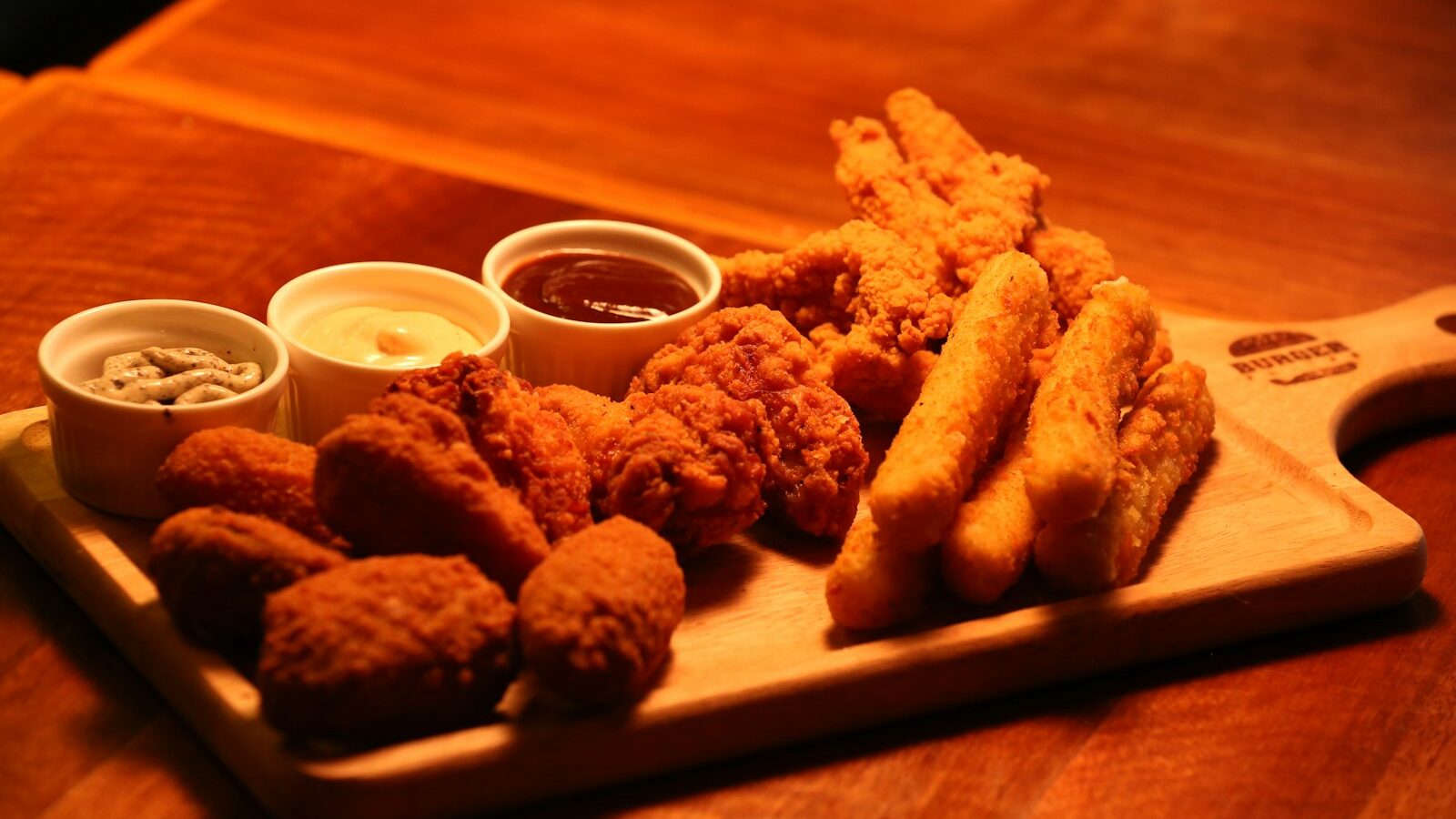
If your child has a sore throat after a weekend of fried chicken and durian, someone in the family will probably say it is because they ate too much heaty food. Questions about heaty food children eat come up in many Singapore households, passed down by grandparents, aunties and helpers alike. This guide explains what “heaty” and “cooling” mean, what doctors generally say about sore throats and mouth ulcers, and how to make balanced, calm food choices that respect both views.
This is general information, not medical advice. If your child is unwell, speak to a doctor, a polyclinic or your paediatrician, and use HealthHub for trusted health information.
What “Heaty” and “Cooling” Mean in Family Food Lore
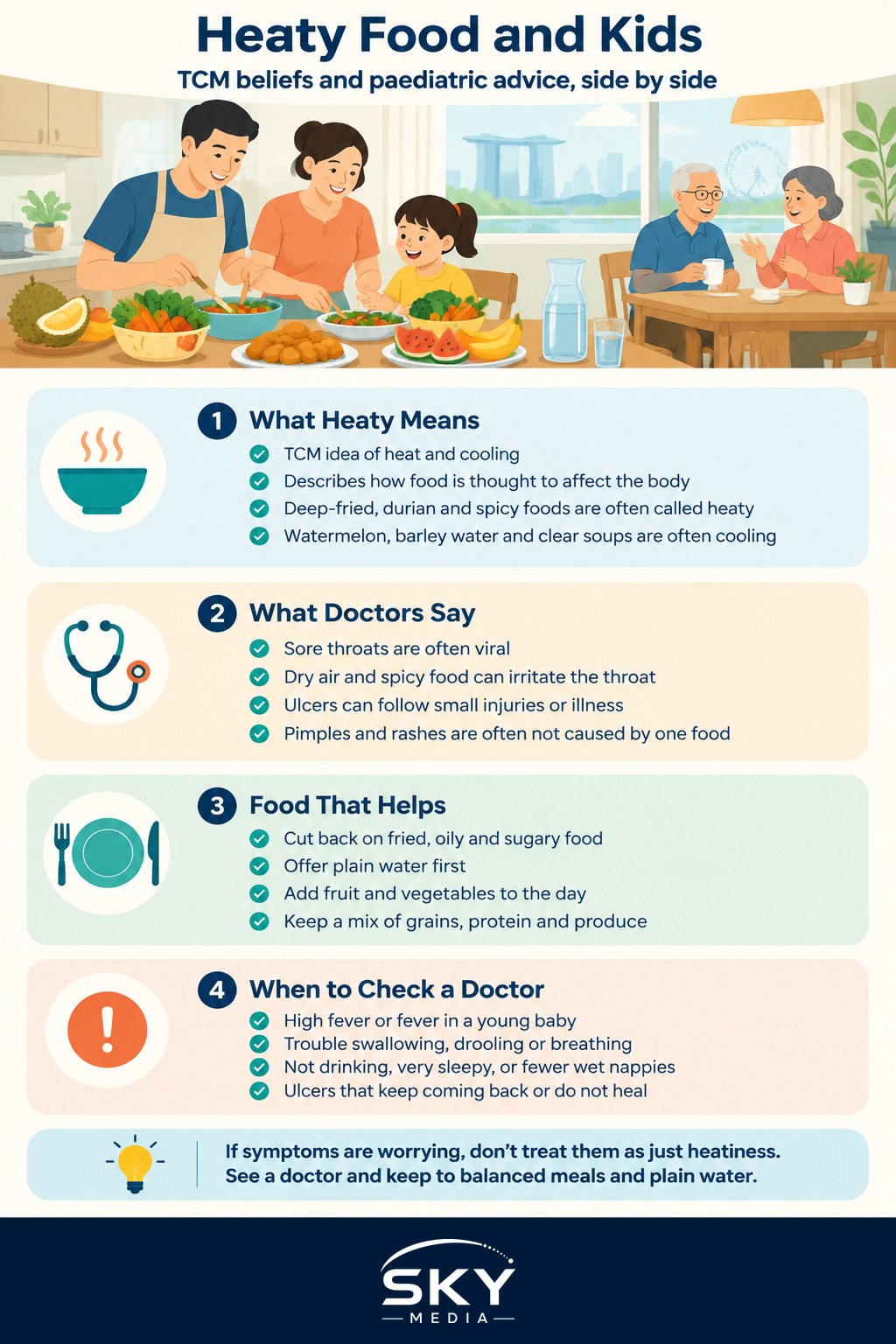
“Heaty” (热气, re qi) and “cooling” (凉, liang) come from Traditional Chinese Medicine (TCM) ideas about balance in the body. In everyday Singapore usage, they describe how a food is believed to affect the body, rather than its actual temperature.
Foods commonly called heaty include:
- Deep-fried and roasted foods, such as fried chicken, chips and barbecued meat
- Durian, lychee, longan and mango
- Chocolate, spicy dishes and some nuts
- Lamb and some richly spiced curries
Foods often described as cooling include:
- Watermelon, pear, cucumber and winter melon
- Barley water, chrysanthemum tea and green bean soup
- Some leafy vegetables and clear soups
The labels vary between families and dialect groups, and the same food can be described differently in different homes. In TCM, too much “heatiness” is commonly linked to signs such as sore throats, mouth ulcers, pimples or feeling irritable. Many families respond by serving a cooling drink or soup after a heaty meal. If you are curious about TCM care for children more broadly, our guide to paediatric tuina and TCM for children covers how registered TCM practitioners work with kids.
What Doctors Generally Say About Sore Throats and Ulcers
Western medicine does not use the heaty and cooling framework. Paediatricians generally explain the same symptoms in other ways.
Sore throats in children are very often caused by viral infections, such as the common cold, and sometimes by bacterial infections. Dry air from air-conditioning, shouting, and irritation from very spicy or rough foods can also make a throat feel scratchy. A sore throat that appears after a party may simply be because the child caught a bug there, not because of the snacks.
Mouth ulcers can have many triggers, including minor injury from biting the cheek or a sharp chip, some viral illnesses such as hand, foot and mouth disease, stress, tiredness, and in some cases nutritional gaps. Most simple ulcers heal on their own.
Pimples and rashes in older children are often related to hormones, skin care, sweat and heat, or allergies, rather than a single food.
Where the two views often agree is that a diet heavy in fried, oily and sugary food is not ideal, and that fruits, vegetables and enough fluids help children feel well. The explanation differs, but the practical advice can overlap.
Comparing the Two Views Side by Side
| Situation | Common family (TCM-inspired) view | Common paediatric view |
|---|---|---|
| Sore throat after a party | Too much heaty food; give a cooling drink | Likely a viral infection; rest, fluids, see a doctor if it worsens |
| Mouth ulcer | Body is too heaty; avoid fried snacks | Minor injury, illness or stress; usually heals on its own |
| Lots of durian or lychee | Will cause heatiness; limit it | Fine in moderation as part of a balanced diet; watch the sugar |
| Child refuses vegetables | Lacks cooling foods | Lacks fibre and nutrients; keep offering a variety |
Balanced Choices That Respect Both Sides
You do not have to choose a side to feed your child well. Many families find a middle path that keeps grandparents happy and lines up with what doctors recommend.
- Moderate the fried and sugary stuff. Limiting deep-fried snacks, sweets and sugary drinks fits both the “too heaty” view and general healthy-eating advice.
- Offer water first. Plain water is the best everyday drink for children. Home-brewed barley or chrysanthemum drinks can be enjoyed, but go easy on added sugar, since many versions sold outside are sweet.
- Pair heaty treats with fruit and vegetables. Durian after dinner can be balanced with a plate of cut fruit and a vegetable-rich meal earlier in the day.
- Keep variety on the plate. A mix of whole grains, protein, fruit and vegetables supports growth. Our guide to iron-rich foods for children has ideas for one nutrient many parents ask about.
- Watch the heat and hydration. In Singapore’s climate, children lose fluid quickly when playing outdoors. Regular drinks and shade help, as covered in our guide to sun safety for children.
Herbal Remedies and Cooling Teas: What to Check
Some families give children herbal teas or pre-packaged cooling drinks when they seem heaty. A few cautious points:
- Check with a doctor or registered TCM practitioner first, especially for babies, toddlers, and children with medical conditions or allergies.
- Avoid giving strong herbal preparations meant for adults to young children without professional advice.
- Read the labels for sugar content and ingredients. Many bottled cooling drinks are high in sugar.
- Tell your child’s doctor about any herbal products they take, so the doctor has the full picture.
TCM practitioners in Singapore are registered with the TCM Practitioners Board, so you can check that someone is registered before taking advice for your child.
When to See a Doctor Instead of Changing the Diet
Changing what a child eats is a gentle, low-risk step for mild discomfort. But some signs should not be treated as “just heatiness”. Seek medical advice if your child:
- Has a high fever, or any fever in a young baby
- Has difficulty swallowing, drooling, or trouble breathing
- Is not drinking, has fewer wet nappies or seems unusually drowsy
- Has many mouth ulcers, ulcers that keep coming back, or ulcers that do not heal within a couple of weeks
- Has a rash with fever, or blisters on the hands and feet
- Has a sore throat that is severe or lasts more than a few days
Polyclinics, GP clinics and children’s emergency departments can help, and HealthHub has guidance on common childhood illnesses. In an emergency, call 995.
Talking About It With Grandparents and Caregivers
Food beliefs are often tied to love and family tradition. If grandparents insist on cooling soups or ban durian, it rarely helps to dismiss their view. Try these approaches:
- Find the shared goal. Everyone wants the child healthy, so focus on what you agree on: fewer fried snacks, more fruit and vegetables, enough water.
- Agree on red flags. Make sure caregivers know that fever, breathing trouble or a child who will not drink means seeing a doctor, not waiting for a cooling drink to work.
- Keep the sugar down. If herbal drinks are part of family routine, ask for less sugar or none.
Questions about heaty food children enjoy do not need to cause arguments. Treat the heaty and cooling ideas as part of your family’s food culture, keep the diet varied and balanced, and rely on doctors when symptoms are worrying.
Frequently Asked Questions
Is durian really bad for children? In moderation it is fine as part of a balanced diet, according to the common paediatric view, though it is sugary so watch the amount. TCM-inspired family lore calls durian heaty and advises limiting it. A plate of cut fruit and a vegetable-rich meal earlier in the day balances both views.
Are bottled barley and chrysanthemum drinks a good cooling drink for kids? They can be enjoyed occasionally, but many versions sold outside are sweet, so read the label for sugar. Plain water is the best everyday drink for children. Home-brewed versions with little or no added sugar are a better choice.
Can I give my toddler herbal tea for being heaty? Check with a doctor or registered TCM practitioner first, especially for babies, toddlers and children with medical conditions or allergies. Strong preparations meant for adults should not go to young children without professional advice. Tell your child’s doctor about any herbal products.
How do I know if a TCM practitioner is properly registered? TCM practitioners in Singapore are registered with the TCM Practitioners Board, so you can check before taking advice for your child. Do this before giving any herbal remedy. Your child’s doctor can also advise on whether the product is suitable.
How do I deal with grandparents who insist on cooling soups for the child? Do not dismiss their view, since food beliefs are tied to love and family tradition. Focus on shared goals such as fewer fried snacks, more fruit and enough water. Agree that fever, trouble breathing or refusing to drink means seeing a doctor, and ask for less sugar in the drinks.