
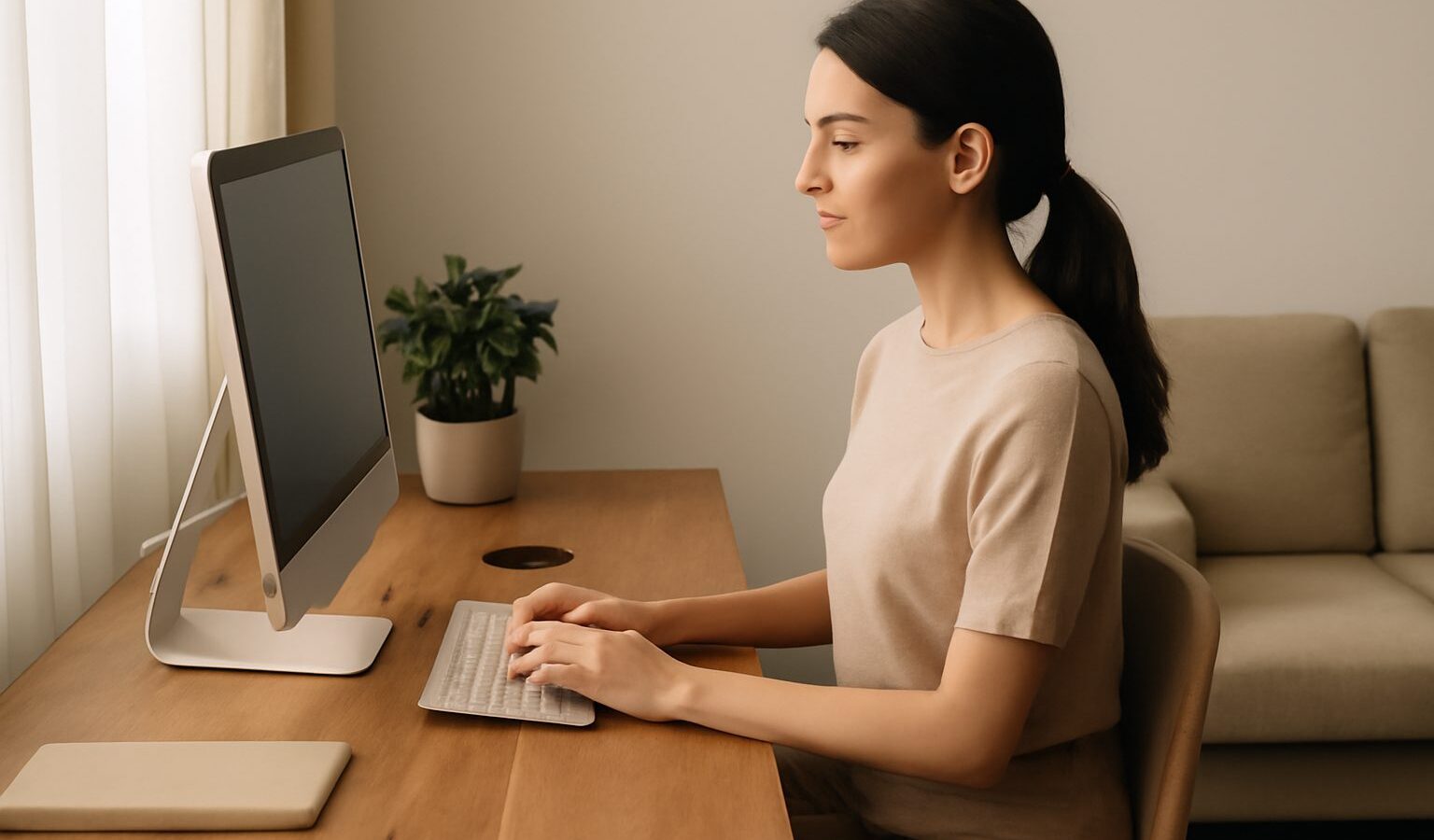
Many of us spend the bulk of our waking hours at a desk, hunched towards a screen, and our bodies quietly protest by evening. Good posture at a desk job in Singapore is not about sitting ramrod straight like a soldier all day. It is about setting things up sensibly and, most importantly, moving often. This is general information to help you feel more comfortable at work, not medical advice, so do see a doctor or physiotherapist if aches persist.
Why Sitting All Day Takes a Toll
Our bodies are built to move, not to hold one position for hours. When you sit slumped for long stretches, some muscles stay tense while others switch off, and joints stiffen. The neck cranes forward towards the monitor, the shoulders round, and the lower back loses its natural curve. None of this is dangerous in the short term, but repeated day after day, it can leave you stiff, sore, and tired.
The single biggest problem is rarely the “perfect” posture you hold, but how long you hold any posture without a break. Even a great chair cannot save you if you never get up. That is reassuring, because it means the fix is largely free and within your control.
Typical grumbles from desk work include:
- A stiff or aching neck and shoulders
- Lower back discomfort that eases when you stand and walk
- Tight hips from hours of sitting
- Tired eyes and tension headaches
- Wrist or forearm discomfort from typing
Setting Up Your Workspace
A comfortable setup reduces the effort your body spends just holding position. You do not need expensive gear, just a few sensible adjustments.
Screen at eye level. The top of your monitor should sit at about eye level, roughly an arm’s length away, so your gaze tilts slightly down and your neck stays neutral. Laptop users can raise the laptop on a stand or a stack of books and add a separate keyboard.
Support your back. Sit back into the chair so it supports your lower back. If the chair lacks support, a small cushion or rolled towel behind the lower back helps restore that natural curve.
Elbows and wrists relaxed. Keep elbows bent at a comfortable angle with forearms roughly level, shoulders loose rather than hunched. Wrists should stay fairly straight while typing, not bent up or down.
Feet flat. Your feet should rest flat on the floor with thighs roughly parallel to the ground. If your feet dangle, a footrest or a sturdy box does the job.
Reduce glare and reaching. Position the screen to avoid window and light glare, and keep your mouse, phone, and water bottle within easy reach so you are not twisting repeatedly.
The Habit That Matters Most: Move Often
If you remember one thing, make it this: break up sitting regularly. Your best posture is your next posture, meaning variety keeps you comfortable.
- Stand and move every half hour or so. Get water, take a call standing, or simply stand and stretch for a moment.
- Use natural break points. Stand during phone calls, walk over to a colleague instead of messaging, and take the stairs when you can.
- Try a few desk stretches. Roll your shoulders back, gently turn your neck side to side, clasp your hands and reach overhead, and stand to stretch your hips. Keep every stretch gentle and pain-free.
- Walk at lunch. A short loop around the building or a walk to a further hawker centre resets your body and mind.
- Consider a sit-stand option. If your office offers a height-adjustable desk, alternate between sitting and standing through the day rather than standing rigidly for hours.
Here is a simple comparison of common desk habits and easy swaps.
| Common habit | Easier on your body |
|---|---|
| Slumping with the laptop low on the desk | Raising the screen to eye level with a separate keyboard |
| Sitting for two to three hours straight | Standing or walking briefly every half hour |
| Cradling the phone between ear and shoulder | Using a headset or speaker for long calls |
| Perching on the edge of the seat, back unsupported | Sitting back so the chair supports your lower back |
| Eating lunch at the desk every day | Taking a short walk before or after eating |
Building Posture Into a Busy Day
The trick is to make good habits automatic rather than relying on willpower. Set a gentle recurring reminder on your phone or calendar to stand. Keep your water bottle small so refills force you up more often. Pair movement with existing routines, such as standing every time you read a long email or stretching while the kettle boils in the pantry.
Outside work hours, general activity supports your posture from the ground up. Regular walking, swimming, or any exercise you enjoy strengthens the muscles that hold you upright and keeps your joints supple. Our climate makes early mornings or evenings the kinder times for outdoor movement, and covered walkways and malls offer options on hazy or very hot days. Strong, mobile bodies simply cope better with desk work.
When to See a Doctor or Physiotherapist
Most desk-related stiffness eases with movement, stretching, and a better setup. Some symptoms, though, deserve a professional look. See a GP or physiotherapist if you notice:
- Neck, shoulder, or back pain that persists for weeks despite better habits
- Pain that disturbs your sleep or does not ease with rest and movement
- Numbness, tingling, or weakness in an arm, hand, or leg
- Wrist or hand pain, numbness, or weakness that affects your grip
- Aches that keep returning and interfere with daily life
Certain warning signs need urgent care rather than a routine appointment. Seek prompt medical attention if back pain follows a fall or injury, comes with fever or unexplained weight loss, or is accompanied by loss of bladder or bowel control, or numbness around the groin. These are uncommon but important to act on quickly.
Better posture at work is less about a single perfect position and more about a comfortable setup plus frequent movement. Make small changes to your desk, get up often, and your body will thank you long before the day is done.
Explore more
Desk comfort is a whole-body affair. Pair this with our guides on preventing neck and shoulder pain and preventing repetitive strain injury for the aches that desk work brings. To build movement into your routine, see how to move more during your workday.