
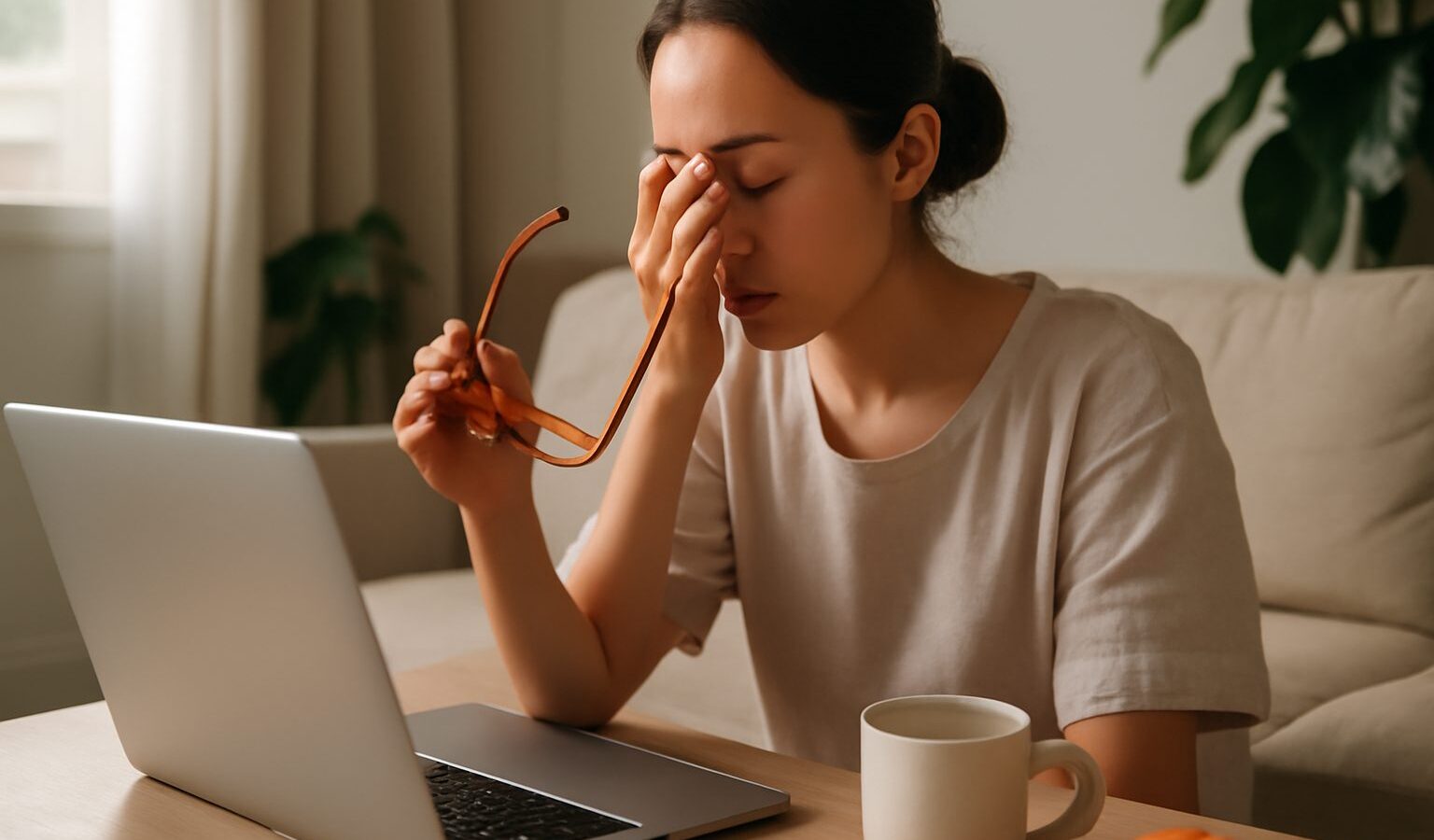
If your eyes feel tired, dry, or gritty by mid-afternoon, you are far from alone. Between office monitors, phones on the MRT, and late-night scrolling in bed, most of us stare at screens for hours on end. Eye strain in Singapore is a very ordinary complaint, and the good news is that most of it responds to small, everyday changes. This is general information to help you look after your eyes, not medical advice, so if something feels wrong, do see an optometrist or doctor.
Why Screens Tire Your Eyes
Screens do not damage healthy eyes the way bright sunlight might, but they do ask a lot of them. When you focus on something close for a long time, the muscles inside your eyes stay contracted, and that steady effort is tiring. You also blink far less when concentrating on a screen, which lets the surface of the eye dry out. Add our air-conditioned offices and MRT carriages, which pull moisture from the air, and you have the perfect recipe for that dry, scratchy feeling.
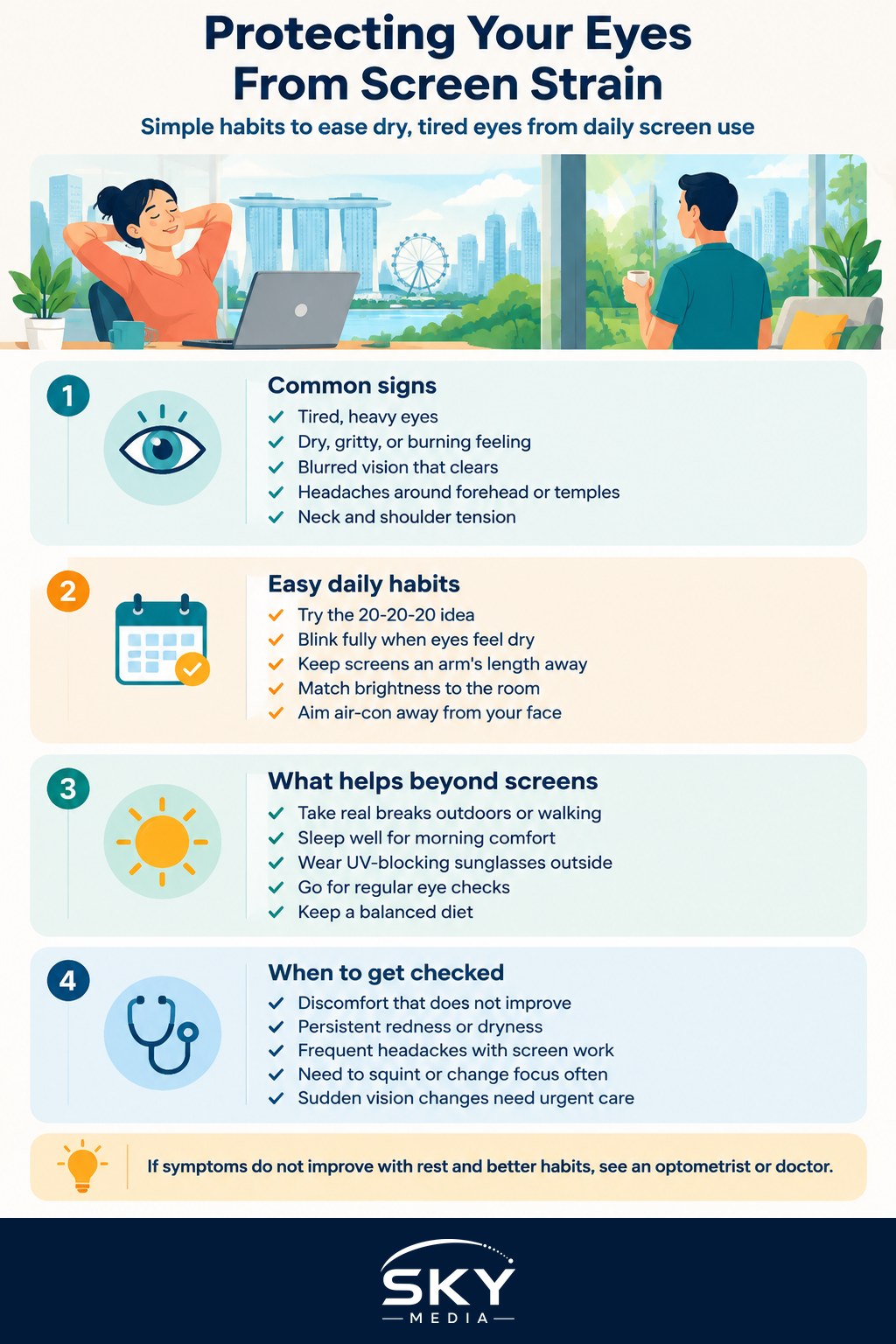
Common signs of digital eye strain include:
- Tired, aching, or heavy eyes, especially late in the day
- Dryness, grittiness, or a burning sensation
- Blurred vision that clears when you look away
- Headaches around the forehead or temples
- Sensitivity to bright light
- Neck and shoulder tension from leaning towards the screen
These symptoms are usually temporary and ease with rest. They are your eyes asking for a break, not a sign of permanent harm.
Everyday Habits That Help
You do not need fancy gadgets to give your eyes an easier time. A handful of simple habits, repeated daily, make the biggest difference.
Follow the 20-20-20 idea. Every 20 minutes or so, look at something far away, such as the view out the window or the far end of the office, for a short while. Shifting focus into the distance lets those tired focusing muscles relax. Set a gentle phone reminder if you tend to forget.
Blink on purpose. When you notice your eyes feeling dry, pause and blink fully a few times. It sounds almost too simple, but consciously blinking spreads a fresh layer of moisture across the eye.
Mind your screen setup. Position your monitor about an arm’s length away, with the top of the screen at or just below eye level so your gaze tilts slightly downward. This is more comfortable and helps your eyes stay moist. On your phone, hold it a little further from your face rather than right up close.
Get the lighting right. Glare is a big culprit. Angle screens away from windows and bright overhead lights, and match your screen brightness to the room rather than having a glowing screen in a dark bedroom. Many phones and laptops have a warmer, dimmer night mode that feels kinder in the evening.
Keep the air on your side. In a cold, dry office, point air-conditioning vents away from your face, and keep a bottle of water handy so you remember to sip and stay generally hydrated.
Sorting Fact From Worry
There is a lot of noise online about screens and eyes, and some of it causes needless anxiety. Here is a calm look at a few common ideas.
| Common claim | What is more accurate |
|---|---|
| Screens permanently damage your eyesight | Screens cause temporary strain and dryness, not lasting damage in healthy eyes; symptoms ease with rest |
| You must buy blue-light glasses | Evidence for blue-light lenses is mixed; good habits, lighting, and breaks matter far more |
| Sitting close to the screen ruins your vision | It can tire your eyes and encourage squinting, but a comfortable distance is mainly about comfort |
| Eye drops fix everything | Lubricating drops can soothe dryness, but persistent problems still need a proper check |
The takeaway is reassuring: for most people, screen strain is a comfort issue you can manage, not a slow path to poor vision. If you are unsure whether a product is worth buying, an optometrist can give you a straight answer for your eyes.
Looking After Your Eyes Beyond the Screen
A few broader habits support comfortable vision over the long run.
- Rest your eyes with distance. Take real breaks that involve walking, looking outdoors, or simply gazing across the room. A stroll around the HDB block at lunch gives your eyes a genuine rest.
- Sleep well. Tired eyes are often just tired eyes. A decent night’s sleep does more for morning comfort than any drop.
- Wear sunglasses outdoors. Our sun is strong. Sunglasses that block UV protect your eyes during that walk to the hawker centre or the weekend at the park.
- Go for regular eye checks. Even without symptoms, a periodic eye examination catches issues early, including the need for an updated prescription. Straining to read a slightly wrong prescription is a hidden cause of tired eyes and headaches.
- Eat a balanced diet. No single food is magic, but a varied diet with plenty of vegetables supports general eye health as part of overall wellbeing.
If you wear contact lenses, follow the wearing and cleaning routine your optometrist gave you, and give your eyes a break with glasses when they feel dry or irritated.
When to See an Optometrist or Doctor
Everyday screen strain settles with rest and better habits. Some symptoms, though, deserve a professional look rather than a wait-and-see approach. Book an appointment with an optometrist or GP if you notice:
- Eye discomfort or blurred vision that does not improve with rest and better habits
- Persistent dryness, redness, or a feeling that something is stuck in the eye
- Frequent headaches linked to reading or screen work
- Needing to hold things closer or further to focus, or squinting more than before
- Eye strain in a child who is struggling at school or holding devices very close
Some warning signs need urgent care, not a routine booking. Seek prompt medical attention, or go to A&E, if you experience sudden vision loss, sudden blurring in one eye, flashes of light with a shower of new floaters, a curtain or shadow across your vision, eye pain with nausea, or an eye injury. These are not typical screen strain and should be checked without delay.
Caring for your eyes is really about giving them regular breaks, a comfortable setup, and the occasional professional check. Small adjustments, repeated each day, add up to eyes that feel a lot fresher by evening.
Explore more
Your eyes are part of a bigger picture of everyday desk comfort. If screens leave the rest of you aching too, read our guides on improving your posture at a desk job and preventing neck and shoulder pain. For a healthier rhythm through the day, see how to move more during your workday.
Frequently Asked Questions
Is looking at a phone worse for my eyes than a computer? Phones are often held closer and viewed in more awkward positions, which can make eyes tire faster. Computers allow a better setup at arm’s length. Hold your phone a little further away and take regular breaks whichever device you use.
Can too much screen time cause short-sightedness in children? Long hours of close-up work are linked with more short-sightedness in children, and time outdoors is widely thought to help. Encourage breaks, distance viewing and outdoor play. If your child squints or sits very close, have an optometrist check their eyes.
Is it bad to scroll my phone in a dark room at night? It is not likely to cause lasting damage, but a bright screen in a dark room can feel harsh and tire your eyes. Lower the brightness, use a warmer night mode and add a soft light. Scrolling late can also cut into your sleep.
Do contact lenses make eye strain worse in air-conditioned offices? They can, because lenses and dry air both contribute to dryness. Follow your optometrist’s wearing and cleaning routine, blink fully, and switch to glasses when your eyes feel dry or irritated. Persistent discomfort deserves a proper check.
Do eye exercises or massage actually help tired eyes? Gentle breaks help most, such as looking into the distance and blinking fully. A warm compress may feel soothing, but there is little proof that exercises improve eyesight itself. Avoid rubbing your eyes, and see an optometrist if discomfort continues.
Official sources: HealthHub
Further reading: Dealing With Dry Eyes