

That “new flat smell” after a renovation, or the sharp scent of a freshly unboxed wardrobe, is not just a smell. It is often a mix of volatile organic compounds, or VOCs: chemicals that evaporate from paints, glues, pressed wood, cleaners and fragrances at room temperature. In Singapore, where many of us keep windows shut and the aircon running for hours, these chemicals can linger. Here is how to reduce VOCs at home without giving up comfort.
This guide focuses on chemicals from things inside your home. For haze and outdoor pollution, or for plants as air cleaners, see our broader guide to improving indoor air quality at home.
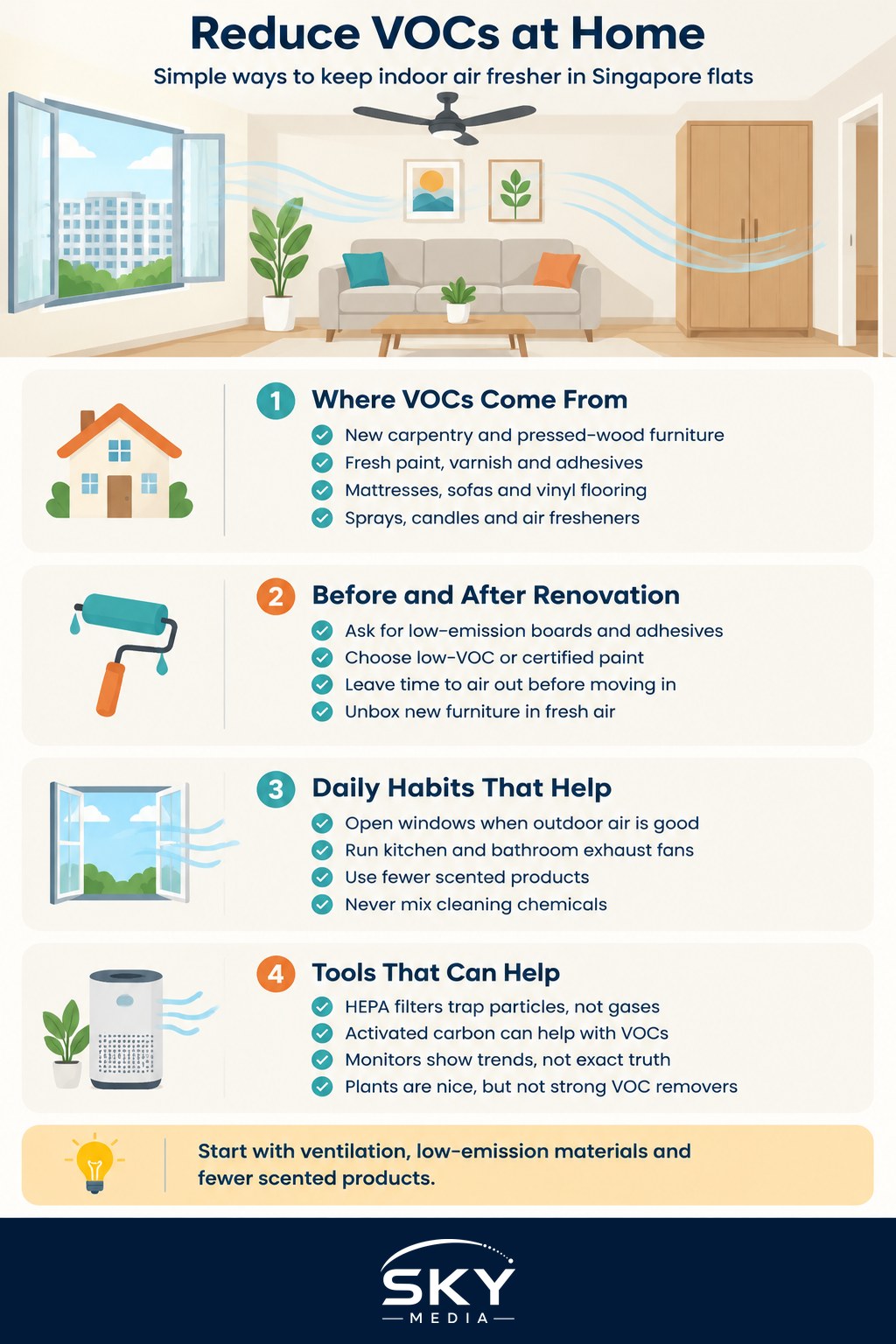
What VOCs Are and Why Sealed Flats Trap Them
VOCs are a large family of carbon-based chemicals that turn into gas easily. Formaldehyde, which is used in some resins and glues for pressed wood, is one of the best known. Others come from solvents in paint, varnish and adhesives, and from fragrances and propellants in household products.
Short exposure to high levels can cause headaches, eye and throat irritation, nausea or dizziness for some people. Longer exposure to certain VOCs is a recognised health concern, which is why authorities such as the National Environment Agency (NEA) publish guidance on indoor air quality. If anyone in your home has persistent symptoms, especially after a renovation or a big furniture delivery, speak to a doctor.
Singapore homes have a few features that make VOCs build up:
- Closed windows with aircon on. Most split-unit air-conditioners recirculate indoor air rather than bringing in fresh air, so emissions accumulate.
- Heat and humidity. Warmer conditions can speed up off-gassing from new materials.
- Renovation culture. New flats and resale renovations often bring in carpentry, laminates, paint and adhesives all at once.
- Compact spaces. A bedroom with a new built-in wardrobe has a small volume of air for those emissions to mix into.
Where VOCs Come From in a Typical Home
| Source | What it can release | Practical fix |
|---|---|---|
| New built-in carpentry and pressed-wood furniture | Formaldehyde and other resin chemicals | Ventilate well for the first weeks; ask for low-emission boards |
| Fresh paint, varnish and wood stain | Solvents | Choose low-VOC or certified paint; paint before moving in |
| New mattresses, sofas and vinyl flooring | Mixed chemicals from foams, adhesives and coatings | Unwrap and air them out before heavy use |
| Cleaning sprays, air fresheners, scented candles | Fragrance compounds and solvents | Use fewer products, unscented where possible, ventilate while cleaning |
| Stored paint, glue, nail polish, pest sprays | Ongoing slow emissions | Seal tightly and store away from bedrooms |
Renovating or Moving In: Get Ahead of Off-Gassing
Off-gassing is usually strongest when materials are new, then tapers off over time. The best moment to act is before and just after a renovation.
- Ask your contractor about materials. Ask whether boards, laminates and adhesives are low-emission, and request product names you can look up. The Singapore Green Label scheme, run by the Singapore Environment Council, certifies some paints, boards and other products against environmental criteria. Check the scheme’s current listings rather than relying on a sales claim.
- Choose low-VOC paint. Many paint ranges sold in Singapore have low-VOC or certified options. Water-based paints generally release fewer solvents than oil-based ones.
- Build in an airing period. If you can, leave a gap between the end of works and moving in, with windows open and fans running during the day.
- Do the smelliest work first. Paint and carpentry before the furniture and soft furnishings arrive, so items like curtains and sofas do not soak up odours.
- Unbox new furniture outdoors or in a ventilated space. Let a new mattress or sofa air out on a balcony, in a well-ventilated room with the window open, or near the service yard before it goes into a bedroom.
Everyday Habits That Cut VOCs
Once you have moved in, small daily choices keep levels down.
- Open windows when the outdoor air is good. Even 10 to 15 minutes in the morning or evening helps flush out built-up chemicals. On hazy days, check NEA’s air quality readings first and keep windows closed if the outdoor air is poor.
- Use exhaust fans. Run the kitchen hood while cooking and the bathroom fan during and after cleaning.
- Cut back on fragrance. Plug-in air fresheners, scented candles, reed diffusers and incense all add to the mix. If you enjoy them, use them sparingly and in a ventilated room.
- Simplify your cleaning kit. For routine cleaning, mild detergent and water often do the job. Save stronger products for when you truly need them.
- Never mix cleaners. Combining bleach with ammonia-based or acidic cleaners can create dangerous gases. Follow label instructions exactly.
- Store chemicals well. Keep leftover paint, glue and pest sprays tightly sealed, ideally in a storeroom or cabinet away from where people sleep.
- Air out dry-cleaned clothes before putting them in the wardrobe.
Air Purifiers, Monitors and Plants: What Helps
Many households reach for gadgets. It helps to know what each one actually does.
- Air purifiers. A HEPA filter traps particles, such as dust and haze, but not gases. To reduce VOCs, look for a purifier with a substantial activated carbon filter, and replace it as recommended, since carbon becomes saturated over time. A purifier works alongside ventilation; it is not a replacement for it.
- Home VOC monitors. Low-cost sensors can show trends, such as levels rising after cleaning or falling after you open the windows. Treat the exact numbers with caution, as consumer sensors vary in accuracy.
- Indoor plants. Plants make a room pleasant, but at normal household numbers they do very little to remove VOCs compared with simple ventilation. Enjoy them for their own sake; our guide to indoor plants for cleaner air covers what they can and cannot do.
A Simple Plan for a Fresher Flat
If you want a short checklist to follow, start here:
- List the likely sources in each room, especially new carpentry, mattresses and cleaning products.
- Air each bedroom daily for a few minutes, starting with any room that has new furniture.
- Swap one scented product a week for an unscented option.
- Move leftover paint and chemicals out of living areas.
- If you buy a purifier, choose one with an activated carbon filter and keep up with replacements.
- Plan future renovations around low-emission materials and an airing period before moving in.
Reducing VOCs is less about expensive equipment and more about fewer sources and regular fresh air. A few consistent habits can make a sealed, air-conditioned flat feel noticeably fresher, especially in the bedrooms where you spend the most hours.
Explore more: How to Improve Indoor Air Quality at Home in Singapore · Indoor Plants for Cleaner Air
Official sources: National Environment Agency (NEA)
Further reading: Greener Alternatives to Air Fresheners and Scented Candles