
A used car can be excellent value, but the money you save only counts if the car is as sound as it looks. Inspecting a used car properly is your best protection against buying someone else’s problem, and most of it comes down to knowing where to look and being willing to walk away. You do not need to be a mechanic. You need a calm, methodical eye and an hour of unhurried time in daylight.
This is a hands-on checklist for viewing a car in person, from the paperwork you should see first to the exterior, engine bay, cabin and the all-important test drive. It finishes with the point at which a professional pre-purchase inspection earns its keep. Bring a friend if you can, park your excitement, and treat every viewing as a chance to gather evidence rather than fall in love.
Start With the Paperwork and History
Before you crouch over a wheel arch, confirm the car is what the seller says it is. Ask to see the registration details and check that the chassis and engine numbers match the car in front of you. Note the original registration date, because that drives the car’s remaining COE life and its value.
Ask directly about accident history, past workshop work and how many owners it has had. Cross-check the servicing record against the odometer to see whether mileage and maintenance tell a consistent story. If anything feels evasive, that is useful information in itself. For the official registration status, LTA and One Motoring are the sources of truth, and figures and rebate rules there change over time, so verify rather than assume.
Walk Around the Body and Panels
Inspect the exterior in good light and, ideally, when the car is dry, since a wet body hides swirls, dents and mismatched paint. Walk the full perimeter slowly and look along each panel from the front and rear, where ripples and colour differences show up.
- Panel gaps and paint. Uneven gaps or a colour that does not quite match between panels can point to past repairs.
- Rust and corrosion. Check the wheel arches, door bottoms, boot floor and around the windscreen for bubbling or flaking.
- Tyres. Look for even wear across each tyre; uneven wear can hint at alignment or suspension issues. Check the tread and that all four roughly match.
- Glass and lights. Note chips or cracks in the windscreen and any moisture inside the lamps.
- Stance. Stand back and check the car sits level, with no corner sagging.
Take photos as you go. They help you compare cars later and give you a record if you negotiate on the strength of what you found.
Check Under the Bonnet and Underneath
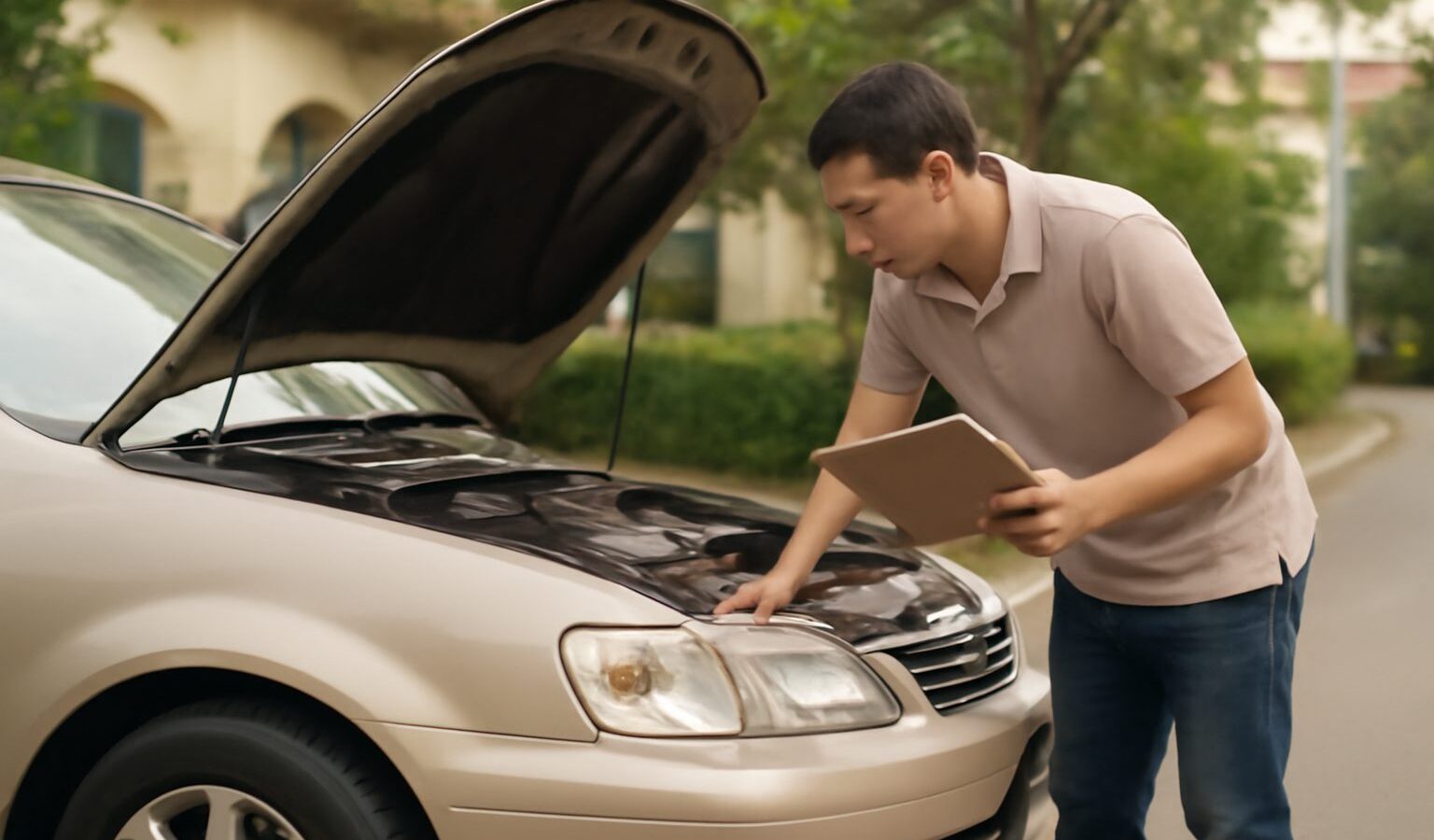
Open the bonnet with the engine cold if you can, as that lets you check the coolant and oil safely and see how the car behaves from a genuine cold start. You are looking for signs of neglect or leaks rather than passing judgement on every component.
- Fluids. Check the engine oil level and colour and the coolant. Milky oil or an oily film in the coolant is a reason to pause.
- Leaks and residue. Look for wet patches, crusty residue or fresh cleaning that might hide a weep.
- Belts and hoses. Cracked, perished or very soft hoses suggest deferred maintenance.
- Battery and terminals. Heavy corrosion around the terminals is a small but telling sign.
- Underneath. If you can see beneath the car, look for obvious leaks, damage or heavy rust on the underbody and exhaust.
You will not diagnose everything here, and you are not meant to. You are deciding whether the car has been cared for and whether a professional needs a closer look.
Sit Inside and Test Every Function
The cabin tells you how hard the car has lived. Get in, close the door and check it shuts cleanly, then work through the controls methodically rather than just admiring the seats.
- Electronics. Test the windows, locks, wipers, lights, indicators, horn, infotainment and reverse camera if fitted.
- Air-conditioning. Run it and check it cools properly, since aircon repairs are common and not cheap.
- Warning lights. Turn the ignition on and watch that the dashboard lights come on and then clear as they should. A light that stays on deserves an explanation.
- Wear versus mileage. Heavily worn pedals, seat bolsters and a shiny steering wheel on a low-mileage car are worth questioning.
- Smells. A persistent damp or musty smell can point to past water ingress.
Take a Proper Test Drive
A short loop around the block is not enough. Ask for a drive long enough to include a mix of speeds, ideally with some expressway running so you can feel the car settle. Keep the radio off for the first stretch so you can hear it.
Notice how the engine starts and idles, whether the gear changes are smooth, and whether the brakes pull evenly and stop the car in a straight line without vibration or noise. On a quiet, safe stretch, let the wheel go momentarily to feel whether the car tracks straight. Listen for knocks over bumps, whining from the transmission and any rattle that appears only at speed. Test the parking brake on a slope if you safely can. Above all, drive within the law and the speed limit; a test drive is for assessing the car, not testing its limits.
Know When to Call in a Professional
Your own inspection filters out the obvious problems, but it has limits, and the biggest risks often hide where you cannot see. This is where an independent, pre-purchase inspection pays for itself, especially on a pricier car or one you cannot fully assess yourself.
| Approach | What it covers well | Best for |
|---|---|---|
| Your own visual check | Condition, function, obvious red flags | First-pass screening before you commit |
| Independent pre-purchase inspection | Mechanical, structural and hidden faults | Serious contenders and higher-value cars |
| Authorised inspection centre check | Standardised, thorough assessment | Final confidence before you buy |
For a formal evaluation, VICOM and other authorised inspection centres carry out standardised checks, and many buyers arrange an independent inspection before committing to a serious contender. If a seller refuses to let you take the car for an inspection, treat that as a warning. A car with nothing to hide can withstand a closer look, and inspecting a used car thoroughly, then verifying it professionally, is how you buy with genuine confidence.
Explore more
Pair this with our guide to checking a used car’s history so the paperwork matches what you found in person. When it is time to talk money, our tips on negotiating a car price in Singapore help you use any faults as leverage, and if you are weighing the seller type, compare a parallel importer with an authorised dealer first.
Related across Sky Media: Buying a Used Car as a Newcomer in Singapore