

Mileage is one of the first numbers buyers look at when choosing a used car, and that makes it a target. Odometer tampering, sometimes called “clocking”, means winding back the recorded distance so a car looks less used than it really is. In Singapore, where cars are expensive and the 10-year COE cycle means many are sold mid-life, a lower reading can make a car seem better value than it is. This guide focuses only on spotting odometer tampering in Singapore: the checks to run, the paperwork to ask for, and what to do if the numbers do not add up.
For broader advice on dodgy listings, deposits and paperwork, see our guide to avoiding used car scams.
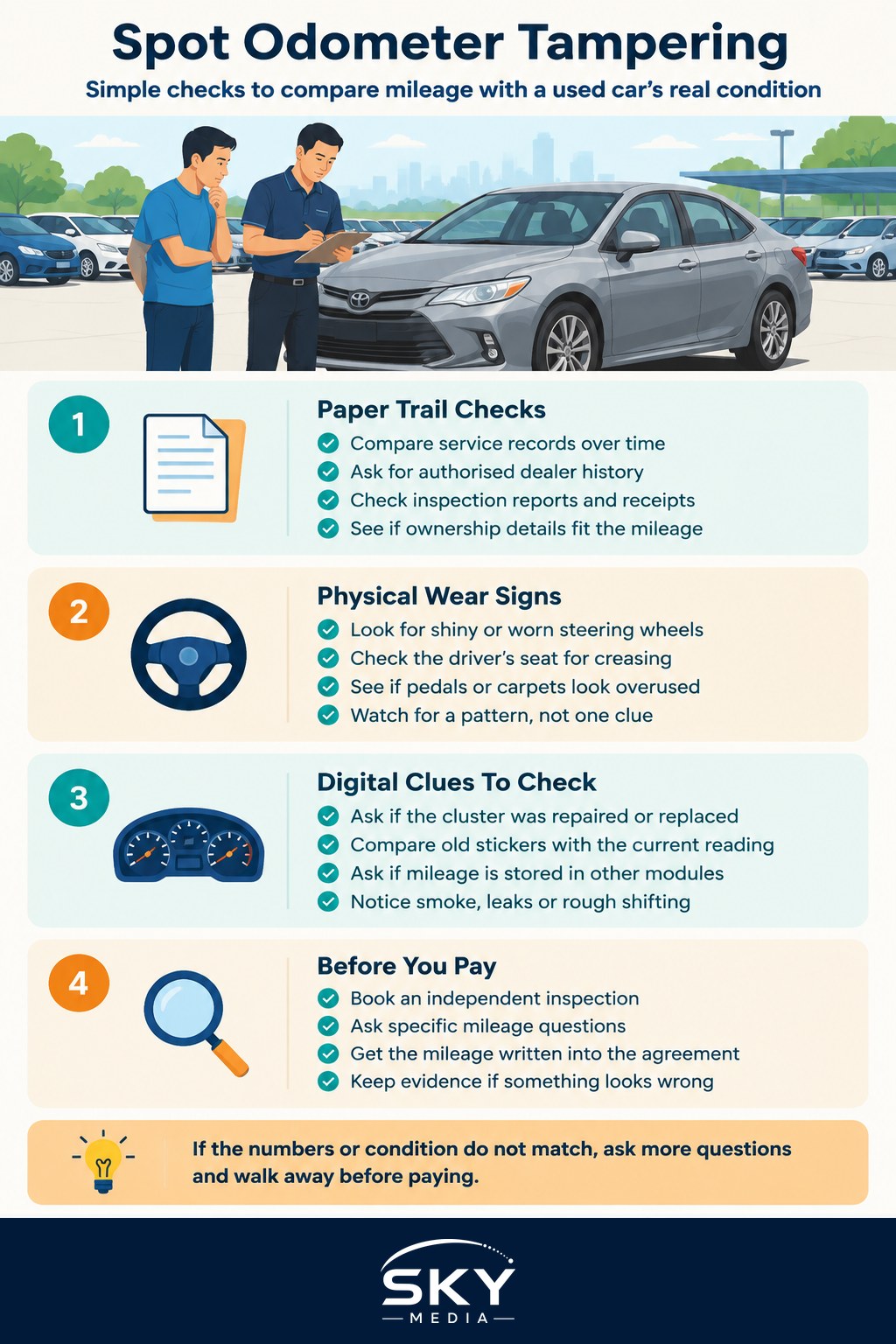
Why Mileage Matters More Than You Think
A car’s mileage gives a rough picture of wear on the engine, gearbox, suspension and interior. A car that has done far more distance than shown may need parts sooner, cost more to maintain and be worth less when you sell it. Mileage also shapes what you should expect to replace soon, such as tyres, brake parts, timing components or a hybrid battery.
Modern cars have digital odometers, and some people assume these cannot be altered. Unfortunately, digital readings can still be changed with the right equipment, so a clean-looking dashboard is not proof of anything. What protects you is cross-checking the reading against other evidence.
Start With the Paper Trail
Records created over the car’s life are the hardest thing for a tamperer to fake consistently. Ask the seller, whether a dealer or a private owner, for as much history as possible.
- Service records. Workshop invoices and service booklets usually note the mileage at each visit. The numbers should rise steadily over time. A later service showing a lower figure than an earlier one is a major red flag.
- Authorised dealer history. If the car was serviced at the brand’s authorised workshop, that workshop may be able to confirm the service history with the owner’s consent. Ask the seller to arrange this.
- Inspection reports. Cars in Singapore go through periodic inspections at LTA-authorised inspection centres once they reach a certain age. Ask for past inspection documents and see what they record.
- Ownership details. On OneMotoring, the Land Transport Authority’s portal, ownership information such as the number of previous owners and registration date can help you judge whether the mileage fits the car’s life.
- Receipts for wear parts. A receipt for new tyres or a clutch at a mileage higher than the dashboard now shows tells its own story.
Missing records are not proof of fraud, since some owners simply lose paperwork. But a car with no history at all deserves extra scrutiny and a more cautious price.
Physical Signs That Do Not Match the Reading
Cars show their age in ways that are hard to hide. Compare what you see with what the odometer claims.
| Area to check | What fits a low-mileage car | What may suggest more use |
|---|---|---|
| Steering wheel and gear knob | Even texture, little shine | Shiny, smooth or worn leather |
| Driver’s seat bolster | Firm, minimal creasing | Sagging, cracks or heavy creasing |
| Pedal rubbers | Grip pattern still clear | Worn smooth or replaced with new ones |
| Carpet under driver’s feet | Little wear | Thin patches or holes |
| Stone chips on bonnet and bumper | Few | Many, or a recent respray of the front only |
On their own, any one of these could have an innocent explanation, such as a careful owner or a recent detailing job. The concern is a pattern: a car advertised as low mileage that has a polished steering wheel, worn pedals and a sagging seat. Brand-new pedal rubbers on an otherwise ordinary car are also worth asking about.
Digital and Mechanical Clues
Beyond the cabin, a few more checks can help.
- Dashboard behaviour. Look for odometer digits that flicker, sit misaligned or show warning lights that come and go. Ask whether the instrument cluster has ever been replaced. A legitimate replacement should come with a workshop record noting the mileage at the time.
- Service stickers and reminders. Old stickers on the door frame or windscreen sometimes show the mileage of the last oil change. Compare them with the current reading.
- Stored data. Some modern cars record mileage in more than one control module. A competent independent workshop or the brand’s authorised workshop may be able to compare readings stored in different systems.
- Engine and gearbox condition. Excess smoke, oil leaks, rough shifting or a tired engine sound on a supposedly low-mileage car are reasons to dig further.
Get an Independent Inspection
An independent pre-purchase inspection is one of the best investments you can make before buying a used car. A neutral inspector has no stake in the sale and knows where to look. Ask them specifically to comment on whether the condition matches the stated mileage, and whether they see signs of cluster tampering. Our guide to inspecting a used car before you buy explains how these inspections work and what a typical report covers.
Arrange the inspection before paying a deposit if possible. If a dealer insists on a deposit first, ask for written terms that let you get it back if the inspection reveals serious issues, and read them carefully.
Questions to Ask the Seller
Direct questions, asked politely, often tell you a lot.
- “Can I see all service records, including the most recent?”
- “Has the instrument cluster ever been repaired or replaced?”
- “Where was the car usually serviced?”
- “What was the car mainly used for?” A car used for private hire or long daily commutes will clock up distance quickly.
- “Will you state the mileage in the sales agreement?”
Ask for the mileage to be written into the sales agreement. If the seller is reluctant, treat it as a warning sign.
What to Do if You Suspect Tampering
If the evidence does not add up before you buy, the simplest choice is to walk away. There are plenty of other cars on the market.
If you discover a likely rolled-back odometer after buying, gather your evidence: the sales agreement, advertisement, service records and the inspection report. Then:
- Raise the issue in writing with the seller or dealer first
- Contact CASE, the Consumers Association of Singapore, for advice on consumer disputes with dealers
- Consider the Small Claims Tribunals for eligible claims
- Make a police report if you believe you were deliberately deceived
This is general information, not legal advice. Rules on consumer protection and claim limits can change, so check the latest details with CASE, the Small Claims Tribunals or a lawyer for your situation.
A Simple Mileage Checklist
Before paying for any used car, make sure you have:
- Compared every service record and receipt against the current odometer reading
- Checked the steering wheel, seats, pedals and carpets for wear that matches the mileage
- Asked about instrument cluster repairs
- Had an independent inspection with a specific mileage check
- Recorded the mileage in the sales agreement
Taking these steps does not guarantee a perfect car, but it makes odometer fraud much harder to pull off. For the full buying process, read our guide on how to buy a used car in Singapore.
Official sources: OneMotoring