

Driving, delivering, designing, tutoring, or picking up jobs through an app can offer real freedom and flexible income. What it does not offer is the built-in safety net that comes with a traditional salaried job. That is why gig worker insurance singapore searches have grown, as more people realise that when you work for yourself, your protection is your own responsibility. This guide walks through the gaps to watch for and how to think about closing them.
To be clear from the outset, this is general information and education, not financial advice, and it is not tailored to your circumstances. It is also not a recommendation of any specific policy or insurer. We have deliberately avoided quoting premiums or coverage figures because these vary widely and change over time. For anything specific, speak to a licensed, MAS-regulated financial adviser and always read the policy terms before you sign up.
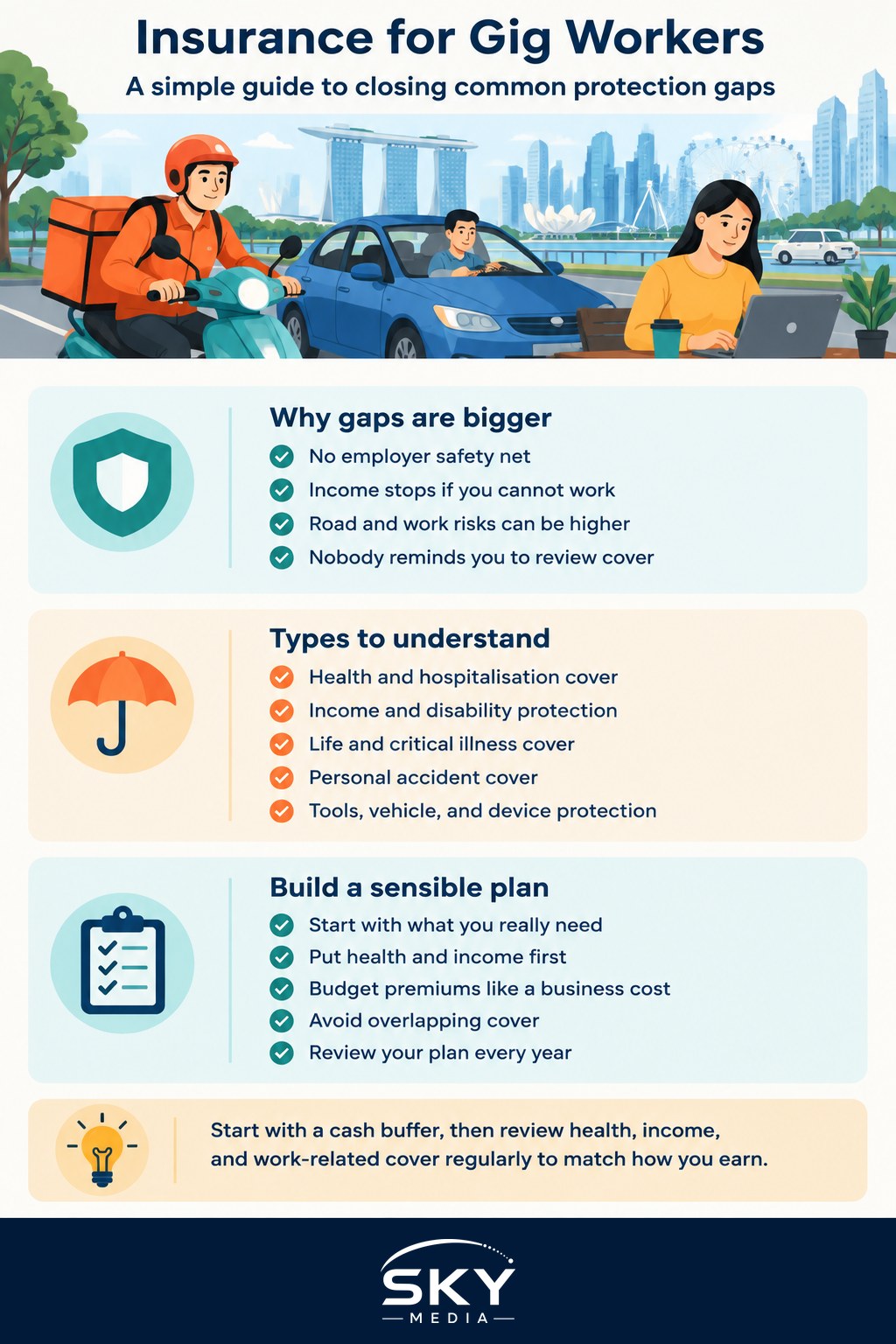
Why Gig Workers Face Bigger Protection Gaps
When you are an employee, a lot happens quietly in the background. Your employer may provide some group insurance, your income keeps arriving if you take a short medical leave, and there is a degree of stability you may not even notice. As a self-employed or platform worker, most of that disappears. If you cannot work, you generally do not earn. There is no colleague to cover your shift and no monthly salary landing regardless.
That changes the maths of protection in a few important ways:
- Your income is the engine. If illness or injury stops you working, the loss is immediate and personal. Building a buffer through an emergency fund in Singapore is the first line of defence before any policy.
- Your risks may be higher. Riders, delivery workers, and anyone on the road daily face different exposures than an office worker. Be honest about the risks your specific work involves.
- Nobody is nudging you. Without an HR department, reviewing your cover is a task only you will remember to do.
The upside is that you are in full control. You can build protection that actually fits how you work, rather than accepting a one-size package. The starting point is understanding the landscape, and insurance basics in Singapore is a helpful primer on the main types of cover and what each is for.
Types of Cover Worth Understanding
Rather than chasing products, it helps to think in terms of what you are protecting. Here are the broad categories gig workers commonly consider, described generally.
Health and hospitalisation
Medical care can be costly, and a stay in hospital can wipe out savings quickly. Understanding how the national framework and private plans work together is essential, and health insurance and Integrated Shield plans in Singapore covers this in more detail. This is often the most important base layer to get right.
Income and disability protection
Because your earnings depend on your ability to work, cover that pays out if you are unable to work due to illness, injury, or disability can be particularly relevant for gig workers. The definitions and waiting periods vary between policies, so read the terms carefully and ask an adviser to explain exactly what would and would not trigger a payout.
Life and critical illness cover
If people depend on your income, term life and critical illness cover can protect them if something happens to you. How much you need depends entirely on your commitments and who relies on you, not on a generic rule.
Personal accident cover
For those doing physical or on-the-road work, personal accident cover is frequently discussed because it can respond to injuries that affect your ability to earn. Again, the specifics of what is covered live in the policy wording.
Do not forget your work tools either. If your livelihood depends on a vehicle, equipment, or a device, consider how you would replace it if it were damaged or stolen. Some platforms may provide limited protections for work done through them, so check what your platform already offers before buying something that overlaps.
Building a Sensible Plan Without Overpaying
The goal is enough cover, not the most cover. It is easy to feel anxious and pile on policies, but overlapping or excessive protection just drains income you could be saving or investing. A calmer approach is to work out your actual responsibilities first, then match cover to them. The general question of how much insurance you need in Singapore is worth thinking through before you commit to anything.
A few habits keep things on track:
- Prioritise. Health and income protection usually matter most for someone whose earnings depend on being able to work. Build from the foundation upward.
- Budget for premiums. Treat insurance as a fixed cost of running your own micro-business, and set the money aside the way you would for taxes.
- Review regularly. Your income, dependants, and risks shift over time. A yearly check keeps your cover aligned, especially since no employer is doing it for you.
- Read before you buy. Exclusions, waiting periods, and definitions decide whether a policy actually helps when you claim.
A Practical Wrap-Up
Working in the gig and platform economy means trading a built-in safety net for flexibility, and it falls to you to rebuild that net. Start with a cash buffer, get your health and income protection sorted, then layer on life or accident cover in line with your real responsibilities. Avoid the temptation to over-insure, and check your arrangements once a year.
Because everyone’s situation differs, use this as a general map rather than a personalised plan. Speak to a licensed, MAS-regulated financial adviser who can look at your specific circumstances, and always read the policy terms in full. This article is general information only and is not a recommendation of any particular policy or insurer.
Frequently Asked Questions
Does my delivery or ride-hailing platform already cover me for injuries? Some platforms provide limited protection for work done through them, but the extent varies. Ask the platform for the written terms, noting what it covers and for how long. Do not assume it replaces your own health and income protection.
Do gig workers need to buy MediShield Life or a hospital plan? Basic national coverage applies to citizens and PRs, but many people also consider private or Integrated Shield plans for better ward options. Check the latest details on MOH’s website, and ask a licensed adviser which level suits your income and risks.
How can freelancers get income protection without an employer? You can buy a disability or income protection policy yourself, usually through a licensed adviser. Compare the definition of disability, waiting period and exclusions, since they decide whether you can claim. Self-employed income may need to be documented.
What should a gig worker do about their work equipment or vehicle? Consider how you would replace it if it were damaged or stolen, since your earnings may depend on it. Vehicles have their own legal insurance requirements, so check with LTA and your insurer. Read what personal and commercial policies actually cover.
Which insurance should a new gig worker buy first? Start with a cash buffer and health or hospitalisation cover, since illness or injury hits your earnings immediately. Income protection often comes next, then life or accident cover as your responsibilities require. A licensed adviser can set the order for your situation.
Official sources: Ministry of Manpower (MOM)
Further reading: CPF Contributions for Platform Workers: What Delivery and Ride-Hail Workers Need to Know