
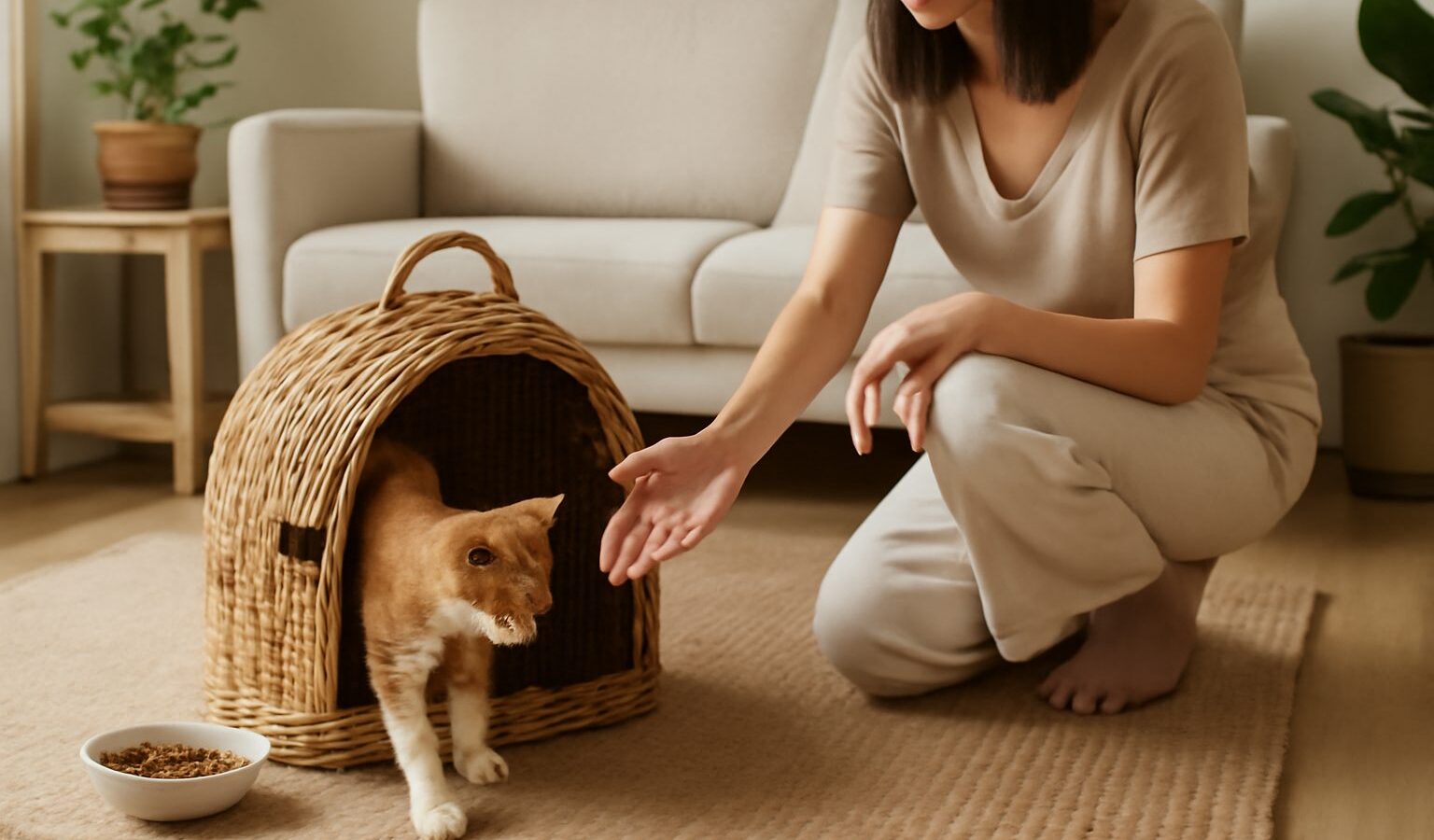
Bringing home a new companion is exciting, but for cats a rushed meeting can set the wrong tone for months. Introducing a new cat well means going slowly, letting the animals get used to each other by scent before sight, and giving everyone room to feel safe. Done patiently, most cats learn to at least tolerate one another, and many become firm friends.
This is general guidance for a smooth introduction in a typical Singapore home or HDB flat. It is not veterinary advice, and if either cat shows signs of illness or unusual distress, a licensed vet should be your first call.
Set Up a Safe Base Camp First
Before the new cat even arrives, prepare a separate room it can call its own. This base camp is the foundation of the whole process and prevents a chaotic first day.
The room should have everything the new cat needs so it never has to venture out before it is ready:
- A litter tray, placed away from food and water
- Food and water bowls
- A cosy hiding spot, such as a covered bed or a box on its side
- A scratching post and a couple of toys
- A comfortable resting place up high if possible, since height helps a cat feel secure
Keep the resident cat out of this room. The goal is for each cat to have its own territory at the start, with a closed door between them. A newcomer that can retreat and settle is far calmer than one thrown straight into a strange, busy household.
Let Them Meet by Scent Before Sight
Cats read the world through smell long before they trust their eyes. Scent swapping is the heart of a good introduction and should never be skipped.
- Swap bedding and scents. Take a soft cloth, rub it gently on one cat’s cheeks, then leave it near the other cat’s feeding area. Do the same in reverse. This lets each cat learn the other’s scent while linking it to something pleasant, like meals.
- Rotate territory. After a few days, let the new cat explore the main home while the resident cat spends time in the base camp, then switch back. Neither sees the other, but both absorb each other’s scent across the shared space.
- Feed on opposite sides of the door. Place a bowl for each cat near the closed door, far enough back that both eat calmly. Over several sessions, move the bowls a little closer. Eating near each other’s scent builds a positive association.
Watch for relaxed body language during these steps. Learning to read your cat’s body language tells you whether to slow down or move on, and it is well worth doing before any face-to-face meeting.
The First Visual Introductions
Only once both cats are eating calmly on either side of the door and showing relaxed body language should you allow them to see each other. Take this in small, controlled steps.
Start with a barrier they can see through but not cross, such as a baby gate or a door held ajar with a wedge. Keep first sightings short and end them while both cats are still calm. If either hisses, freezes, flattens its ears or puffs up, quietly close the gap and go back a stage. That is information, not failure.
When brief visual meetings stay peaceful, allow supervised time in the same room. Keep sessions short, scatter treats or run a play session so both cats are busy and happy, and never force them together. Let them approach at their own pace and always give each cat an easy escape route to a high perch or another room.
Reading the Signs and Moving at Their Pace
Every pair of cats sets its own timetable. Some settle in days, others need weeks. Rushing is the single most common mistake, so let the cats tell you when to progress.
| Sign | What it usually means | What to do |
|---|---|---|
| Relaxed posture, slow blinks, eating near each other | Things are going well | Progress to the next step |
| Hissing, flattened ears, crouching, staring | Tension is rising | Slow down, shorten sessions, go back a stage |
| Puffed fur, growling, swatting, blocked exits | Too much too soon | Separate calmly, return to scent swapping |
| Grooming each other, sleeping in the same room, playing | Acceptance | Ease into normal shared life |
Give the process the time it needs. A steady, unrushed introduction protects the long-term relationship, whereas a frightening first meeting can leave lasting tension that is much harder to undo.
Common Mistakes to Avoid
A few missteps trip up even well-meaning owners. Keeping these in mind smooths the whole journey:
- Skipping the separate room. Letting the cats meet on day one is the fastest route to conflict.
- Punishing a hiss or growl. These are normal warnings, not bad behaviour. Punishment adds fear and stress.
- Only one set of resources. From the start, provide separate litter trays, bowls and resting spots so neither cat feels it must compete.
- Comparing to other households. Your cats are individuals; their pace is the right pace.
If tension does not ease over several weeks, or if either cat stops eating, hides constantly, over-grooms or shows toileting changes, speak to a licensed vet. Sudden or persistent behaviour changes can have a medical cause such as pain or illness, and a vet can check for that and suggest a humane behaviour plan if needed.
Patience is the whole secret to introducing a new cat. Prepare a safe base, let scent do the early work, progress only when both cats are relaxed, and keep every meeting positive. Most Singapore homes that take it slowly end up with cats that, at the very least, share the space in peace.
Explore more
Once your cats are living together, keep the peace with our guide to multi-cat household harmony. If the new arrival is targeting your sofa while settling in, stopping your cat scratching the furniture offers humane redirection tips.