
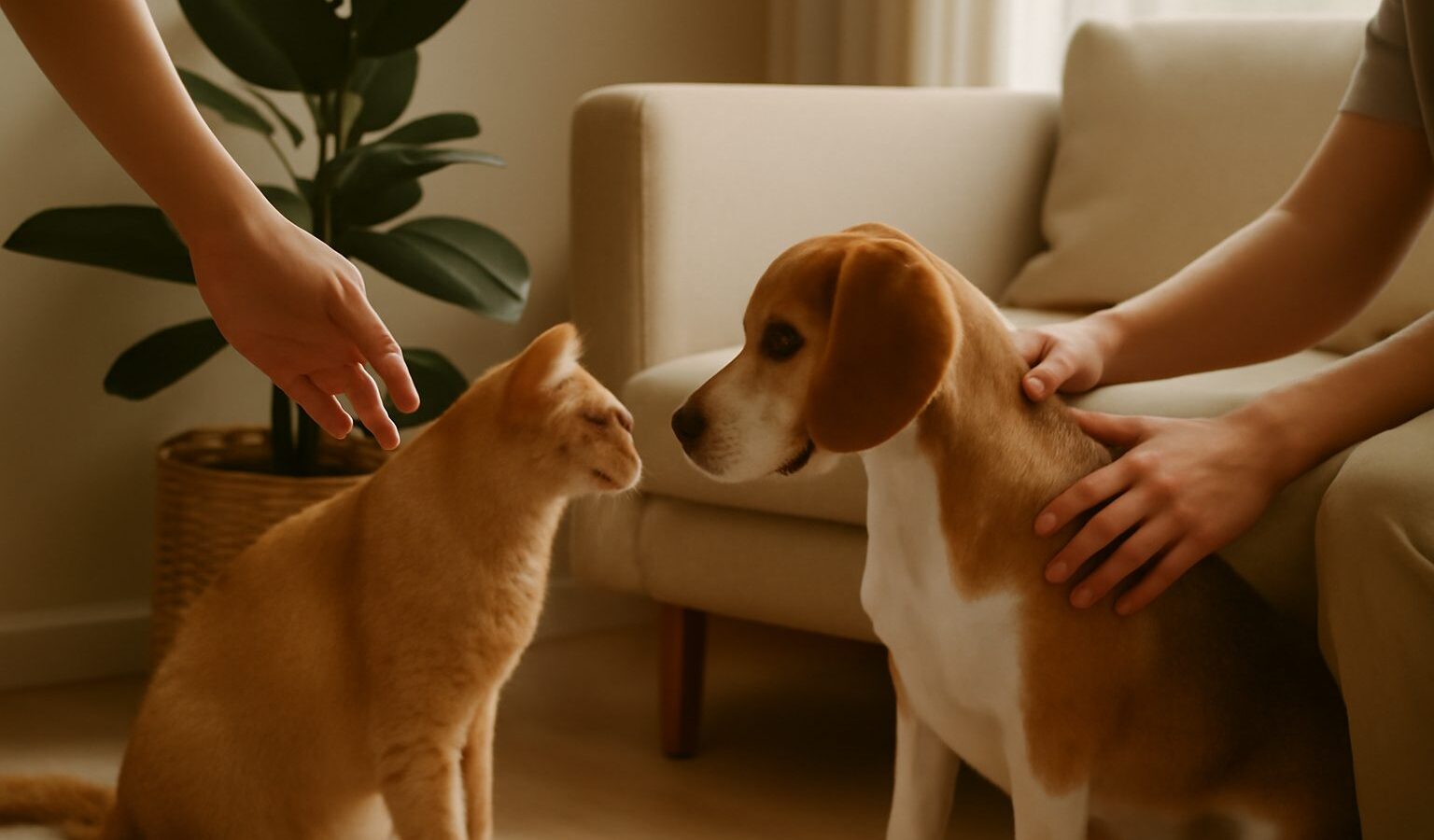
Bringing a new animal into a household where another already lives is one of the most rewarding, and most fumbled, parts of pet keeping. Done in a rush, first meetings can end in a chase, a swipe, or a fright that both animals remember for months. Done slowly and kindly, most cats and dogs learn to share a home, and some become firm friends. Introducing cats and dogs well is less about a single big moment and more about a patient, staged process that lets each animal feel safe before they ever meet face to face. In a compact HDB flat, where there is little room to retreat, that patience matters even more.
This guide is general information for pet owners, not veterinary or behavioural advice. If either animal is unwell, very fearful, or has a history of aggression, speak to a licensed vet or an accredited animal behaviourist before you begin.
Before You Bring the New Pet Home
Good introductions start before the two animals are ever in the same space. The single most useful thing you can offer is a separate room for the newcomer, with its own door that closes. This becomes a safe base where the new pet can eat, sleep, and settle without being crowded.
Prepare a few things in advance:
- A closed room for the new arrival with food, water, a bed, and a litter tray for a cat, kept well away from the resident pet’s core areas.
- A tall shelf, cat tree, or a couple of high perches so a cat can climb out of a dog’s reach. Vertical space is precious in a small flat.
- Baby gates or a mesh barrier that lets the animals see and smell each other without contact.
- Separate feeding stations, so no one feels their food is under threat.
- For the dog, a well-fitted harness and lead for controlled early meetings, and a solid grasp of a “sit” or “settle” cue.
Make sure the resident pet’s routine barely changes. Cats in particular read disruption as threat, so keep feeding times, favourite spots, and quiet corners intact.
Swapping Scent Before Sight
Cats and dogs understand the world through their noses long before their eyes. Scent swapping lets each animal grow familiar with the other while both stay calm and unseen, which takes the surprise out of the first proper look.
Try this over several days:
- Rub a soft cloth gently around one animal’s cheeks and body, then leave it near the other’s feeding area, and swap the cloths back and forth.
- Rotate the animals through each other’s spaces while the other is safely elsewhere, so each explores the other’s scent at leisure.
- Feed both animals on opposite sides of a closed door, moving the bowls a little closer only as they stay relaxed. This pairs the other’s smell with something good.
- Watch for loose, easy body language before you move on. There is no fixed timetable, and rushing this stage is the commonest mistake.
If either animal hisses, growls, refuses food, or paces at the door, you have gone too fast. Step back to an easier distance and give it more days.
The First Supervised Meetings
Only when both animals eat, rest, and move calmly on either side of the door should you let them see each other. Keep these first visual meetings short, calm, and always supervised.
Begin with a barrier, a baby gate or a cracked door, so they can look without reaching each other. Keep the dog on a loose lead and reward calm attention with a quiet word or a treat. Never hold or restrain the cat; a cat must always be free to leave and climb. Let the cat approach or retreat on its own terms.
Keep sessions to a few minutes at first and end on a good note, before either animal tires or tenses. Repeat daily, slowly lengthening the time and lowering the barrier only as both stay relaxed. A dog that can settle on cue near the cat, and a cat that chooses to stay in the room, are strong signs of progress. Full freedom together should come last, and only when supervised meetings have been consistently uneventful.
Reading Body Language on Both Sides
Learning to read each animal is what keeps introductions safe. The goal is loose, unbothered bodies, not frozen tolerance. Watch continuously and step in early, before a stare becomes a lunge.
| Signal | In the dog | In the cat | What to do |
|---|---|---|---|
| Relaxed | Loose body, soft mouth, easy tail | Slow blink, upright or curled tail, grooming | Carry on calmly, reward the calm |
| Aroused | Hard stare, stiff body, whining, fixed focus | Crouched, fixed stare, tail flicking | Redirect the dog, add distance |
| Fearful | Tucked tail, ears back, trying to flee | Flattened ears, puffed fur, backing away | End the session, give space |
| Threat | Growl, lunge, snapping | Hiss, swat, low growl | Separate at once, slow right down |
If you see threat signals, calmly separate the animals and return to an earlier, easier stage for several more days. Punishing either animal for growling or hissing only teaches it to hide its warnings, which makes a bite or swipe more likely later. Reward the behaviour you want instead.
Settling Into Life Together
Once the animals move freely in shared space without tension, your job shifts to protecting the peace. Keep each pet’s resources separate and plentiful so nothing has to be contested.
- Give the cat escape routes and high perches in every shared room, plus a quiet litter tray the dog cannot reach or raid.
- Feed the animals apart, and never leave food or treats where one can guard them from the other.
- Keep the dog’s excitement low around the cat with regular walks and enrichment, so it is not looking to the cat for entertainment.
- Continue to supervise until you are fully confident, and separate them when you are out, especially in the early weeks.
- Give the resident pet plenty of one-to-one attention so the newcomer never feels like a loss.
Some pairs bond within weeks; others simply learn to coexist politely, which is a perfectly good outcome. Age, past experience, and individual temperament all shape the pace, so compare your pets only to themselves.
Above all, be realistic and kind to yourself as well as your animals. If introductions stall, if there is a bite, or if one pet is persistently terrified, pause and get help from a licensed vet or an accredited behaviourist rather than pushing on. A slow, patient start is the surest path to a calm, shared home, and it is well worth the extra weeks it takes.